
By Sultana Khatun from Poba, Rajshahi
In the drought-prone Barind region, young people are quietly planting the seeds of change. At the Agroecology Learning Center in Bilne Palpara, Darshan Para Union, youth, farmers, and students gathered for a workshop on agroecology, climate justice, and food sovereignty, which was organized by Chashi Club and BARCIK.
For the 40 participants, the workshop was and an invitation to rethink agriculture as a relationship with nature, not a battle against it. BARCIK’s regional coordinator Md. Shahidul Islam said that agroecology protects soil, biodiversity, and human health by respecting local knowledge and ecological balance. He said, “We want an agriculture that does not harm people, land, or life. Youth can lead the transition toward safe, just, and climate-resilient farming.”
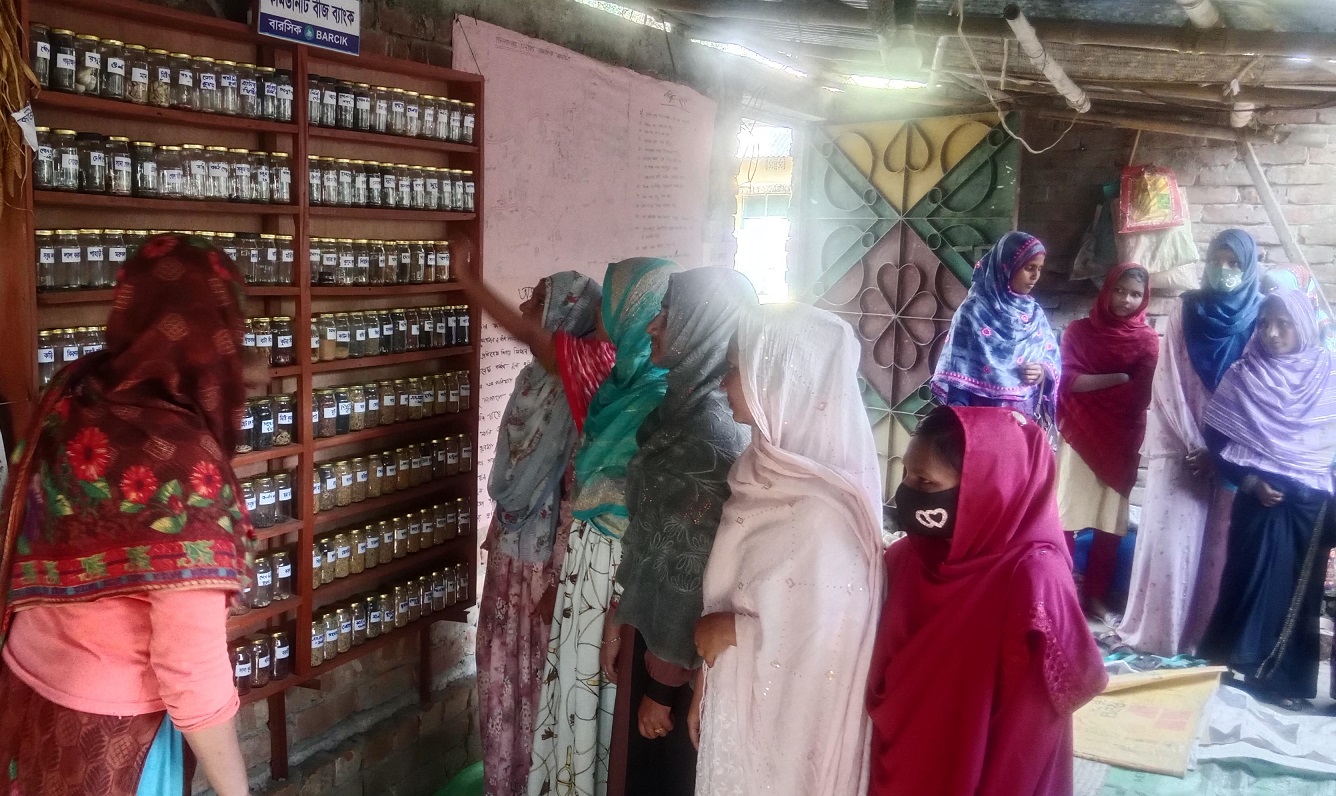
Discussions focused on indigenous seed conservation, organic fertilizers, natural pest management, and the revival of traditional practices. At the heart of the learning center lies a community seed bank conserving 185 indigenous seed varieties which could be said a living symbol of food sovereignty in action.
Young participants shared personal experiences. Sanjida Khatun (22) spoke about growing vegetables organically in sacks and unused spaces beside her home saying, “It helps us learn, stay connected to nature, and keep our surroundings green.”
Hands-on demonstrations from vermicompost production to organic pest control and uncultivated leafy greens sparked enthusiasm. Md. Sarowar Jahan (25) said the workshop gave him clear direction on how youth can engage in safe food production and apply these practices in everyday life.
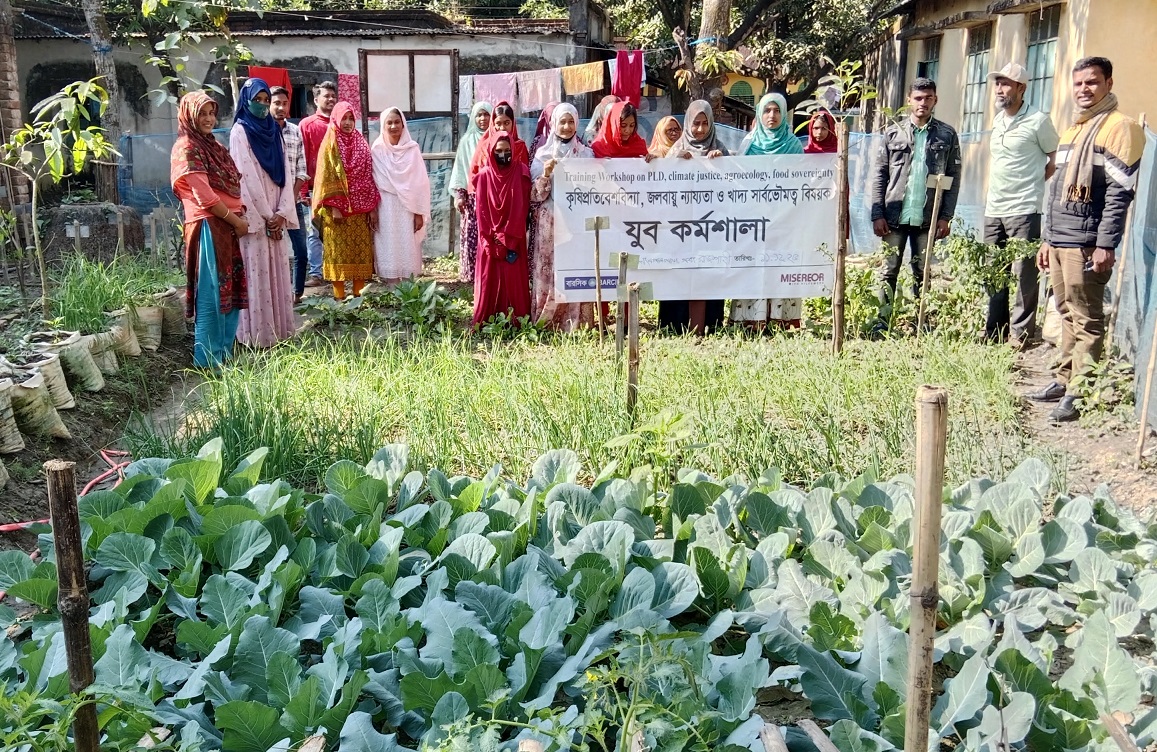
Speakers at event concluded with a strong call saying, ‘Reducing chemical fertilizers and pesticides is essential to protect soil health, biodiversity, and public health. Reviving local knowledge through youth leadership is key to building a future where food is safe, farmers are respected, and ecosystems thrive.’
However, as climate pressure intensifies, these young farmers are proving that agroecology is not just a farming method it is more than a movement for justice, dignity, and survival.