
By S.M. Osman Goni Sohag from Shymnagar, Satkhira
Agroecology was highlighted as an effective response to the adverse impacts of climate change at the South Asian People’s Dialogue titled “From Himalayas to Sundarbans: Agroecology as a Climate Solution.” The dialogue was held recently at the Kalagachhia Forest Station in the Sundarbans, organized by BARCIK in collaboration with Green Coalition Satkhira.
Participants included representatives from Nepal’s Social Work Institute, leaders of the Green Coalition, journalists, government officials, civil society members, BARCIK representatives, youth volunteers, and farmers.
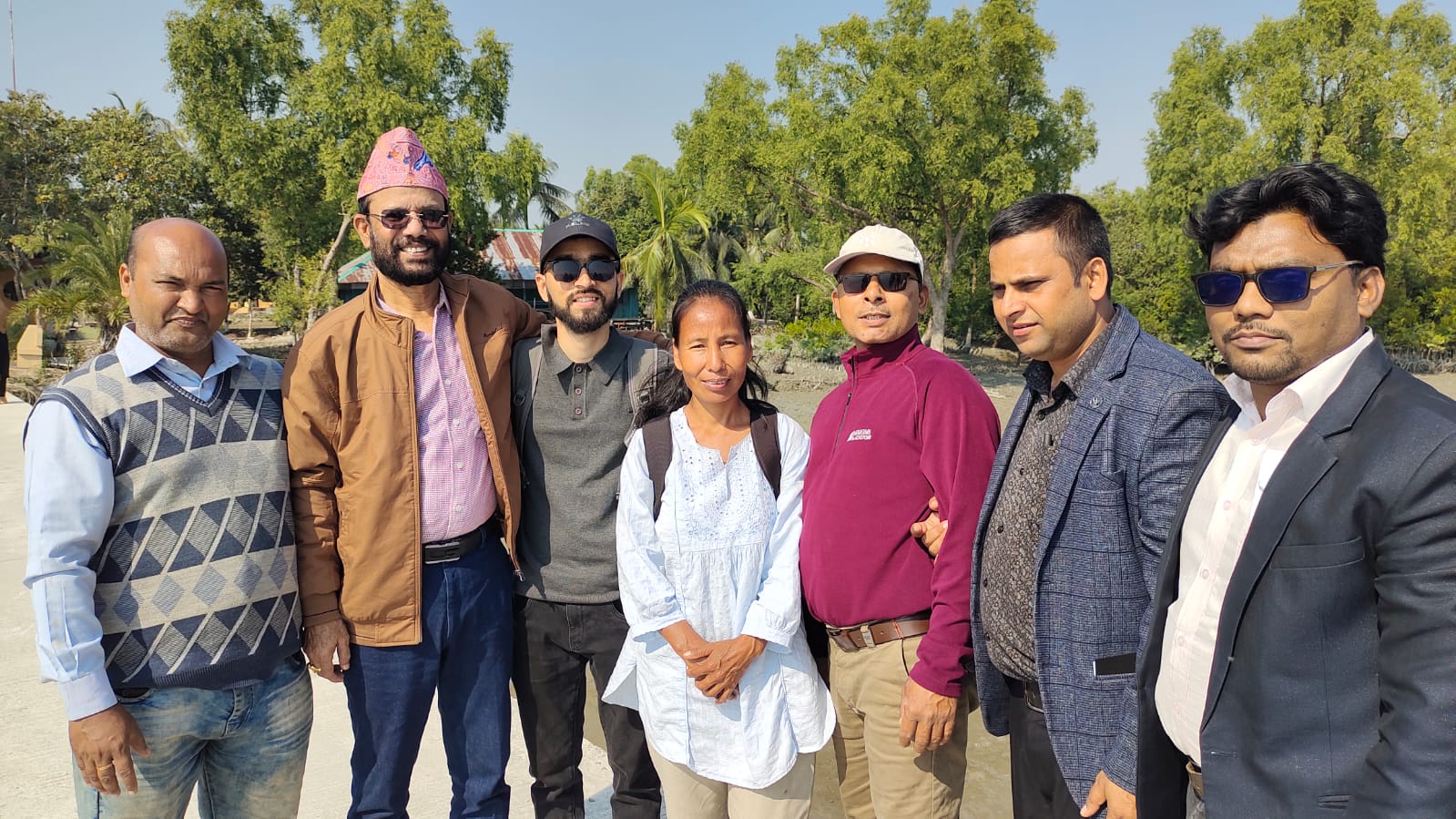
The session was chaired by Professor Pabitra Mohan Das, Adviser to Green Coalition Satkhira. BARCIK Coordinator Md. Jahangir Alam delivered the welcome address.
Speakers included Ashish Thani, Agroecology Coordinator of Nepal Social Work Institute; Project Coordinator Bhakta Bahadur Khati; Dilmaya Gurung, Chairperson of Srijanashil Permaculture Centre; Ashik-e-Elahi, Adviser to Green Coalition Satkhira; senior journalist Kalyan Banerjee; and BARCIK Regional Coordinator Ramkrishna Jowardar, among others.
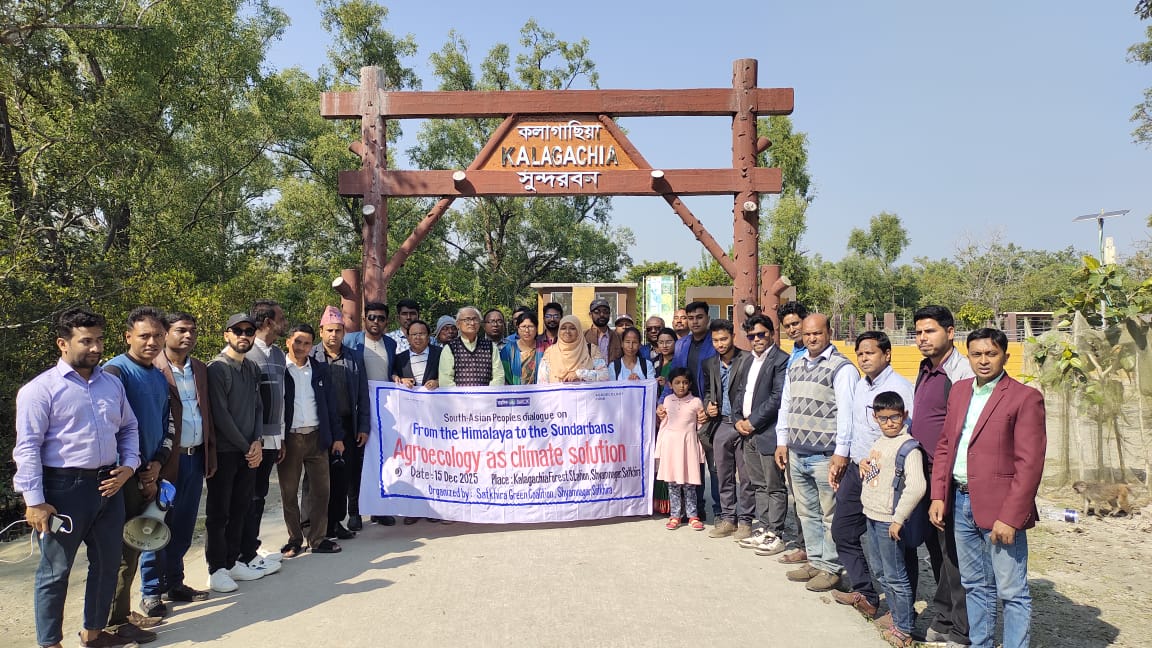
The dialogue discussed the climate crisis in Nepal and Bangladesh’s coastal regions, highlighting both shared and distinct climate impacts. Speakers emphasized the importance of local knowledge, ecological farming systems, and food sovereignty in addressing climate challenges. Special emphasis was placed on strengthening agroecology-based initiatives to protect coastal and hilly communities from flash floods, excessive rainfall, salinity, and natural disasters.
The dialogue concluded with recommendations to enhance regional cooperation, expand agroecology under the leadership of farmers, and take effective policy-level actions to address the climate crisis.