
By Barsha Gain, from the Coast
A two-day training workshop on “Climate Crisis, Agroecology, and Local Adaptation Strategies in the Coastal Region” was held recently at the Pankhali Agroecology Learning Center in Burigoalini Union, Shyamnagar Upazila, Satkhira.
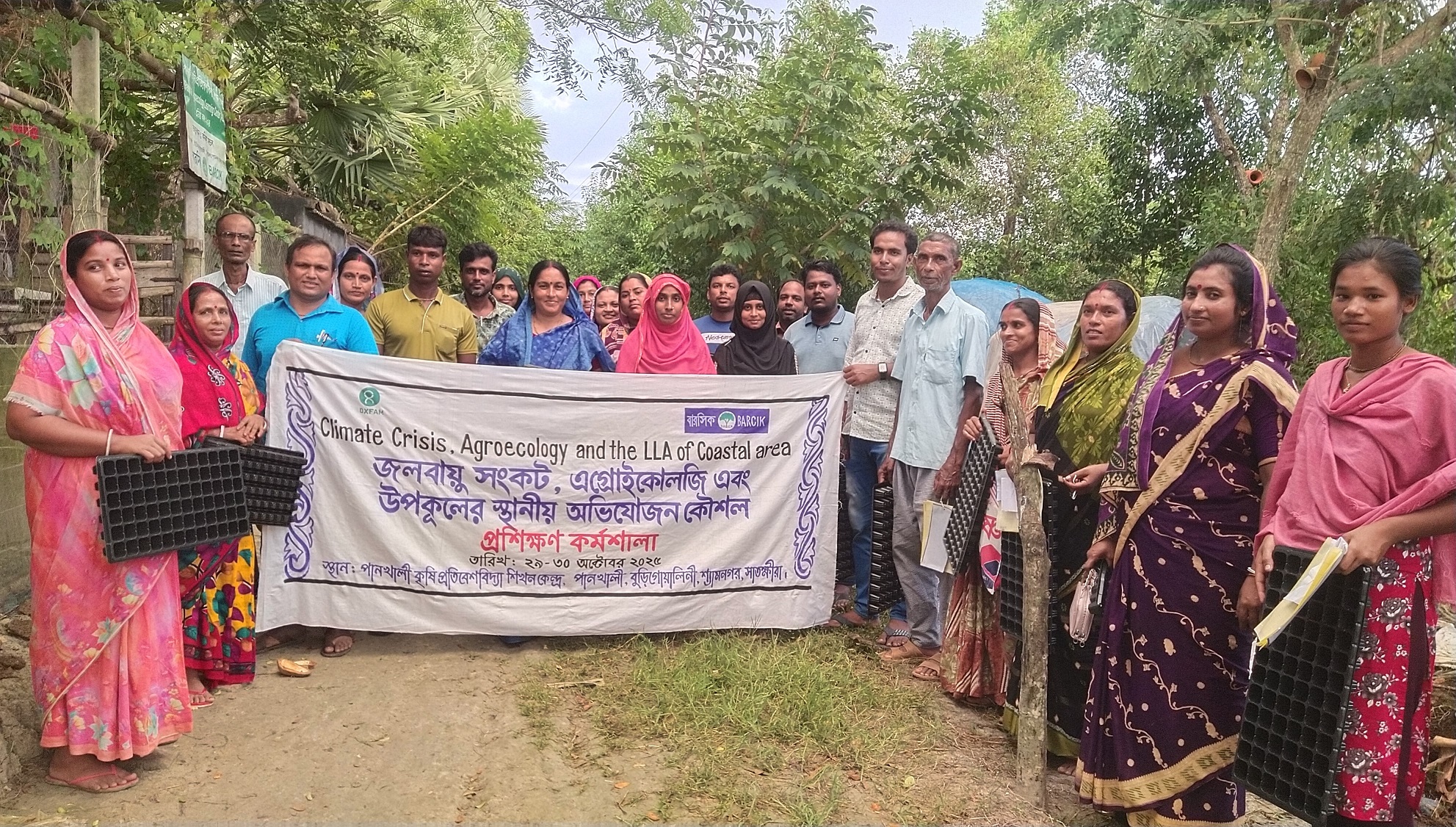
The event was presided over by Konika Rani, a representative of the learning center, while other speakers included representatives Alpona Rani, Sharma Rani, Gobinda Mondal, and Nimai Mondal. Local representatives, journalists, farmers, women farmers, and young entrepreneurs from Padmapukur, Atulia, and Burigoalini unions also attended and received hands-on training on various adaptation practices to cope with climate challenges in coastal areas.
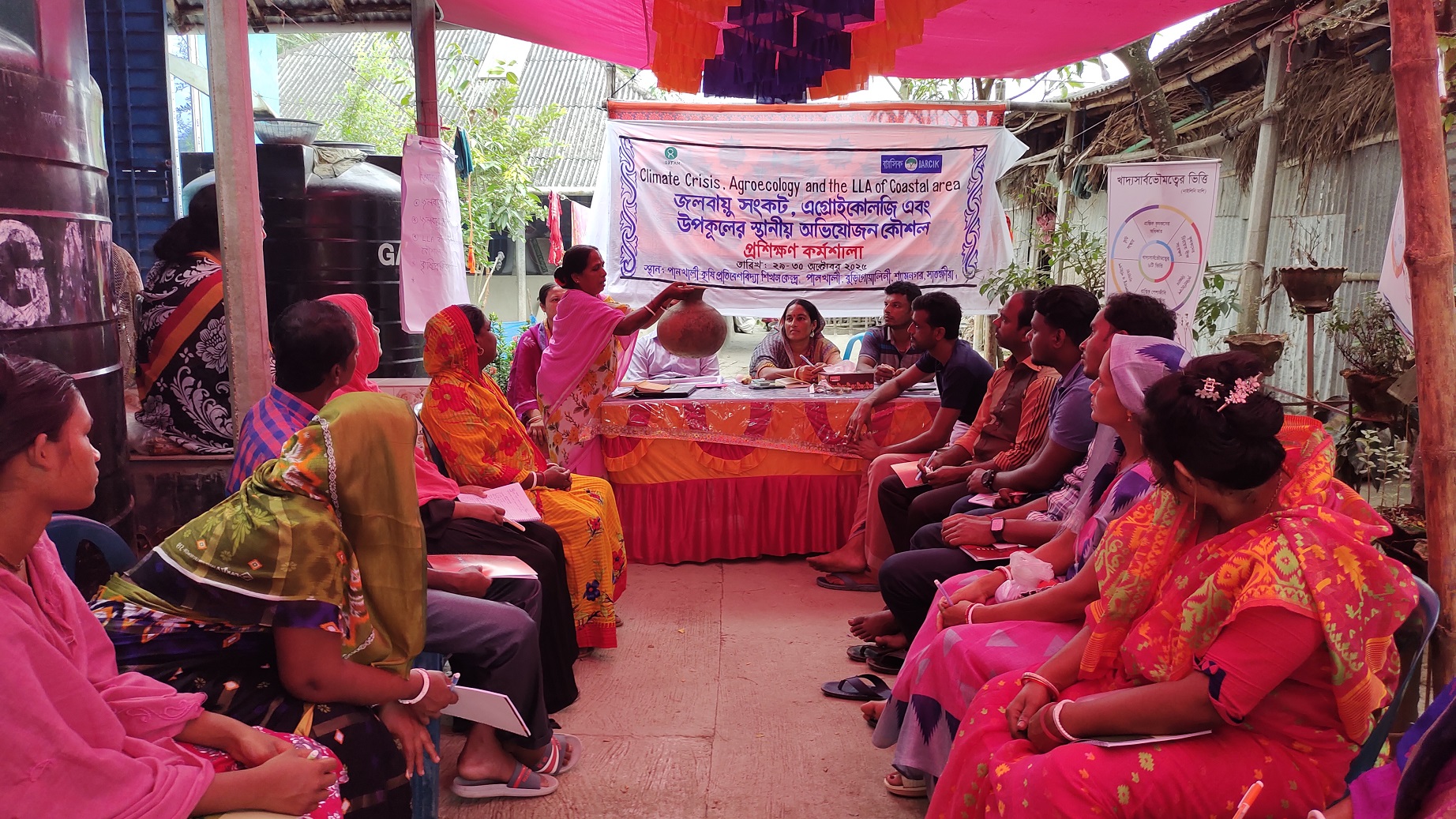
Participating in the event Gobinda Mondal said, “Salinity is high in coastal areas, and unpredictable storms and rainfall due to climate change make farming difficult. To survive, farmers must adopt time-appropriate adaptation strategies.” He discussed in detail sack-based ginger cultivation, the benefits of uncultivated plants, and integrated farming methods.
Sharma Rani, representing the Mathurapur Agroecology Learning Center, provided practical training on dealing with waterlogging, drought, salinity, water scarcity, and excessive rainfall. She also demonstrated easy and effective cultivation methods for small spaces such as tower gardening, use of floating beds, and saline-resistant farming systems. In addition, she emphasized on the importance of organic cultivation without using chemical fertilizers and pesticides.
Ranjit Barman, teacher of Sundarban Girls’ Secondary School and journalist, called for collective efforts to produce safe food and continue farming despite climate challenges. He encouraged farmers to be proactive and motivated to ensure toxin-free food production.
Highlighting the importance of seeds, the core element of agriculture Alpona Rani Mistri, president of Shapla Nari Unnayan Sangathan, shared insights on the importance of local seed varieties in coastal regions and methods for collecting and preserving them.
Participant Hira Begum remarked that the training would help them become more organized and resilient in farming during crises, ensuring safe and sustainable food production saying,“Throughout the year, we can protect biodiversity by cultivating crops using our homestead and natural resources effectively”.
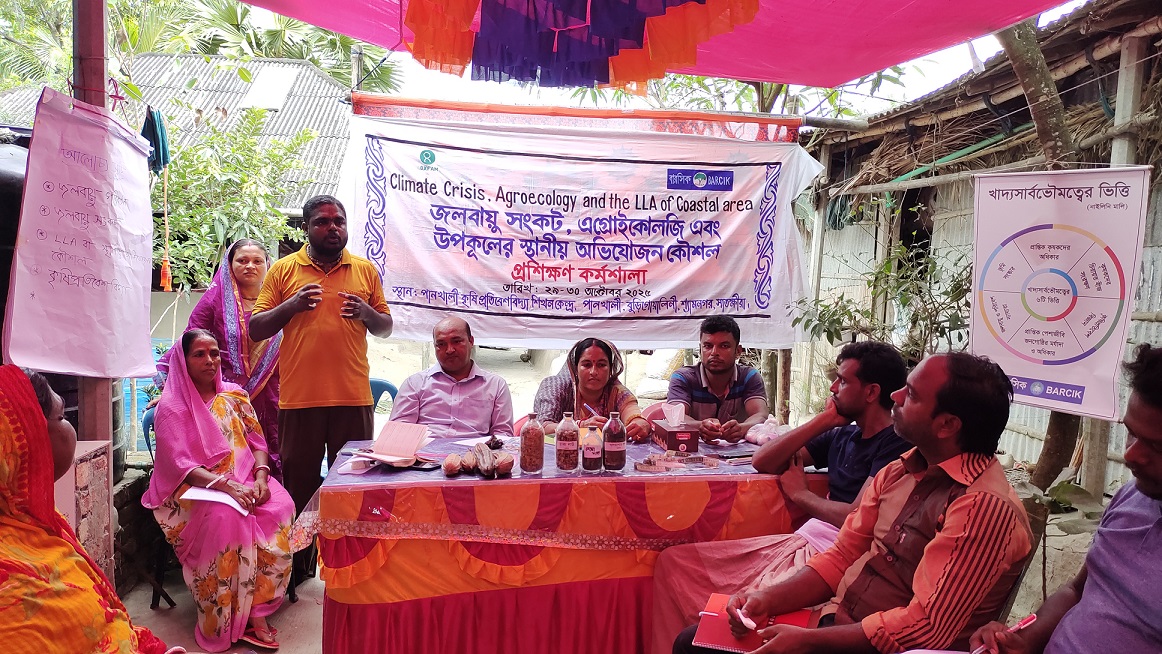
The two-day training concluded with open discussions and practical demonstrations on quick composting, vermicompost, pit composting, conservation of uncultivated plants, the use of natural boosters like Horlicks to promote flowering and fruiting, identification of beneficial insects, and sack-based farming methods. The participants actively engaged, making the workshop both interactive and inspiring for strengthening local adaptation practices in the coastal region.