
By Barsha Gain from the Coast
A school-level lecture series on locally led adaptation strategies was held at Srifalkati Secondary School under Ishwaripur Union of Shyamnagar Upazila, Satkhira recently. The event was organized by BARCIK
The program was chaired by the Head Teacher of the school, Md. Nazmul Hossain. Ramkrishna Joardar, Associate Regional Coordinator of BARCIK; Assistant Teachers Zakir Hossain, Subrata Kumar Mondal, Md. Nurul Haque, and M.M. Majnu Elahi; and BARCIK official Barsha Gain participated as special guests of the event.
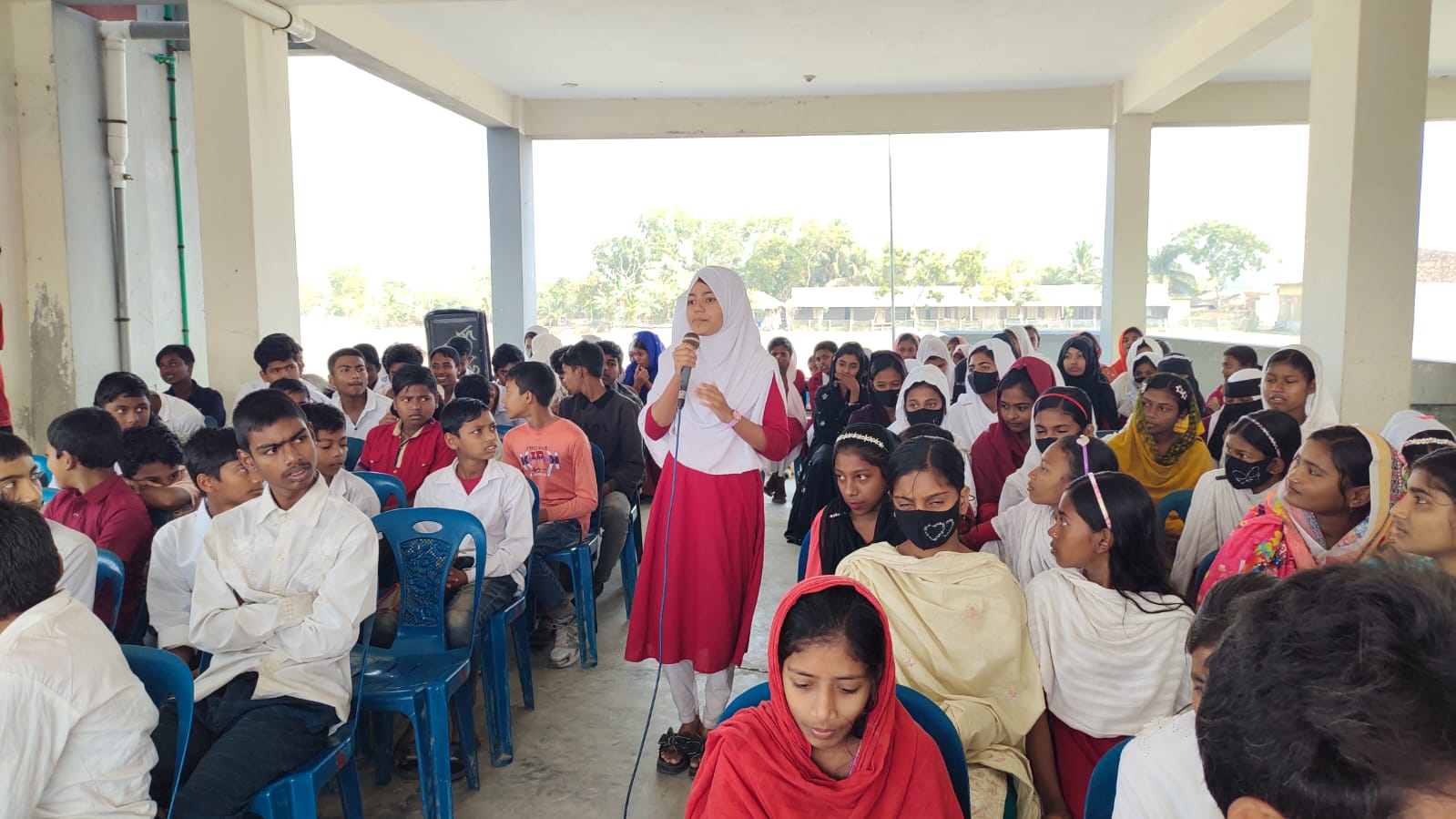
The session was moderated by S.M. Osman Goni, Network and Campaign Facilitator of BARCIK. Speakers included Alpona Rani Mistri, pioneer of the “Silent Agricultural Revolution” and Supervisor of Dhumghat Agroecology Learning Center; Konika Rani, Supervisor of Pankhali Agroecology Learning Center; farmer Nimai Mondal, member of the Burigoalini Union Green Coalition; and students Md. Hasib and Mosammat Shifa from Class Eight, along with Tahera and Maysha from Class Nine.
In the event Ramkrishna Joardar said that although Bangladesh is a small country and cannot stop climate change alone, it must build its capacity to adapt and survive in the face of climate impacts. He said, ‘Agroecology is a science, a practice and a movement for protecting nature and biodiversity. It emphasizes on the importance of indigenous knowledge and local techniques, which strengthen community resilience.’
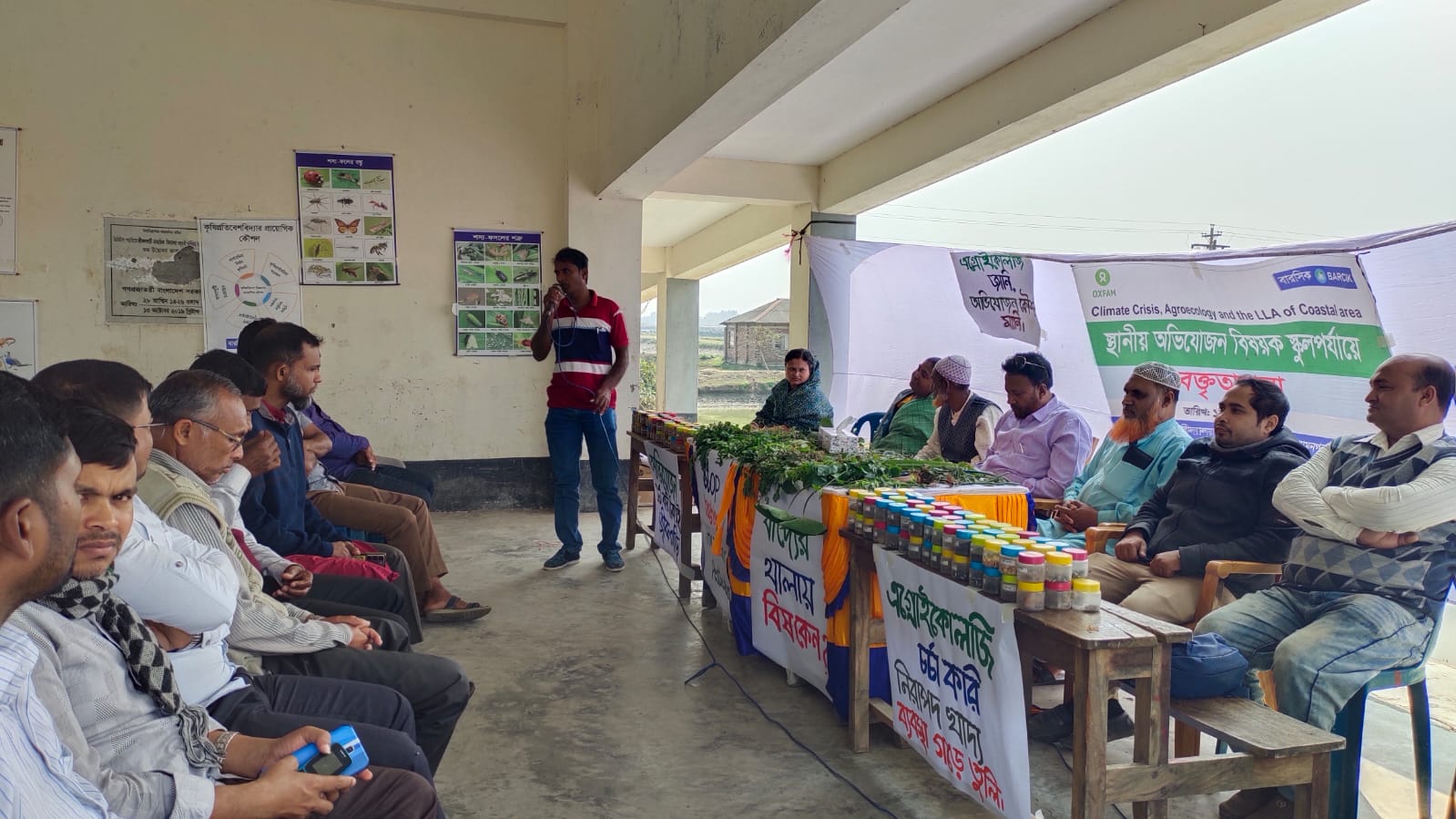
Farmer Nimai Mondal mentioned that agricultural advancement alone is not enough; agriculture must progress in harmony with nature. By reducing chemical use and adopting organic farming methods, it is possible to protect biodiversity and ensure safe food systems.
National Agriculture Award recipient Alpona Rani said that climate change is creating new challenges in agriculture every day. To cope with these challenges, farmers must adopt systematic and adaptive farming methods. Adaptation, she explained, is the key survival strategy in adverse environmental conditions.
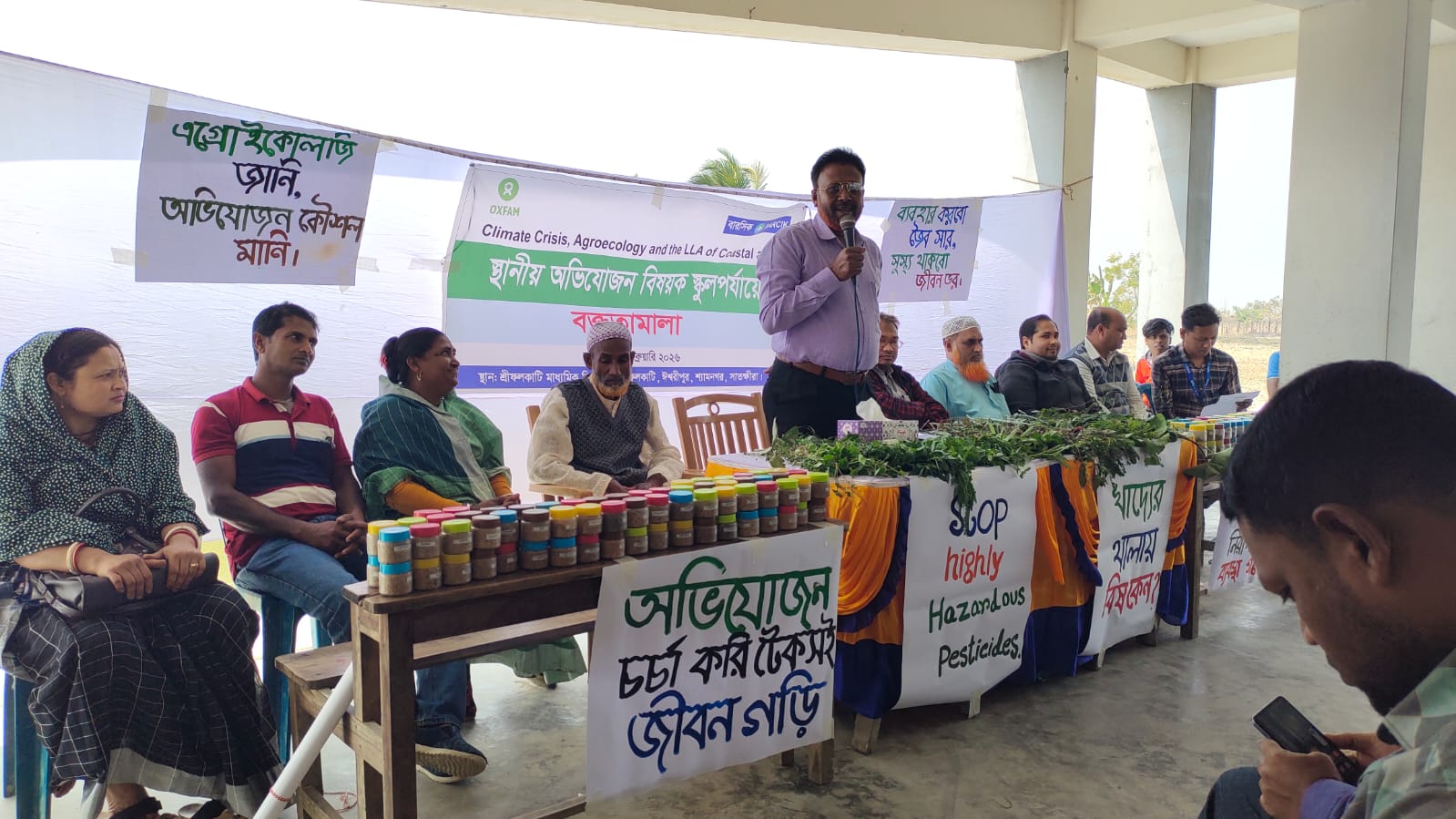
Students Shifa and Tahera expressed concern that natural disasters, rising temperatures, increased use of chemical fertilizers and pesticides, river pollution, and indiscriminate tree cutting are severely harming the environment. These practices are damaging biodiversity and threatening the ecosystem of the Sundarbans.
The event also featured exhibitions of uncultivated plant species, indigenous seeds, and awareness festoons. The importance of coastal agriculture and local adaptation strategies was highlighted, along with a strong call for active participation of the younger generation in ensuring safe and sustainable food systems for the future.