
By Abdur Rob from Madan, Netrakona
A day-long rural planning workshop was held in Uchitpur village, Madan union of Netrakona district, focusing on community-based adaptation strategies to cope with climate change and disasters in the haor (wetland) areas.
The event was jointly organized by the Agroecology Team of Uchitpur village and BARCIK, with financial support from Oxfam. Fifteen farmers, youth, and adolescent girls from several nearby villages of Uchitpur, Argila, Kuliyati, Dakshin Madan, and Madan Purbapara participated in the session.
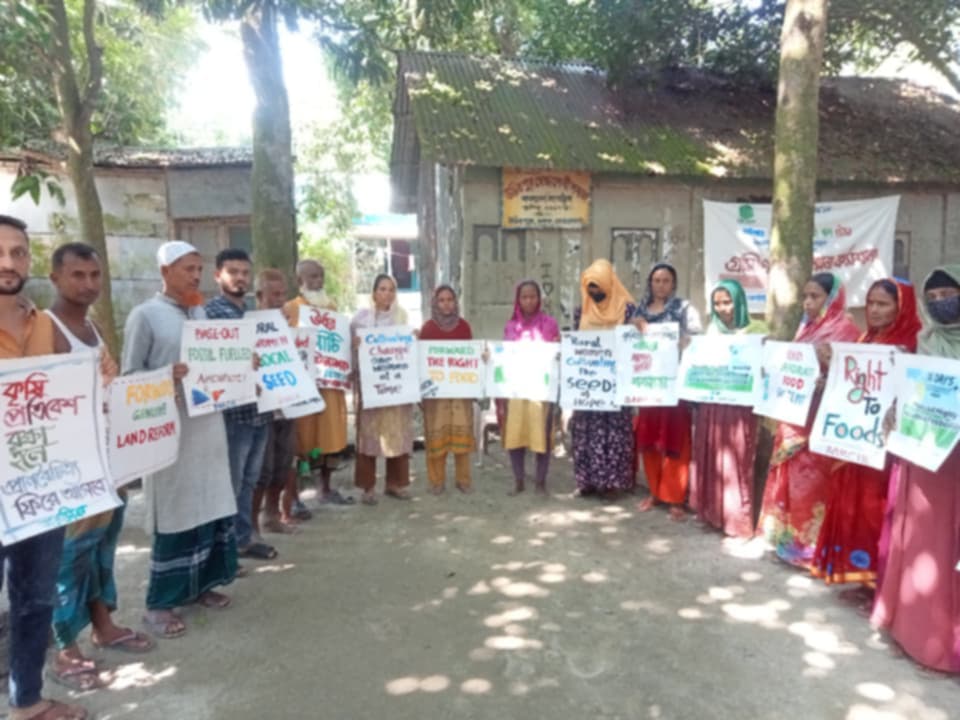
Participants identified key challenges facing haor communities, including early floods, flash floods, cold waves, high input costs, low crop prices, seed scarcity, irrigation water shortages, and excessive rainfall. Due to climate change, these challenges are becoming increasingly severe, with limited homestead land posing additional constraints.
Many men and women in the haor area grow vegetables year-round around their homesteads and rear ducks, chickens, cattle, and goats, using every bit of space efficiently. They adopt various traditional methods to sustain agriculture and livelihoods.
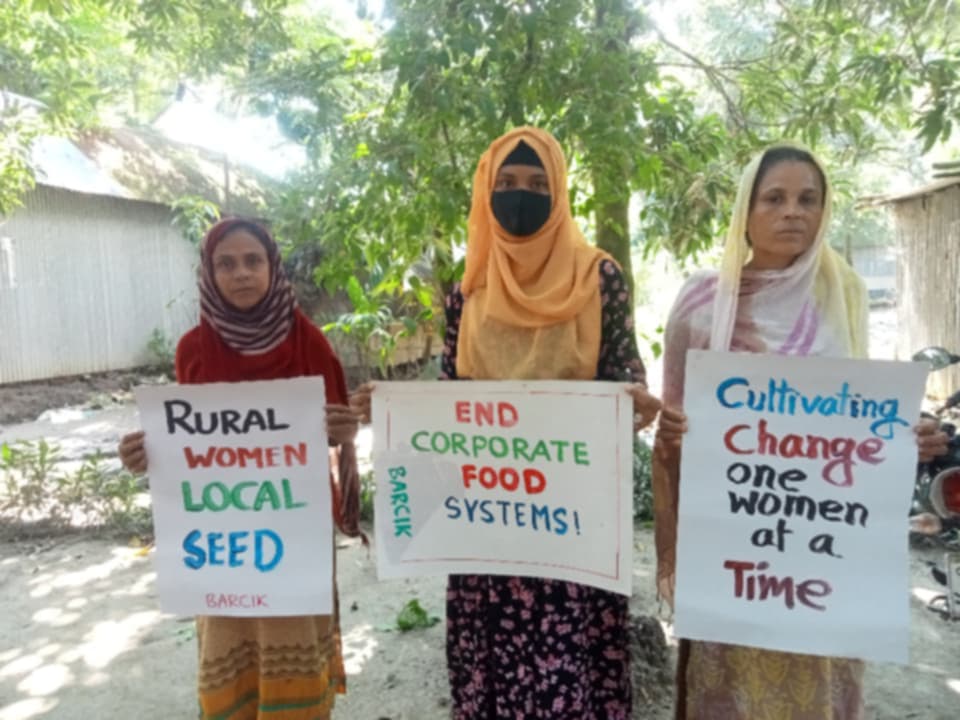
Farmer Siddiqur Rahman said in this regard, “Sometimes we irrigate fields manually using buckets from small ponds. We store water during the dry season and use it later for irrigation. Instead of chemical fertilizers, we use cow dung and vermicompost in small amounts.”
The session was facilitated by Md. Ohidur Rahman, Regional Coordinator of BARCIK, along with Abdur Rob, Field Facilitator.