
By Parboti Rani Singha, from Netrakona
The Mongolsiddha Kandapara Agroecology Learning Center has emerged as an inspiring example of ecological farming, demonstrating how farmers can produce safe food while protecting nature. The center promotes crop diversity, local seed conservation, efficient water use, organic fertilizer production, low-cost trellis systems, and the optimal use of homestead land and ponds.
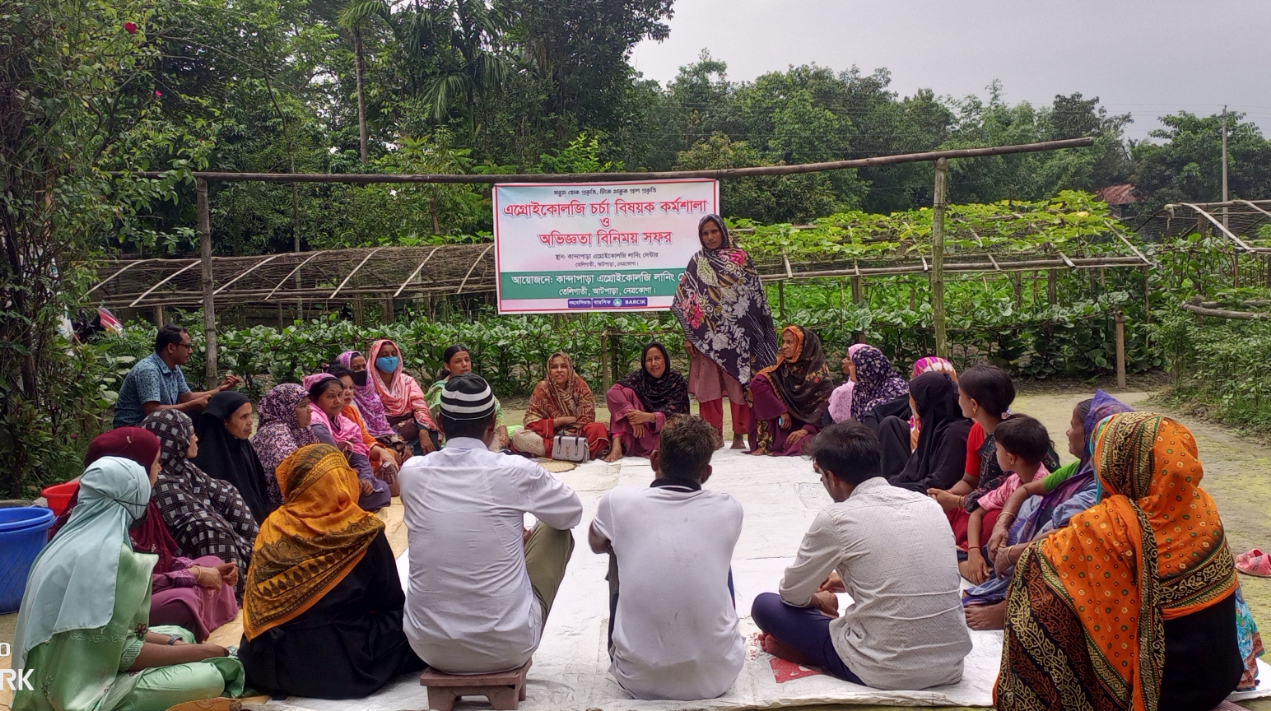
Twenty-six farmers from 13 villages, along with caretakers of local Shatobari initiatives, participated in a learning exchange visit to the center. Host farmer Kabita Akter shared her experiences of transforming her homestead into a productive vegetable garden through local knowledge and sustainable practices. Participants also exchanged their own experiences and innovations.
Farmer Morzina Begum from Bishwanathpur appreciated the aesthetically designed trellises, vegetable cultivation around homesteads, and the use of living fences. Experienced farmer Chinu Rani from Rameshwarpur highlighted the intensive use of pond embankments and homestead spaces for vegetable production, noting the effective use of organic manure, pheromone traps, chili powder, naphthalene, and ash for pest management.
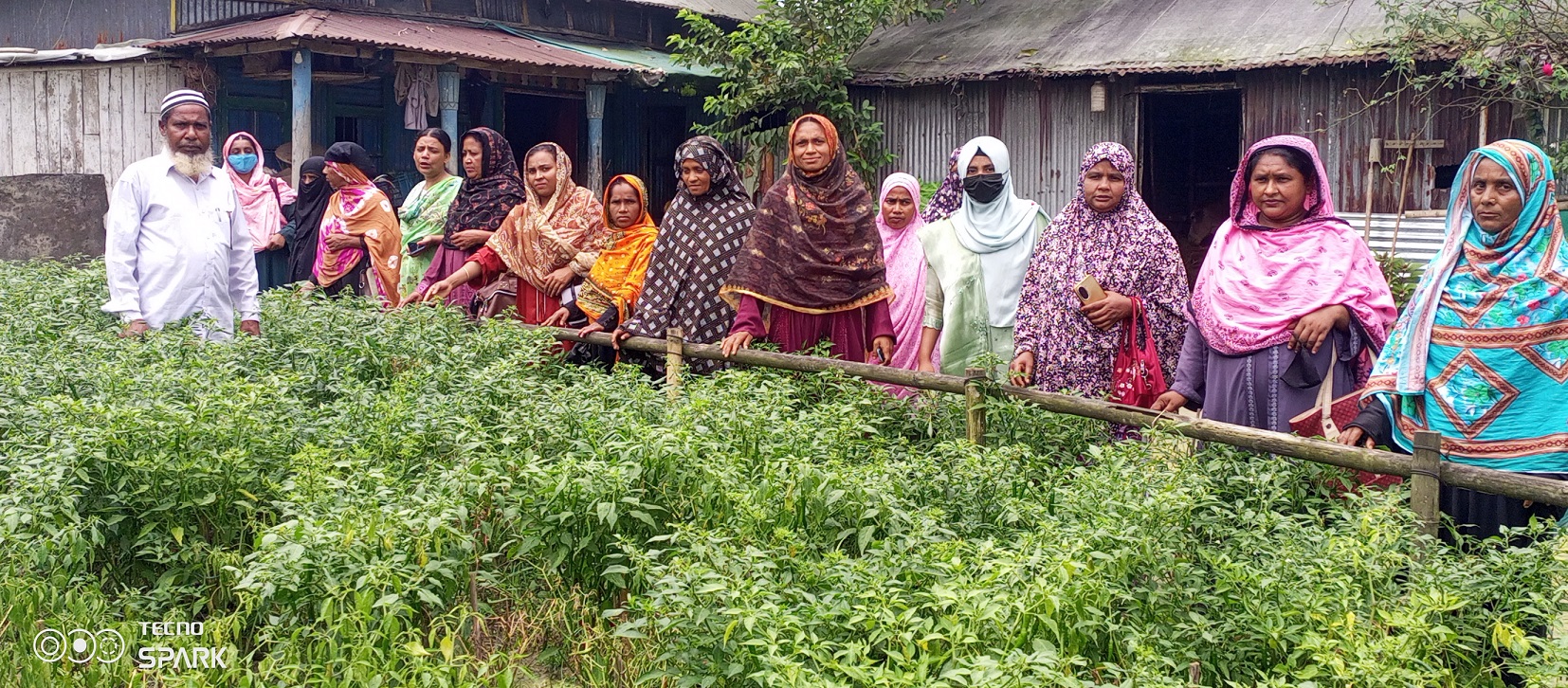
Farmer Sayed Ahmed Khan Baccu emphasized the importance of year-round vegetable cultivation and maximizing the productive use of available land. Participants agreed that establishing agroecology learning centers in every village could strengthen farmers’ rights, food security, nutrition, and sustainable agricultural development.