
By Barsha Gain from Shyamnagar, Satkhira,
A training workshop on local crop diversity and seed conservation was held recently at the Dhumghat Agroecology Learning Center in Ishwaripur Union of Shyamnagar, Satkhira, to strengthen community resilience to the climate crisis. The event was organized by the Shapla Women Development Organization.
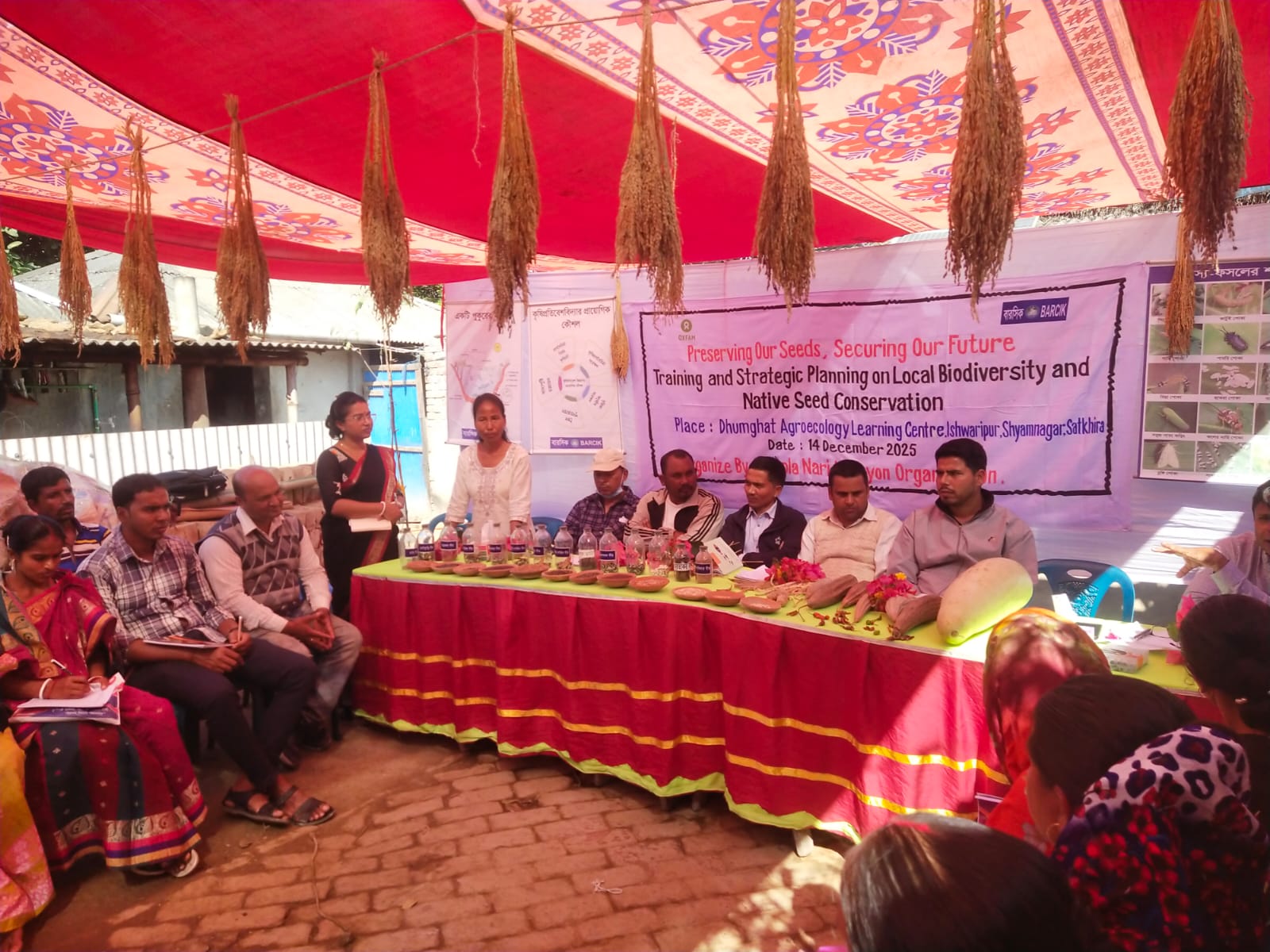
The workshop was presided over by organization president Alpana Rani Mistry and facilitated by BARCIK Coordinator Jahangir Alam, with Barsha Gain moderating. Participants included representatives from Nepal’s permaculture movement, BARCIK officials, and members of agroecology teams and women’s organizations from several unions of Shyamnagar.
An exhibition showcasing nearly 400 varieties of native seeds was a key attraction, including 164 rice varieties along with beans, chilies, leafy vegetables, gourds, eggplant, and uncultivated species. Participants also received practical training on seed collection and conservation.
Nepalese permaculture representative Dilmaya Gurung shared her experience of working with marginalized women on climate adaptation in Nepal’s hill regions and highlighted the loss of seasonal balance and local seed diversity due to climate change and harmful pesticides.
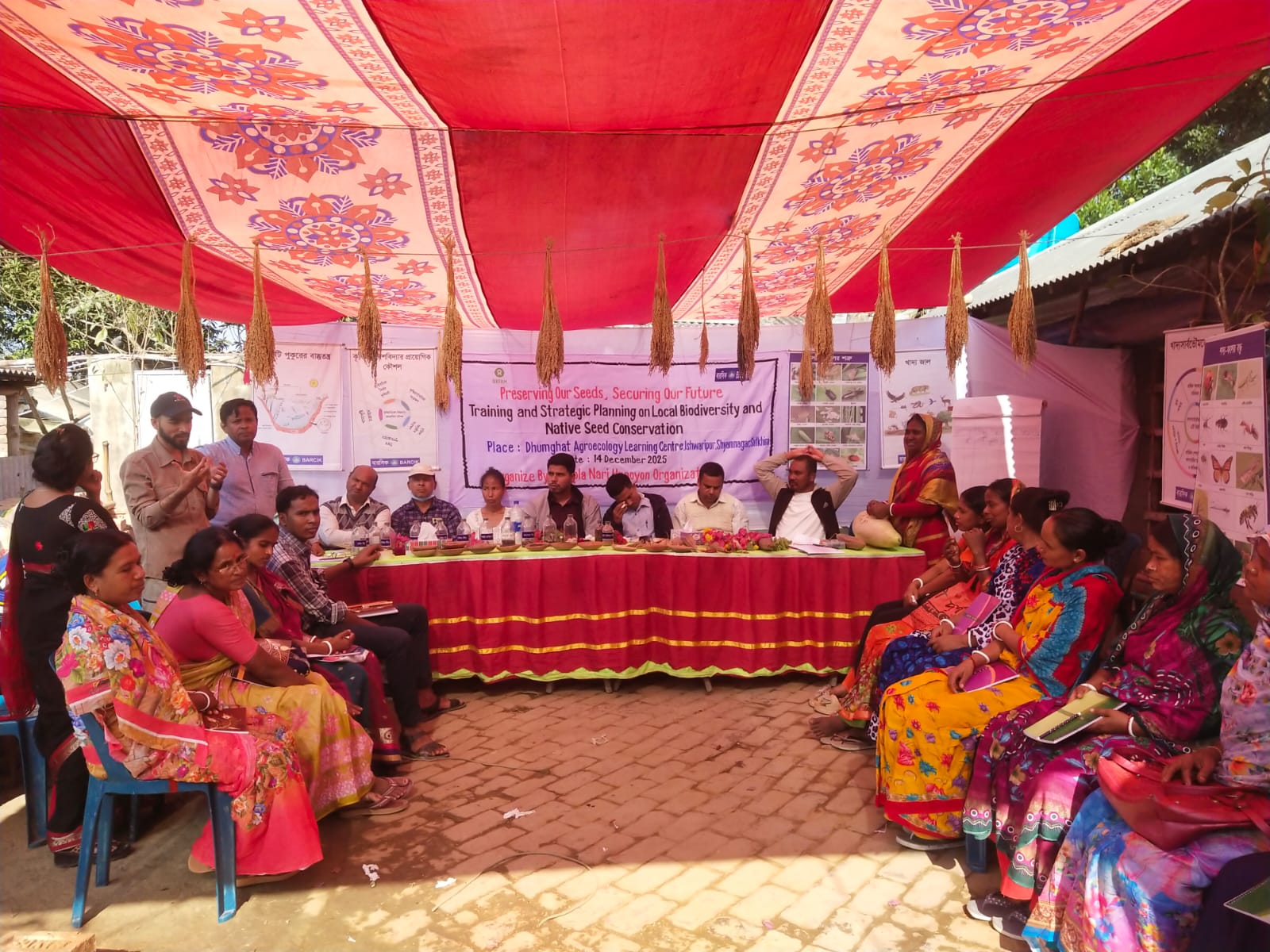
Mita Rani, President of the Surjomukhi Women Development Organization, said, “The learning center has helped women adopt chemical-free food production, seed conservation, and other sustainable practices by making the best use of their homesteads.”
Participants said the training has equipped them to conserve seeds at home, reducing dependence on markets. The workshop concluded with an interactive learning exchange between Nepali delegates and local community members.