
By Subir Kumar Sarker, from Ghior, Manikganj
Anandabazar, a marketplace once vibrant with life and joy, now stands as a fading memory of its glorious past. Named by the zamindars of the region, the market used to embody festivity and excitement, drawing crowds from far and wide. People would gather with enthusiasm, filling the the marketplace with energy and joyfulness. Today, however, the happiness that once defined Anandabazar has disappeared, leaving behind only silence and memories.
Situated in the historic Baniajuri area of Ghior sub-district in Manikganj district, Anandabazar was established by local zamindars and quickly grew into a thriving commercial hub. There was a time when large quantities of milk were traded here, and the market was filled with the sweet aroma of freshly made date palm jaggery. Fishes and vegetables occupied a significant portion of the marketplace, creating a lively and colorful scene. But all this pride and tradition had been placed in history only.
According to elderly residents, Anandabazar was once widely recognized across the Indian subcontinent. Its name was given in the Bengali year 1280 after Anand Mohan, the son of a zamindar. In those days, grand Rath Yatra festivals were held here, accompanied by a fifteen-day fair that featured theatre performances, circus shows, puppet dances, and bioscope exhibitions. These events were not only sources of entertainment but also carried deep cultural significance, especially for the Hindu community.
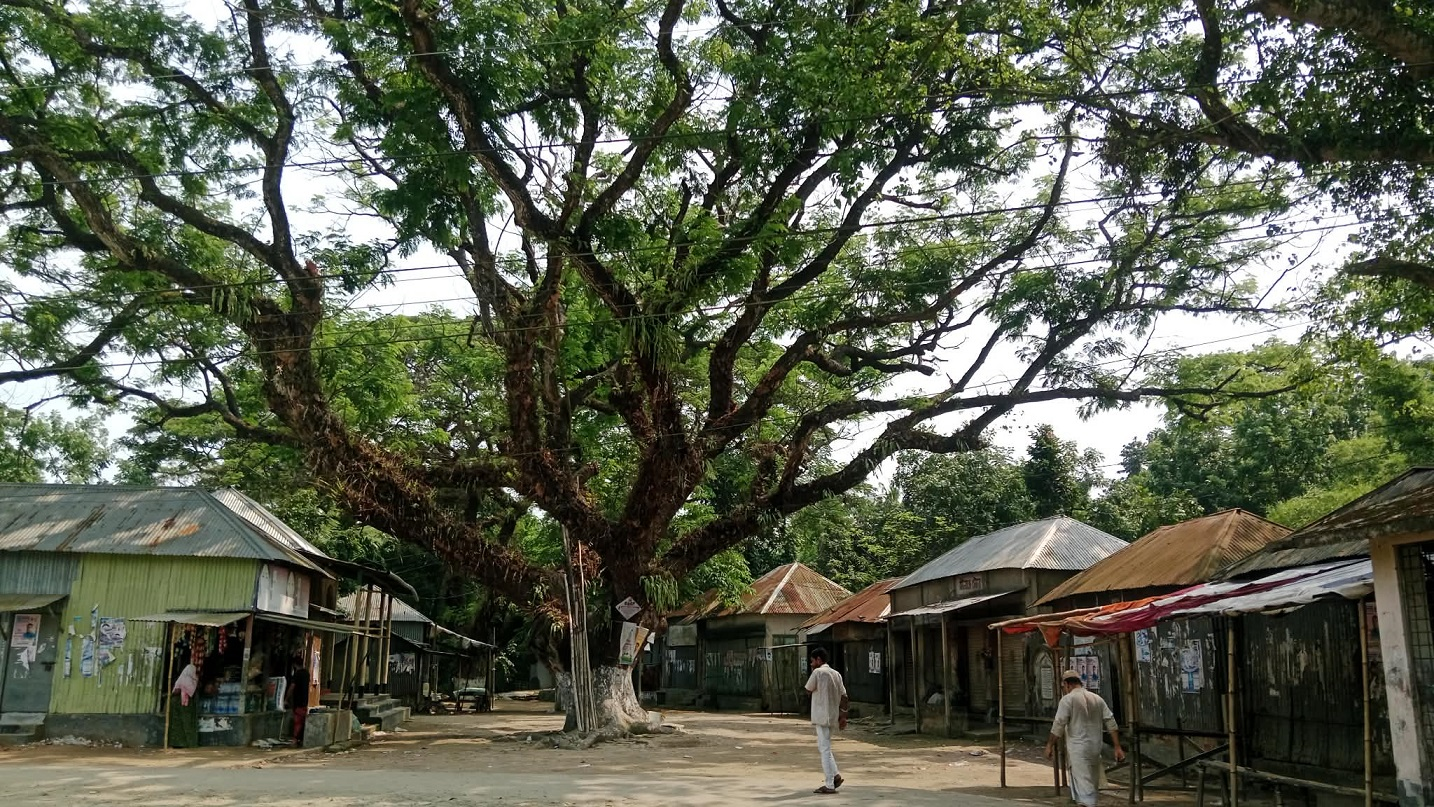
Despite the disappearance of its former glory, traces of the past still remain. Two century old koroi trees continue to stand on either side of the market, offering shade and silently bearing witness to its history. Local elder Kshitish Chandra Mondal recalls hearing from his father that these trees were planted by Fatik Bihari Mondal and Shyama Pada Bhowmik, who had brought the saplings from the roadside while returning home from playing football. Another resident, Basanti Chakraborty, remembers seeing the trees in their full size since her early married life.
Today, these trees provide shelter to a market that has almost ceased to function. But there is no market here today. Milk sellers no longer travel from distant areas, and fishermen carrying baskets of fresh fishes are rarely seen. A few small traders, such as Komal Ghosh and Swapan Ghosh, continue to sit idly with their vegetables, often waiting in vain for customers.
Swapan Ghosh describes the situation bluntly, saying that Anandabazar is now effectively dead. Apart from a handful of traders, there is hardly any presence of traders. Similarly, fisherman Anand Rajbanshi reflects on the past, recalling how the market once overflowed with local fishes. Now, only a few fishermen remain, struggling to sell farmed fish with little success.
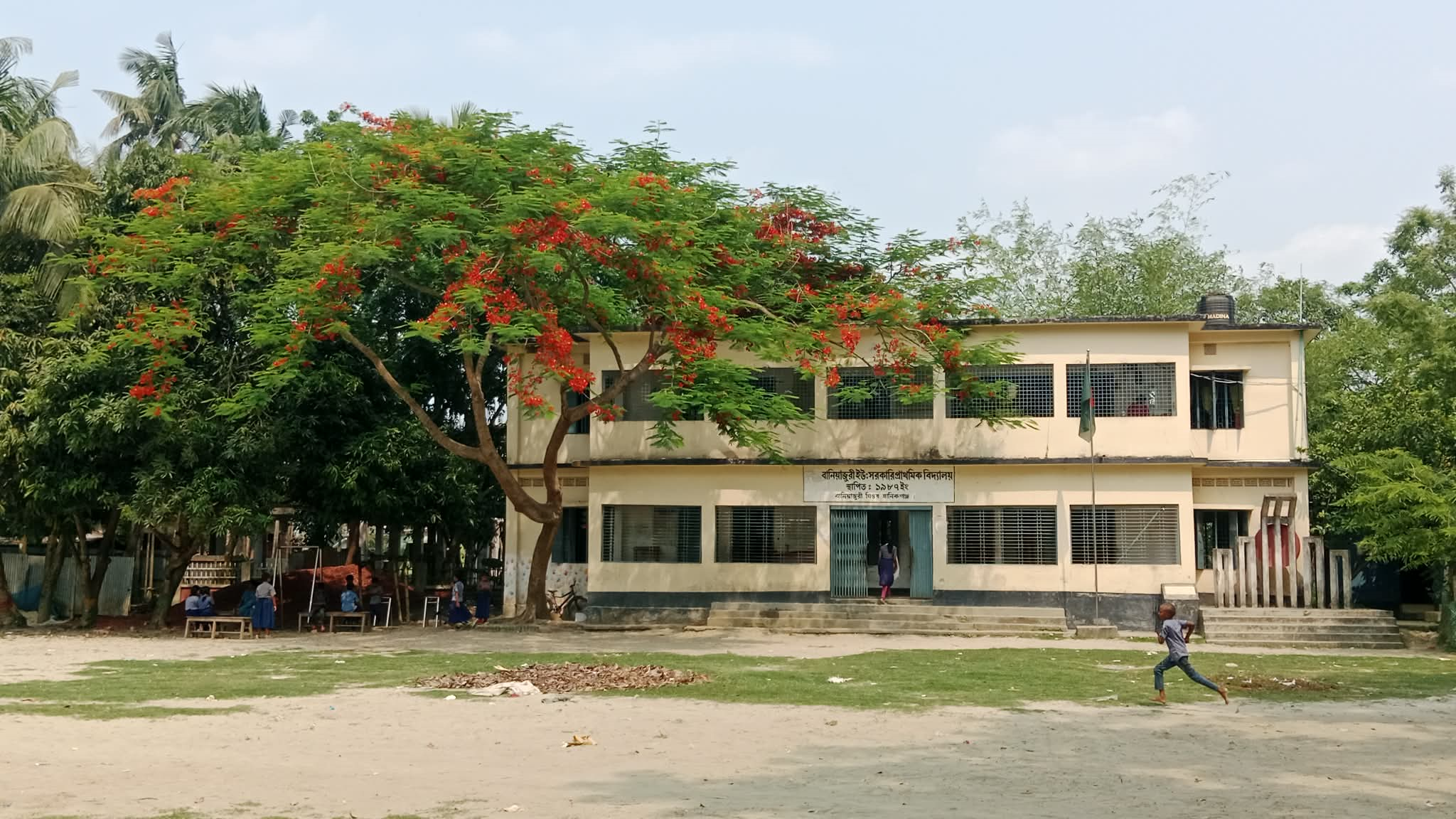
Businessman Tapan Das observes that Anandabazar has lost its tradition and vibrancy. What was once a place of festival and laughter has turned into a space marked by silence and passiveness. Yet, amid this decline, there remains a faint symbol of hope. Local environmental activist Syed Al-Azad mentions that Krishnachura trees planted near the Baniajuri Union Parishad and the local primary school are now blooming, spreading shade and beauty, as if reminding humans that renewal is still possible.