
By Barsha Gain from the coast
Climate change has become a harsh reality for Bangladesh’s southwestern coastal communities. In South Barakupat village of Atulia Union in Shyamnagar, Satkhira, life is shaped by the Kholpetua River on one side and saline shrimp ponds on the other. Since Cyclone Aila in 2009, erosion, salinity, and repeated disasters have displaced many families. Around 300 households remain, struggling daily to survive.
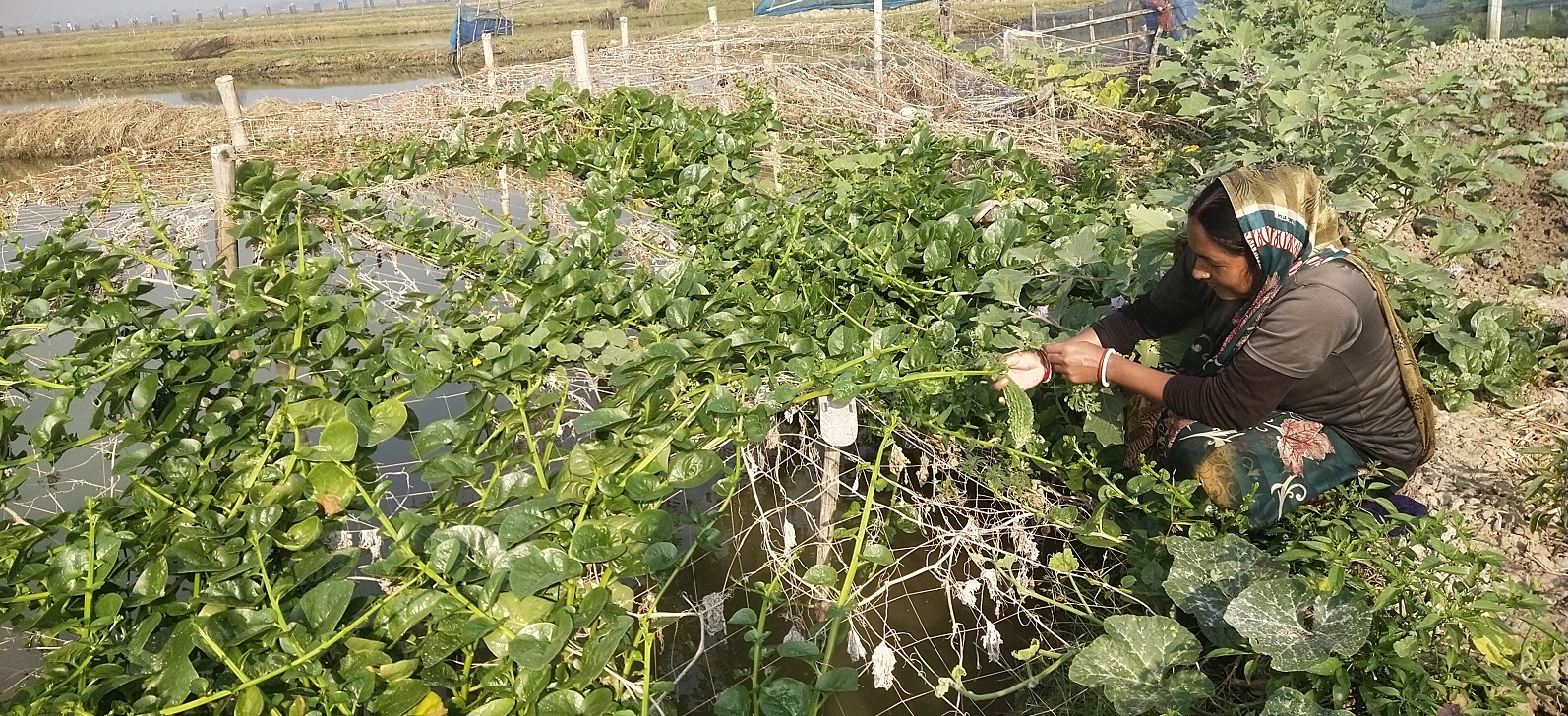
Among them is 34-year-old Parul Rani, an active and determined woman working to conserve biodiversity and strengthen women’s resilience. In 2024, she joined BARCIK and learned organic farming, indigenous seed conservation, and saline-tolerant cultivation practices. Her homestead has since become a biodiversity-rich space, producing vegetables year-round without chemical inputs.
This year, Parul earned about 5,000 taka from selling surplus vegetables and conserved seeds of 14 varieties. She also helped to form the ‘Kholpetua Paira Women’s Development Organization’ to promote women’s collective empowerment.
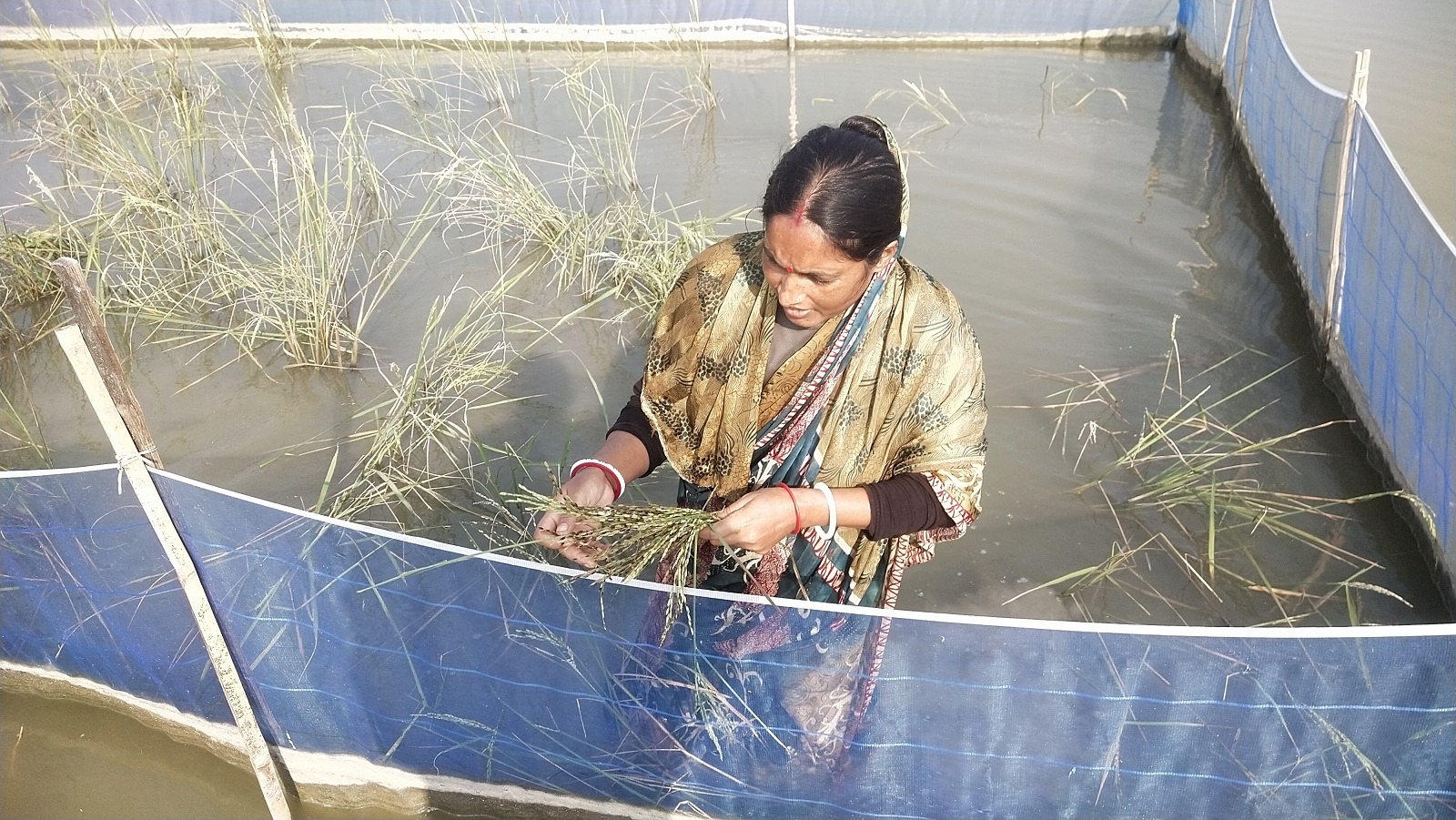
In 2025, Parul experimented with growing saline-tolerant native rice varieties inside shrimp ponds alongside fish farming. Though tidal saline water damaged much of the crop at maturity, she identified varieties like Talmugur and Nonakachi as highly saline-tolerant.
Parul believes that integrating indigenous crops with shrimp farming and collective action can help coastal farmers adapt to salinity. Survival in the coastal belt, she says, depends on shared, nature-based adaptation strategies that protect livelihoods, food security, and natural resources.