
By Anabila Ona and Tajim Rahman Rakib from Netrakona
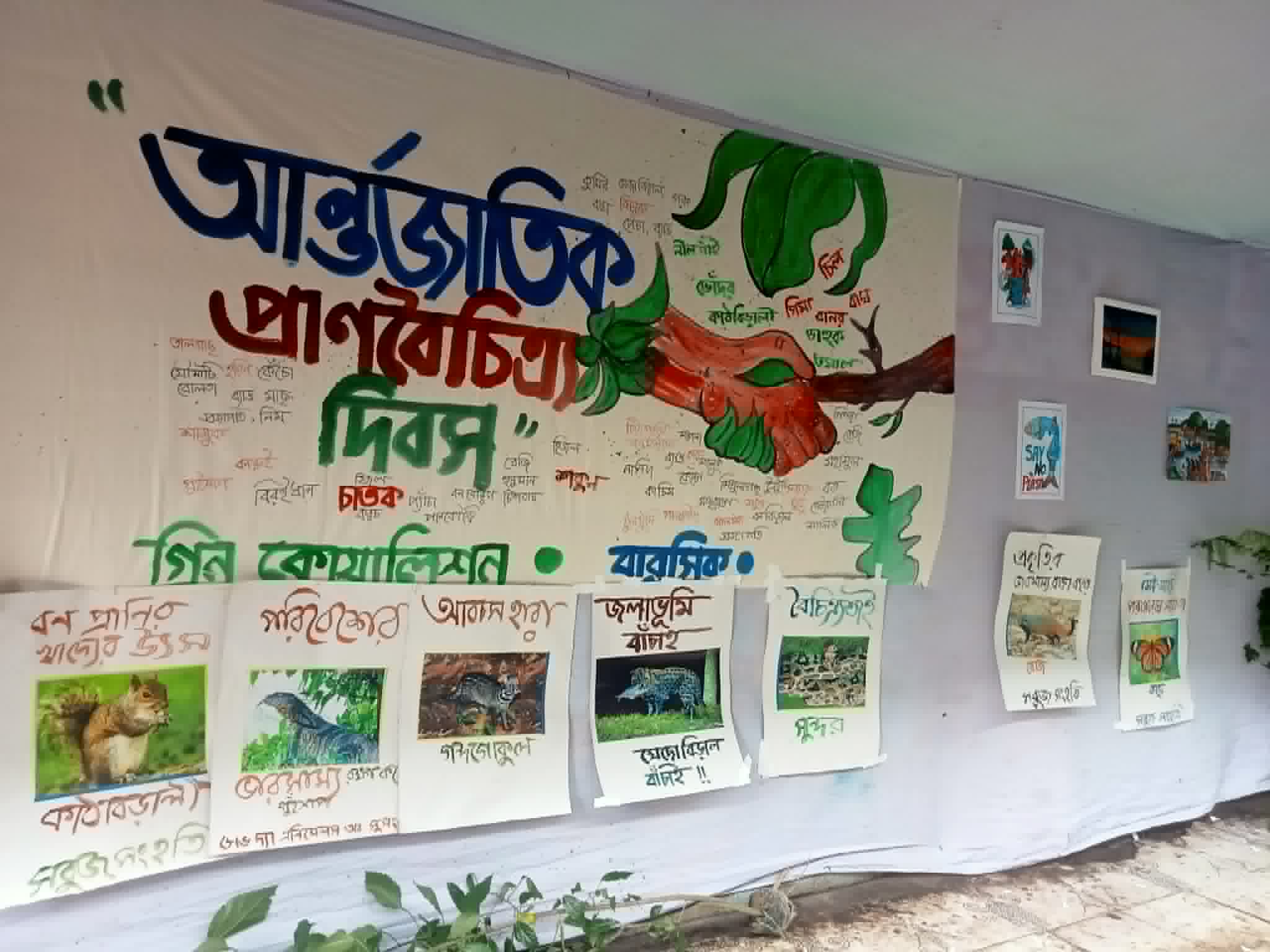
On the occasion of the International Day for Biological Diversity 2026, the Green Coalition Netrakona District Committee, with support from BARCIK, organized a drawing competition and exhibition of endangered biodiversity at the Netrakona Municipal Art Gallery premises. The theme of this year’s observance was: “Take Local Action for Global Impact.”
The exhibition was inaugurated by Abdullah Al Matin, Assistant Director of the Department of Environment in Netrakona. Others guests included writer and researcher Ali Ahmed Khan Ayub, Assistant Professor Nazmul Kabir Sarkar, students of Netrakona University, journalists Alpona Begum and Mirza Hridoy Sagar, BARCIK Regional Coordinator Md. Ohidur Rahman, along with environmental activists, youth, and students from the town.
Twenty child artists from Netrakona municipality participated in the drawing competition. Through their paintings, the children depicted the environment, nature, wildlife habitats, forests, rivers, and hills and place that were once safe homes for living creatures.
However, today, due to habitat destruction, many animals are endangered or becoming extinct. The excessive use of toxic pesticides is threatening bees, butterflies, aquatic animals, and plant life, while also polluting soil and water.
Assistant Director Abdullah Al Matin said, “Netrakona district is known for its rich biodiversity. The extensive presence of rivers, haors, ponds, canals, wetlands, forests, hills, and water bodies reflects a vibrant ecosystem. But due to human activities, excessive consumerism, and the overuse of toxic chemicals in agriculture, beneficial species around us are disappearing, and ultimately we ourselves are facing crisis.”
Researcher Ali Ahmed Khan Ayub said, “Rivers are disappearing, ponds are being filled for construction, wetlands are vanishing, and agricultural lands are being converted into houses, markets, brickfields, rice mills, fish farms, and cattle fattening farms. Forests are being cleared. We must move away from this destructive model of development.”
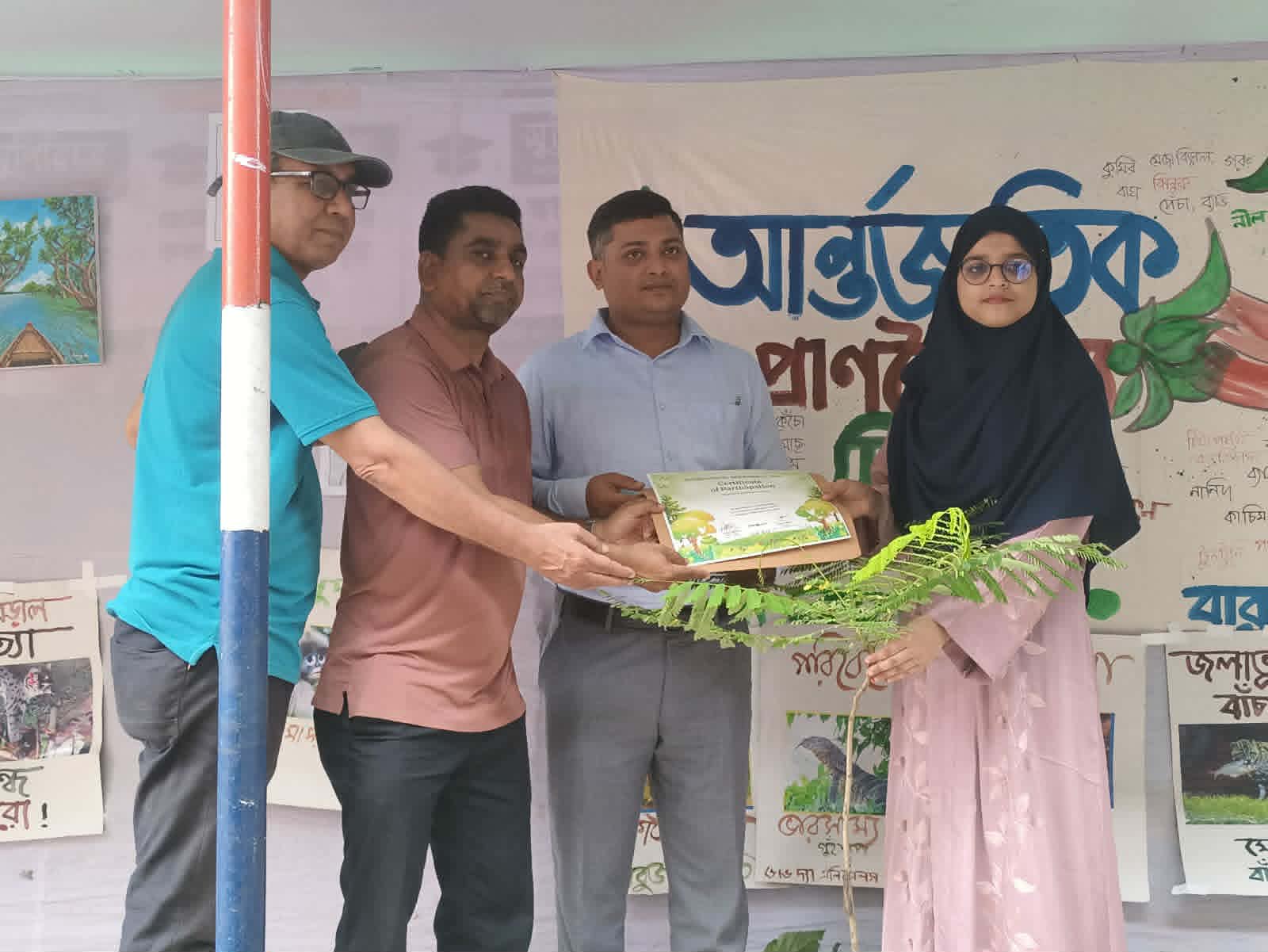
At the end of the competition, participants were awarded indigenous crop plants, medicinal and ornamental plants, and certificates. The exhibition was conducted by Anabila Ona and Tajim Rahman Rakib.