
By Md. Shahidul Islam from Rajshahi
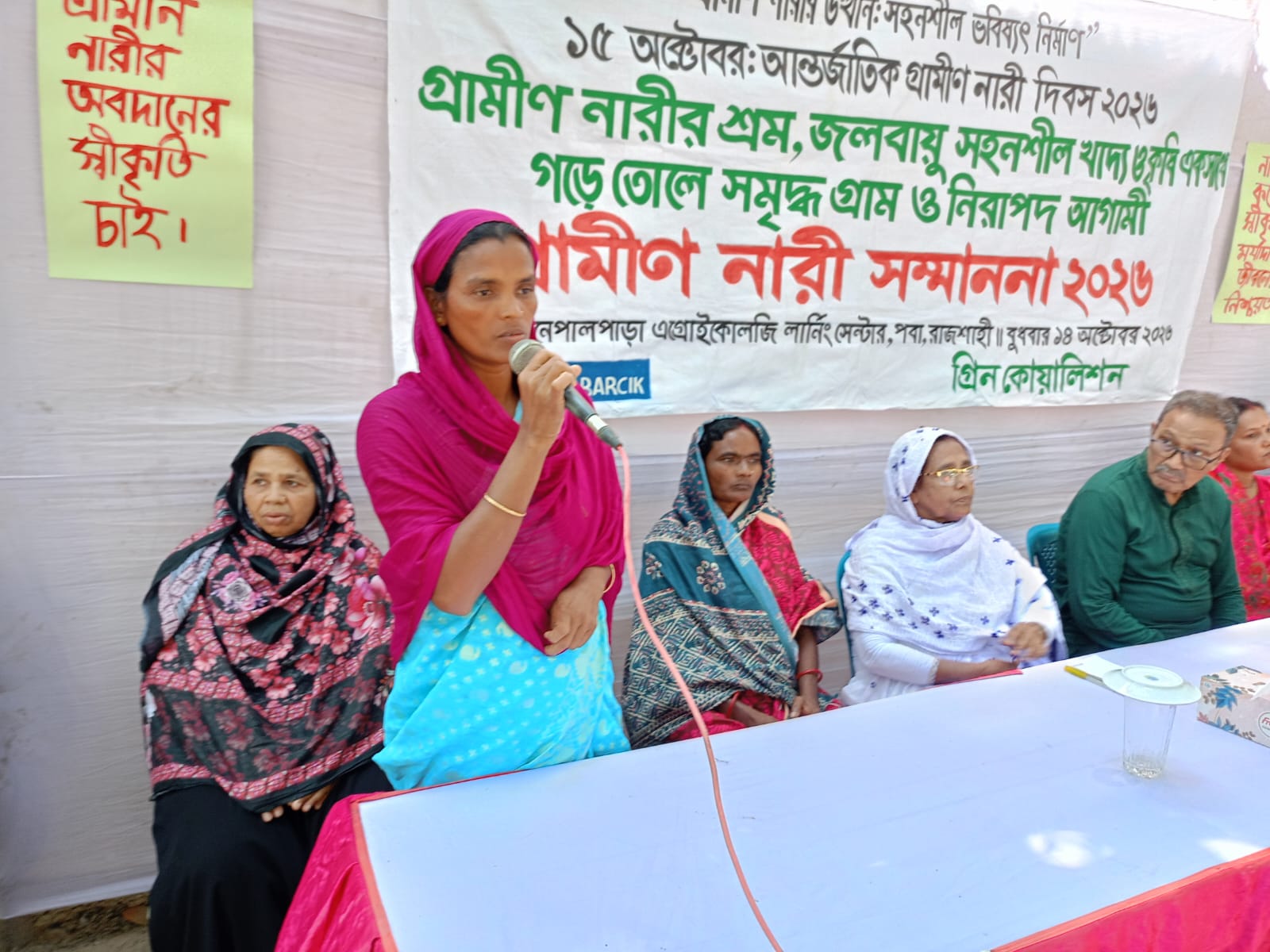
Twenty-two rural women from Bangladesh’s drought-prone Barind region have been honoured for their contributions to conserving native seeds, protecting agricultural biodiversity, promoting organic farming and developing environment friendly technologies. The Rural Women’s Recognition 2026 ceremony was organized jointly by BARCIK and the Green Coalition on 14 October at the Bilnepalpara Agroecology Learning Centre in Paba upazila, Rajshahi, marking International Day of Rural Women. The event’s theme was “Empowering Rural Women; Building a Resilient Future.” The award recipients from Paba and Tanore in Rajshahi and Nachole in Chapainawabganj have been promoting diverse vegetable cultivation, seed conservation and exchange, vermicompost production, cottage industries and women’s organisations. Their initiatives demonstrate how local knowledge and collective action can strengthen rural livelihoods and environmental resilience.
Women conserve native seeds and agricultural diversity
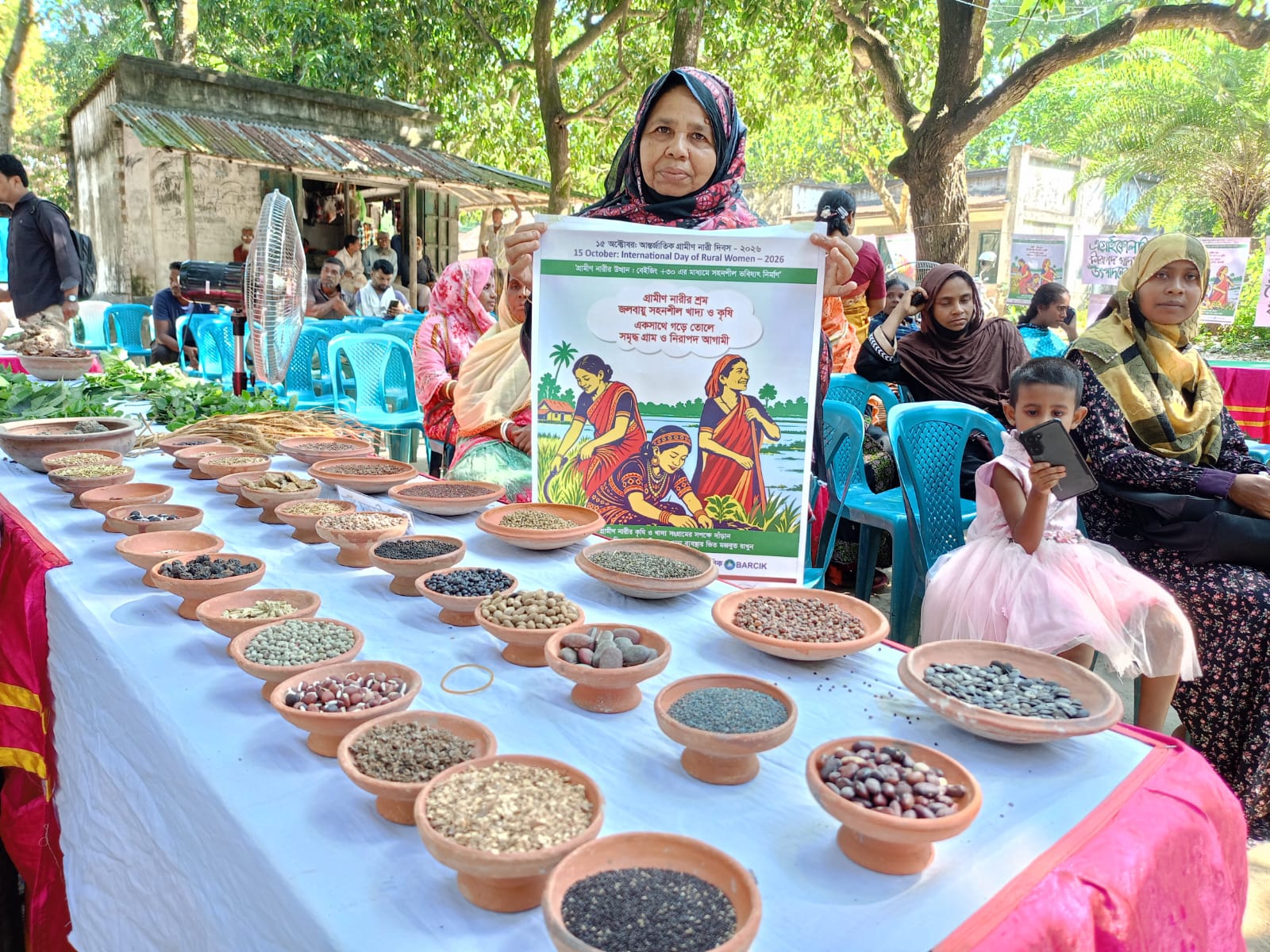
Native seeds preserve more than crop varieties; they also carry generations of farming knowledge, food traditions and adaptation to local conditions. Women across the Barind region are helping safeguard this heritage by collecting, storing and exchanging seeds with other farmers. Shahana Begum of Nachole conserves native seeds, including rare varieties, and promotes botanical pesticides. Sharing seeds with local farmers, she helps expand access to locally adapted crops. Morjina Tudu has collected 47 seed varieties and facilitated exchanges among 175 women across 10 villages. Shilpi Begum has promoted the exchange of 25 seed varieties, while Setara Begum has shared 21 vegetable seed varieties among 145 women. These efforts preserve agricultural diversity while strengthening cooperation among rural women. Ayesha Begum has also contributed to conserving 14 varieties of native bananas, helping protect local fruit diversity and the knowledge associated with traditional cultivation.
Agroecology strengthens food security and livelihoods
Women’s contributions extend beyond seed conservation. Pani Mardi of Thanthala, Tanore, cultivates diverse vegetables in her homestead while encouraging Indigenous women to participate in agriculture and organizing women’s groups. Her work demonstrates how individual farming initiatives can inspire collective action and strengthen women’s leadership. Bilkis Begum has developed an income-generating initiative through vermicompost production and received the divisional-level Joyeeta recognition for her achievements. Her experience highlights the potential of environment friendly agricultural inputs to support both sustainable farming and women’s economic independence. Minara Begum has encouraged 120 women across six villages to adopt improved, environmentally friendly cooking ovens. Her initiative has helped to spread knowledge of appropriate technologies through community-level cooperation. Together, these initiatives show how rural women contribute to household food and nutrition security, soil health, resource conservation and alternative livelihood opportunities.
Recognition must lead to greater opportunities
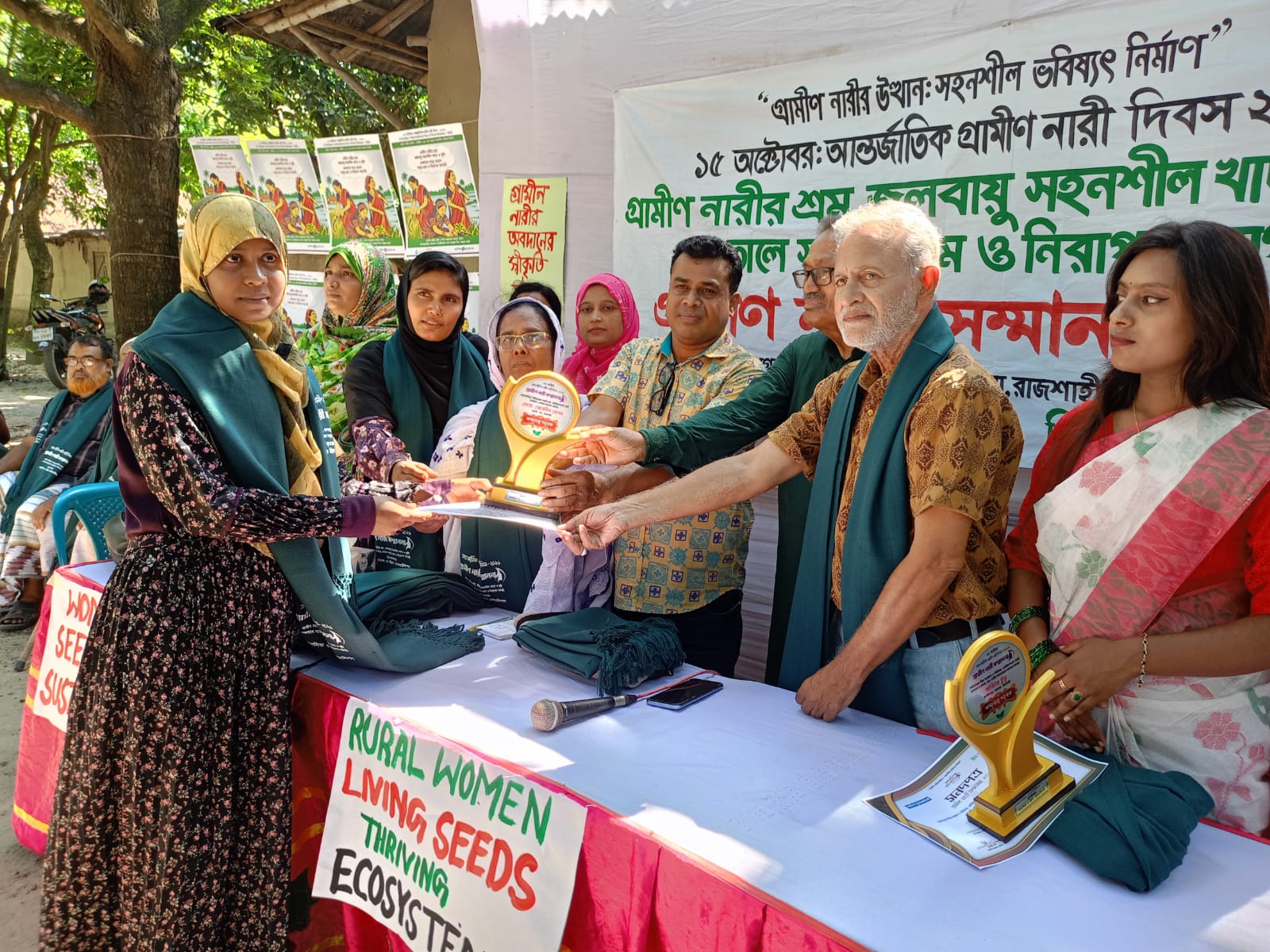
At the ceremony, Mahbub Siddiqui, president of the Green Coalition’s Rajshahi district committee, stressed the importance of recognizing people who contribute to social development. BARCIK Regional Coordinator Md. Shahidul Islam said that rural women were not only becoming economically self-reliant but were also helping other women achieve the same goal. The event also featured exhibitions of uncultivated plant diversity, locally developed agricultural technologies, environment friendly cooking ovens, organic farming inputs, textiles and food products, showcasing women’s creativity and knowledge of local resources. The 22 award recipients were Pani Mardi, Shahana Begum, Marjina Tudu, Jasmin Begum, Rubina Khatun, Bilquis Begum, Tahmina Begum, Selina Begum, Sagari Rani, Maino Baskey, Tithi Soren, Anjali Roy, Cecilia Hasda, Shilpi Begum, Ayesha Begum, Minara Begum, Panna Begum, Mahmuda Begum, Marjina Begum, Setara Begum, Sumi Begum and Pari Tudu. Their achievements highlight the essential role rural women play in sustaining agricultural biodiversity, preserving traditional knowledge and building climate resilience in the Barind region.
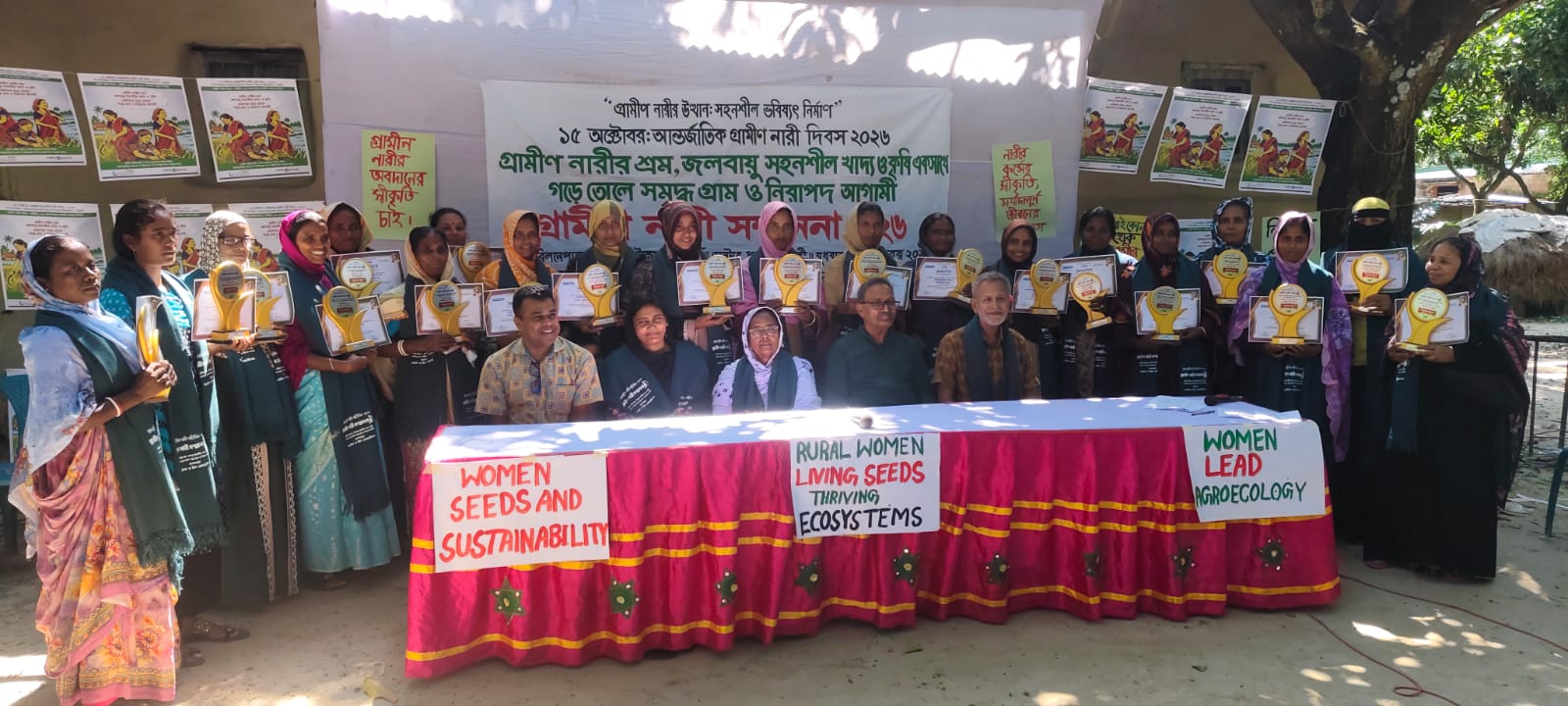
However, recognition alone is not enough. Women need better access to resources, training, markets and decision-making opportunities so that their knowledge and initiatives can continue to grow. Their experiences should also inform agricultural and environmental policies. Supporting rural women’s leadership and agroecological practices, communities can protect native seeds, strengthen food security and build more resilient livelihoods. The recognition of these 22 women is therefore, a tribute to their achievements and a reminder that rural women’s knowledge, leadership and collective action are essential to a sustainable future.