
By Tanmoy Kumar Sanyal and Md. Atikur Rahman from Rajshahi
Encroachment, pollution, landfilling and obstructions to water flow are threatening rivers across Rajshahi, reducing navigability and disrupting natural water flows. These problems are putting agriculture, fisheries, biodiversity and the livelihoods of river-dependent communities at risk. The recent mass death of native fish in the Barnai River has further heightened concerns over water pollution.
These issues were highlighted in a presentation titled “Overall Condition of Rivers in Rajshahi District” at a discussion marking World Rivers Day 2026, held on 15 October at the NGO Forum auditorium in Rajshahi city.
The event was jointly organized by the Association for Land Reform and Development (ALRD), Bangladesh Environmental Lawyers Association (BELA), RULFAO, Bosti Unnayan O Karmasangsthan, BARCIK, Barind Youth Forum, MASAUS, Thikana and Samajik Kalyan Sangstha. Tanmoy Kumar Sanyal, BELA’s coordinator for Rajshahi and Rangpur divisions, presented the findings.
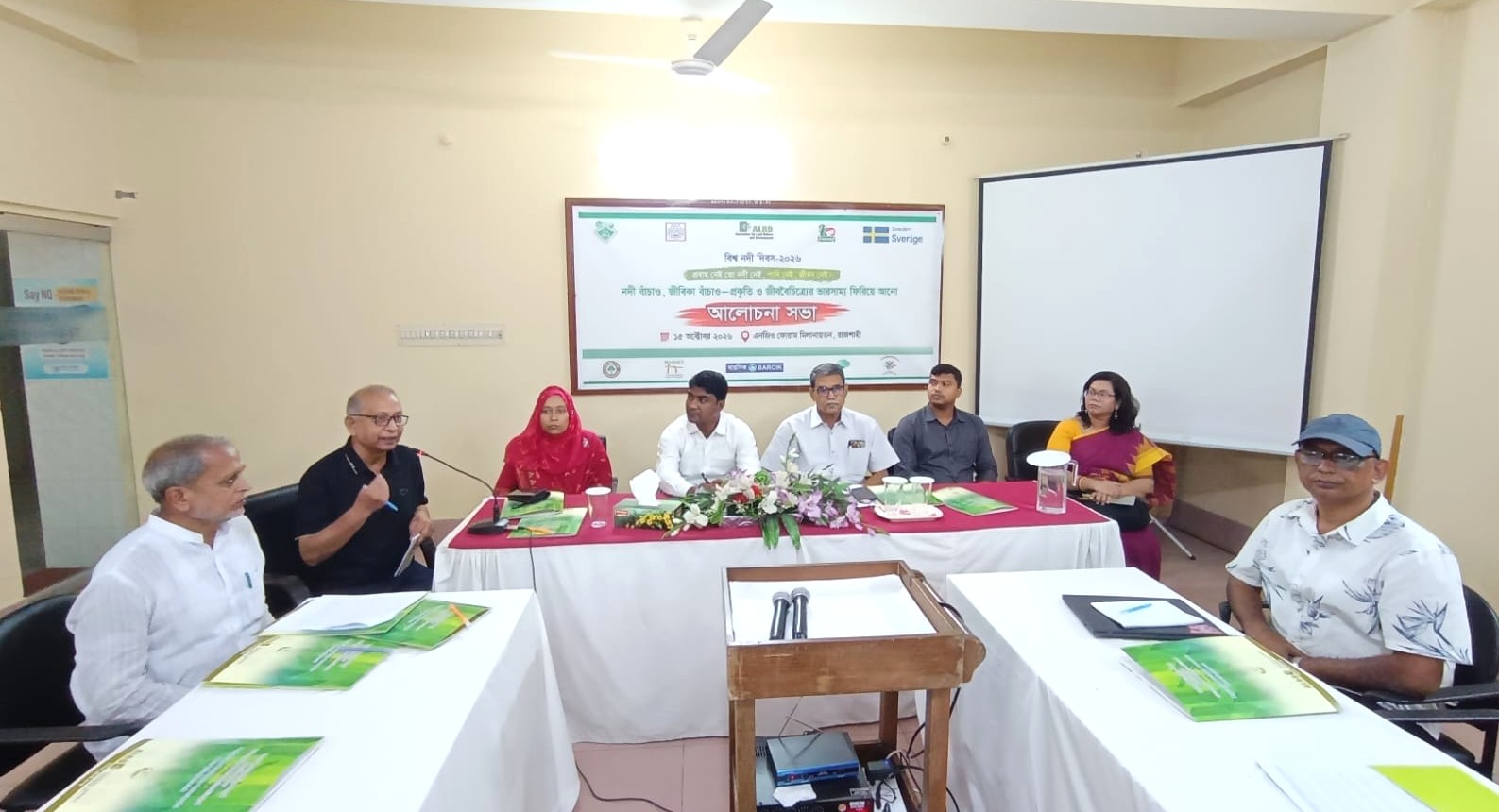
The meeting was chaired by Afzal Hossain, executive director of RULFAO. Speakers included Paba Upazila Nirbahi Officer Md. Ibnul Abedin; Assistant Director of the Rajshahi District Fisheries Office Mosammat Ayesha Khatun; Assistant Engineer of the Bangladesh Water Development Board Rinku Pramanik; Akbarul Hasan Millat, editor of Daily Sonar Desh; and Sanjida Khan, programme manager at ALRD. Welcome remarks were delivered by Hasinur Rahman, executive director of Bosti Unnayan O Karmasangsthan, and Bijoy Shankar Barua of ALRD. Journalists, NGO representatives, youth organisers, farmers, fishers and other community members attended.
The presentation highlighted the challenges facing 13 rivers, including the Padma, Mahananda, Baral, Barnai, Shib, Fakhirni, Musakhan, Hoja, Narad, Swarmangala, Barahi, Daya and Sandhya.
Citing Bangladesh Water Development Board information, the presentation reported more than 1,000 illegal encroachers along the Padma River in Rajshahi metropolitan area. It also referred to records from 2022 identifying 1,771 encroachment sites and 57 encroachers along the Mahananda and Punarbhaba rivers.
In 2022, authorities identified 1,178 illegal structures along approximately 40 kilometres of the Baral River in Baraigram, Natore. Sluice gates, cross-dams, sedimentation and water hyacinth were also reported to be obstructing water flow and reducing navigability in parts of the river.
In September 2026, reports emerged of mass deaths of native fish in the Barnai River in Bagmara and Naldanga. According to information from the Rajshahi District Fisheries Office cited in the presentation, excessive ammonia and low levels of dissolved oxygen were identified as possible causes.
The Shib River supports approximately 1,785 fishing families across 10 villages. River filling, pollution and disrupted connections are threatening their livelihoods. The presentation also identified 36 structures obstructing the flow of the Narad River and 471 encroachers in Natore Sadar Upazila. Encroachment, landfilling and urban expansion were further reported to be narrowing the natural channels of the Barahi, Swarmangala and Daya rivers.
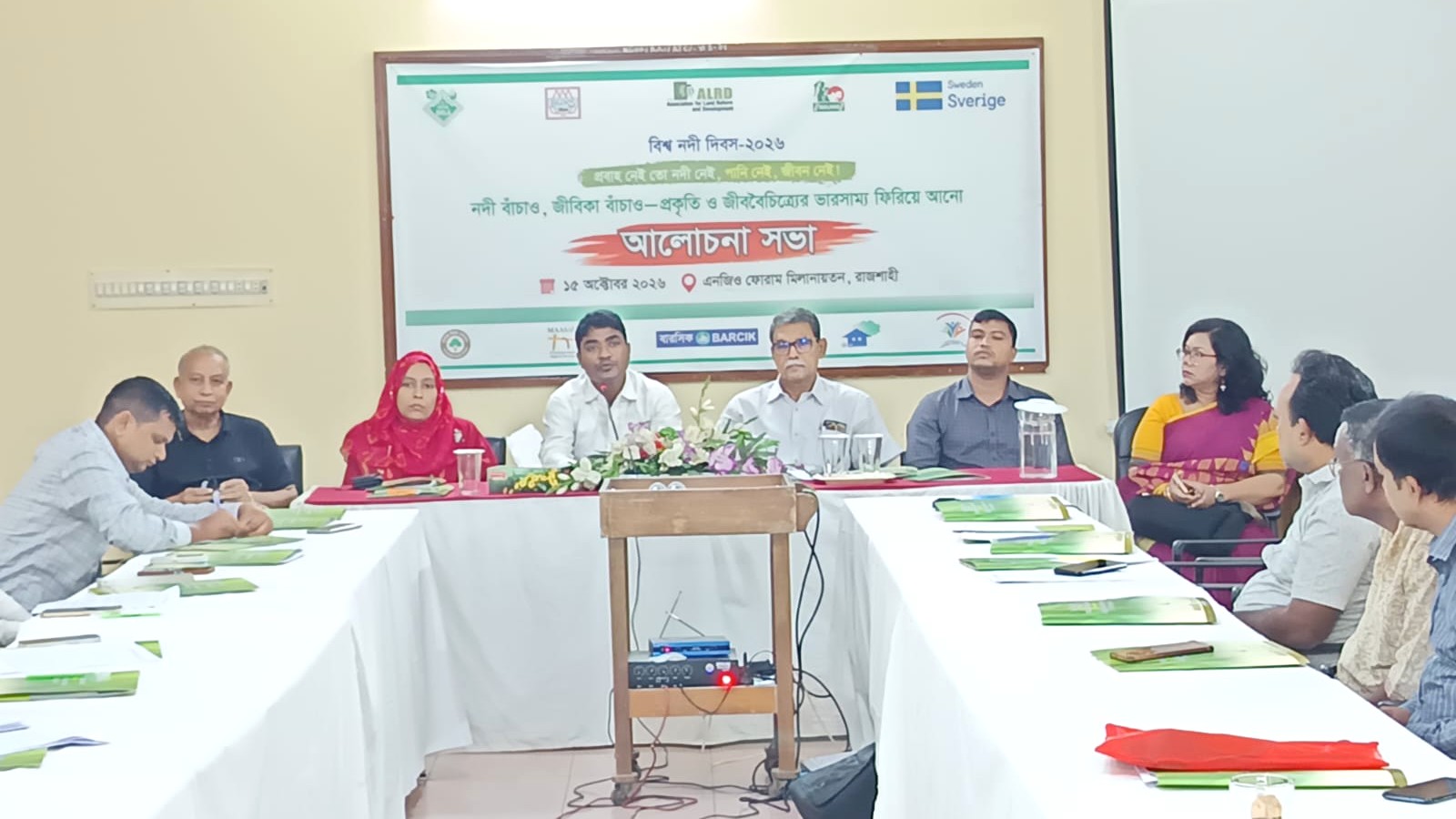
Participants recommended clarifying the number and names of rivers in Rajshahi district and division, demarcating river boundaries, removing illegal structures, stopping pollution at its sources, ensuring wastewater treatment, restoring connections among rivers, canals and wetlands, and undertaking necessary dredging based on scientific assessments.
They stressed that rivers must be recognized as living ecosystems rather than merely channels for drainage or sites for excavation. Controlling encroachment and pollution is essential to restoring natural water flow, protecting water quality and conserving biodiversity.
Participants called for coordinated action among relevant authorities, alongside community participation and sustained enforcement, to protect rivers for future generations. They also urged the authorities to take necessary steps to free the Barahi, Nabaganga and Swarmangala rivers flowing through Rajshahi city from encroachment and pollution and restore their natural flow.