
By Md. Touhidul Islam from Rajshahi
In a small village in Rajshahi, Jasmin Khatun is turning her homestead into a source of nutritious food, environmental care and economic opportunity. Through diverse vegetable cultivation, vermicompost production and homemade botanical pest repellents, she is gradually reducing her dependence on chemical agricultural inputs while supporting her family’s food security. Her journey reflects the important role rural women play in sustaining agriculture, conserving biodiversity and protecting the environment. For Jasmin, farming is more than a means of livelihood; it is a way to provide safe food for her children, improve her family’s well-being and inspire other women to adopt environmentally friendly farming practices.
From family responsibilities to farming
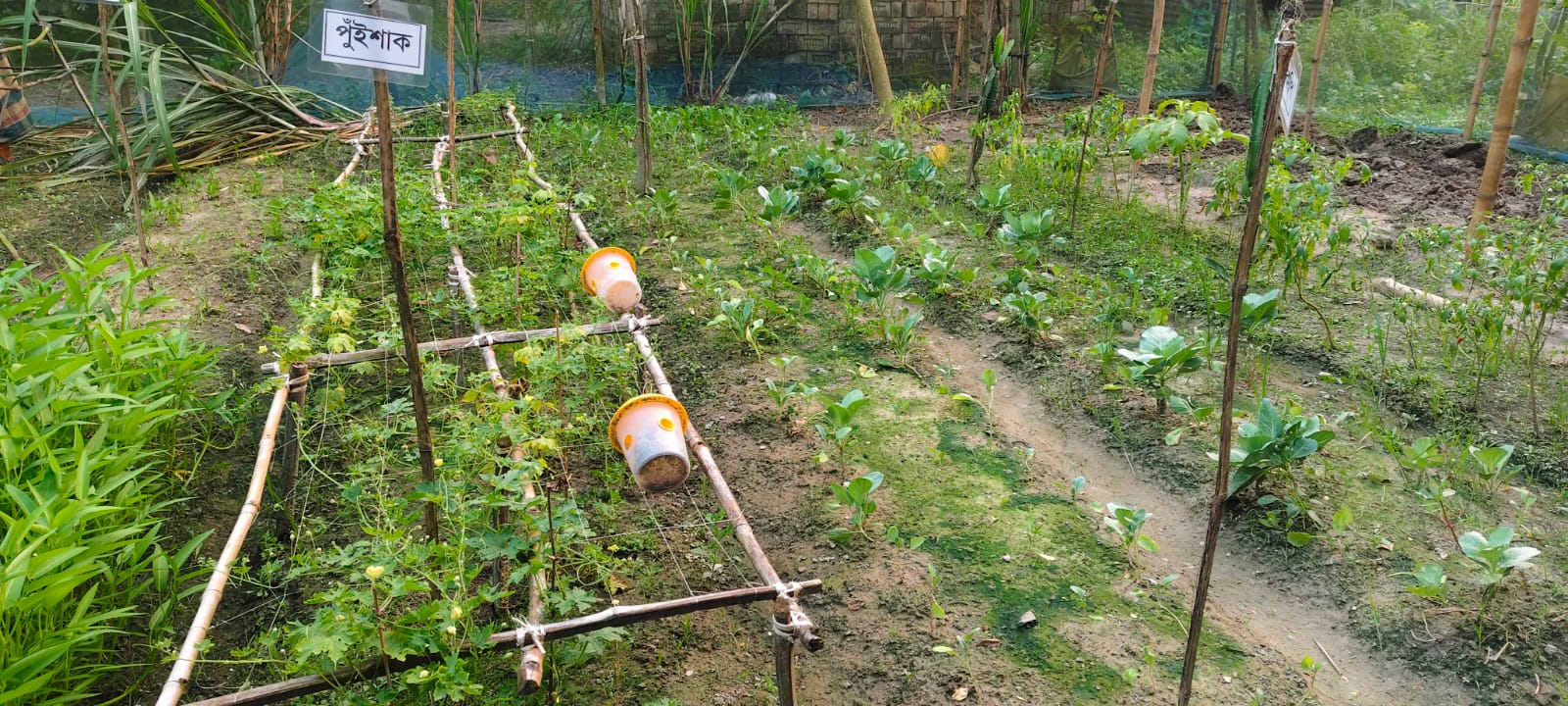
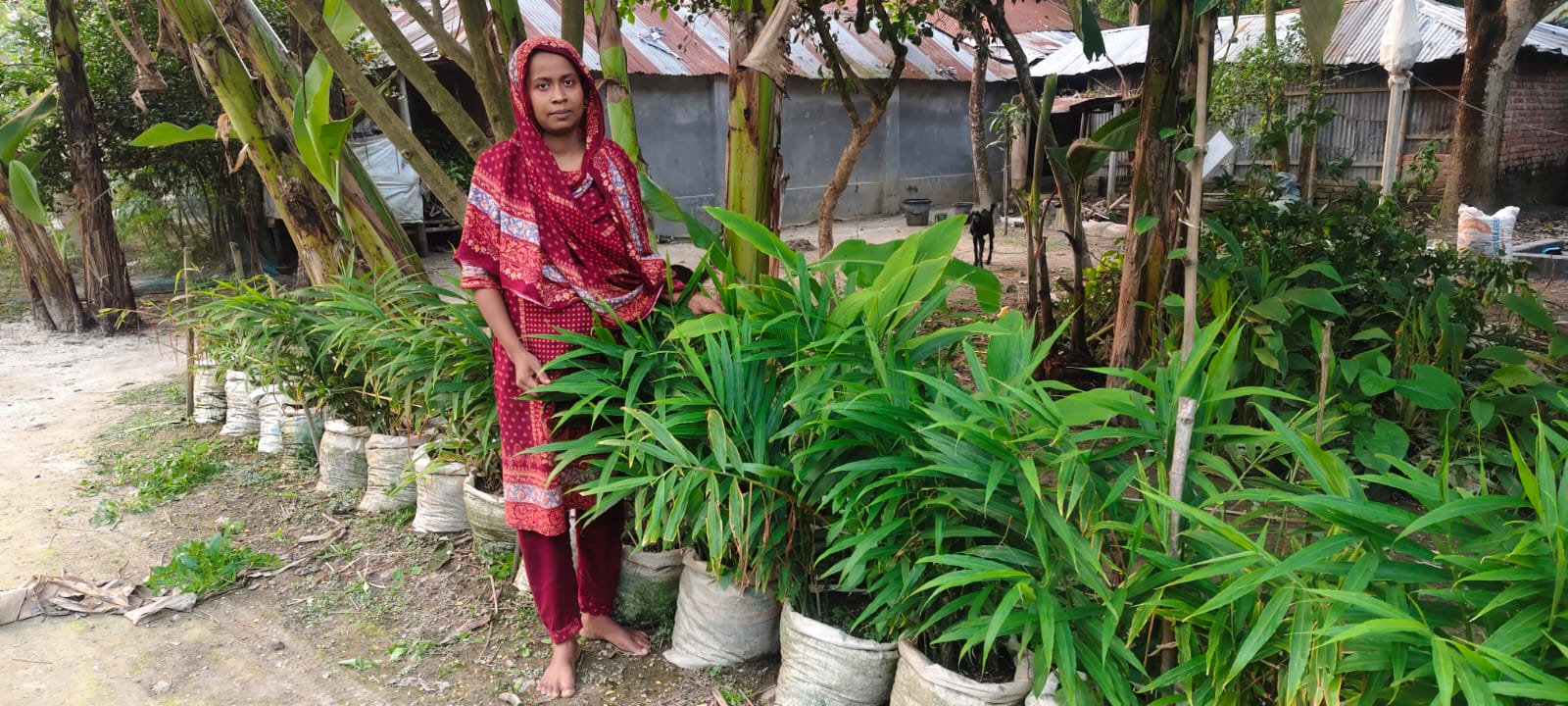
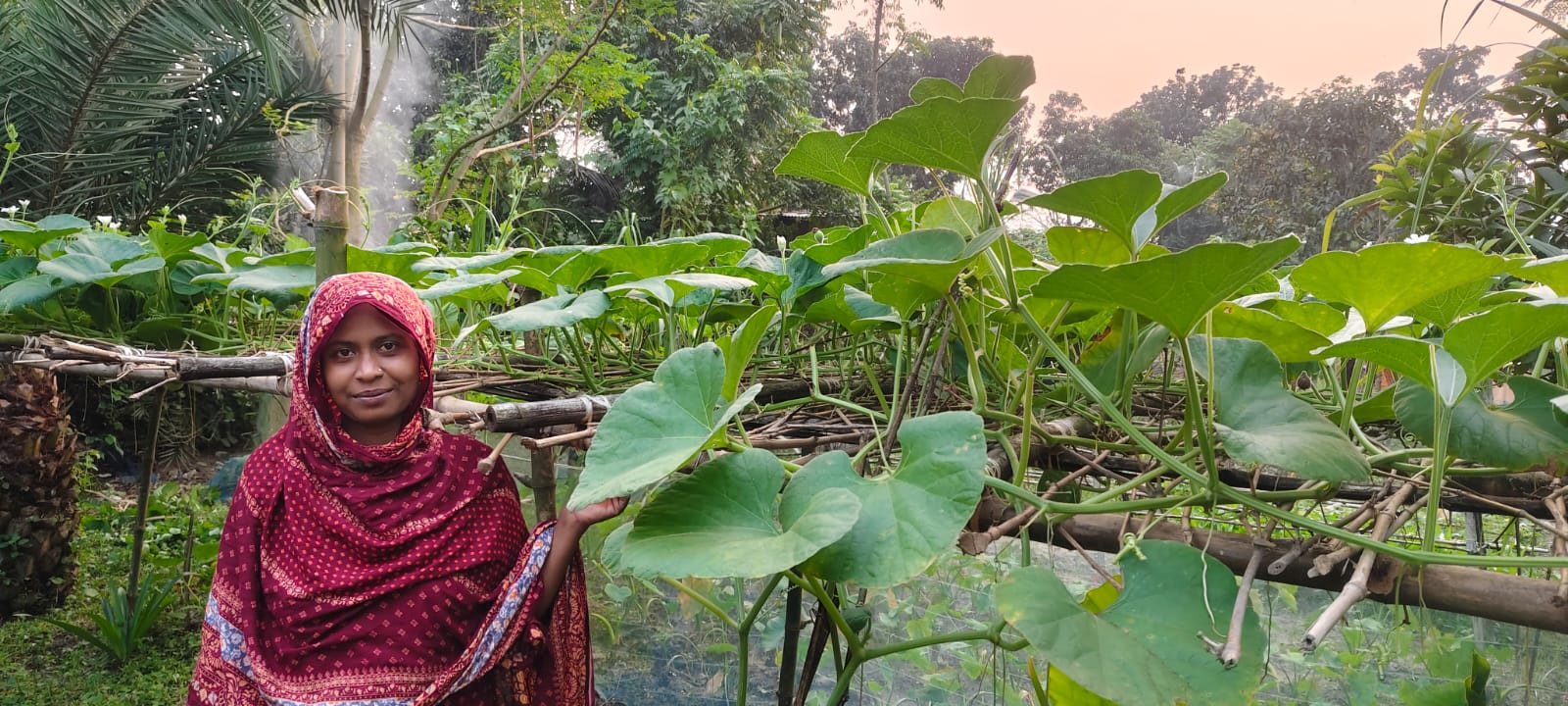
Jasmin Khatun lives in Duari Kumra Pukur village in Paba Upazila of Rajshahi district. Her family has four members, including her husband, Md. Sakhawat Hossain, and their two children, a son studying in Grade Five and a six-year-old daughter. In 2021, her husband suffered a serious injury involving his lungs and chest, according to the original account. Following his illness, Jasmin took on greater responsibility for managing the household alongside her agricultural activities. She now plays a central role in maintaining the family’s homestead garden, caring for livestock and producing food. Her homestead is a diverse farming space. She grows leafy vegetables such as Malabar spinach, red amaranth and water spinach, alongside stem amaranth, bottle gourd, pumpkin, eggplant, beans, cabbage, potatoes, garlic, ginger, chilli, onion, green bananas and mustard. She also grows ginger in sacks, making productive use of limited space. Mango, jackfruit, lemon, jujube and hog plum trees add to the diversity of her homestead. Alongside crop cultivation, Jasmin raises chickens, goats and cattle. These activities provide different sources of food and agricultural resources while helping her make the most of the space and materials available at house. She said, “I grow vegetables and other foods for my family, so I do not have to buy many of our daily food items from the market. I can serve my family food that I have grown myself, and I also share vegetables with my neighbours”. Her garden is therefore more than a place for growing crops. It supports household nutrition, reduces food expenses and strengthens relationships within the community.
Turning farm waste into valuable fertilizer
One of Jasmin’s most significant initiatives is vermicomposting, which she began in 2023. Vermicompost is an organic fertilizer produced with the help of earthworms, using materials such as cattle dung and decomposable organic waste. She initially learned the process from her aunt, Bilkis Begum, who shared practical knowledge and guidance. Starting on a small scale, Jasmin gradually developed her skills and expanded her production. She now uses cattle dung and other locally available organic materials to produce vermicompost. The fertilizer is applied to her own vegetable plots, helping reduce the need to purchase chemical fertilizers. She also sells the surplus, creating an additional source of household income. This practice demonstrates how materials that might otherwise go unused can be transformed into a valuable agricultural resource. By recycling organic matter, Jasmin contributes to better soil management while making practical use of resources available within her homestead. Her vermicomposting initiative has also strengthened her confidence as a farmer. Rather than relying entirely on purchased inputs, she is increasingly able to produce some of the resources needed for her own cultivation.
Making botanical pest repellents at home
Jasmin is also reducing her reliance on commercial pesticides by preparing botanical pest repellents from locally available plants. For her seasonal vegetables, she uses extracts made from neem leaves, moringa leaves, onion and basil to help manage insect pests and plant diseases. These practices allow her to explore locally available alternatives while reducing expenditure on purchased pesticides. She credits training sessions and courtyard meetings organized with support from BARCIK, which began working with her in 2025. Through these activities, she has gained knowledge and practical skills in organic fertiliser production and environmentally friendly pest management. She said, “Through BARCIK’s training and courtyard meetings, I have learned how to prepare and use botanical pest repellents. Now, I make them myself instead of buying pesticides from the market”. Her experience highlights the value of practical learning, peer exchange and locally accessible knowledge in helping farmers change their agricultural practices.
Protecting biodiversity, one plant at a time
For Jasmin, a healthy farming system depends on maintaining the balance between soil, plants, insects, birds and other living organisms. Her homestead reflects this understanding. Growing a variety of vegetables, fruit trees and other useful plants, she maintains a diverse growing environment and makes productive use of the space around her home. She also values the cultivation and conservation of traditional crop varieties. Conserving local seeds can help rural families maintain agricultural diversity and pass useful varieties on to future generations. Her use of organic fertilizers and botanical pest-management methods is part of this broader effort to reduce dependence on chemical inputs. Combined with diverse cultivation, these practices can support soil health and create better conditions for beneficial organisms. For Jasmin, biodiversity conservation is not an abstract idea. It is part of everyday life, choosing what to grow, making use of local resources and caring for the land that sustains her family.
A homestead that supports food and nutrition security
A diverse homestead garden can make an important contribution to family nutrition, particularly when households have limited resources to purchase food regularly. Jasmin grows different vegetables and crops throughout the year, helping her family access a wider range of foods. Her garden also reduces some household food expenses, while the surplus produce and vermicompost offer opportunities to earn additional income. The combination of crop diversity, livestock rearing and organic fertilizer production makes her homestead a practical example of agroecology: an approach that connects agricultural production with ecological processes, local knowledge and people’s livelihoods. Her experience also demonstrates how women’s agricultural work can contribute to household resilience. Producing food and agricultural inputs at home, Jasmin is building greater control over some of the resources her family needs.
Her dream: Safe food and fair prices for every farmer
Jasmin hopes to expand the cultivation of diverse vegetables, fruits and traditional crops on her homestead and farmland. She also wants to continue using homemade organic fertilizers and botanical pest repellents while encouraging other farmers to explore similar practices. She said, “I want every family in my village to grow safe vegetables according to its needs. Families can meet their nutritional requirements and earn extra income by selling surplus produce”. She also hopes to see fairer markets for organically grown and pesticide-reduced agricultural products, where farmers receive reasonable prices and consumers have better access to safe food. She believes that cooperation among farmers, local communities, development organizations and relevant institutions can help to make these aspirations a reality. Access to practical training, locally appropriate technologies and fair markets would allow more rural women to develop their skills and benefit economically from their work.
A growing example of women-led agroecology
Since 2025, BARCIK has supported Jasmin through information sharing, advice and skills development. This engagement has helped strengthen the visibility of her work and provided opportunities to improve her agricultural practices. Her experience shows how women can use local resources, practical knowledge and sustained effort to develop more diverse and resource-efficient farming systems. It also illustrates the connections between agroecology, food and nutrition security, biodiversity conservation and women’s economic empowerment. Jasmin’s journey is still evolving. Yet her homestead already offers a valuable lesson: meaningful agricultural change can begin at home, with a handful of seeds, locally available organic materials and a willingness to learn. Nurturing her soil, growing diverse crops and sharing what she produces, Jasmin Khatun is working towards a future in which farming supports her family and a healthier environment and a more resilient rural community.