
By Barsha Gain, from the Coast
Soil is one of nature’s most essential elements. However, due to unplanned use and excessive application of chemical fertilizers and pesticides, soil in many areas has become infertile and hard like stone. These chemicals are also polluting water and air, threatening biodiversity and the environment.
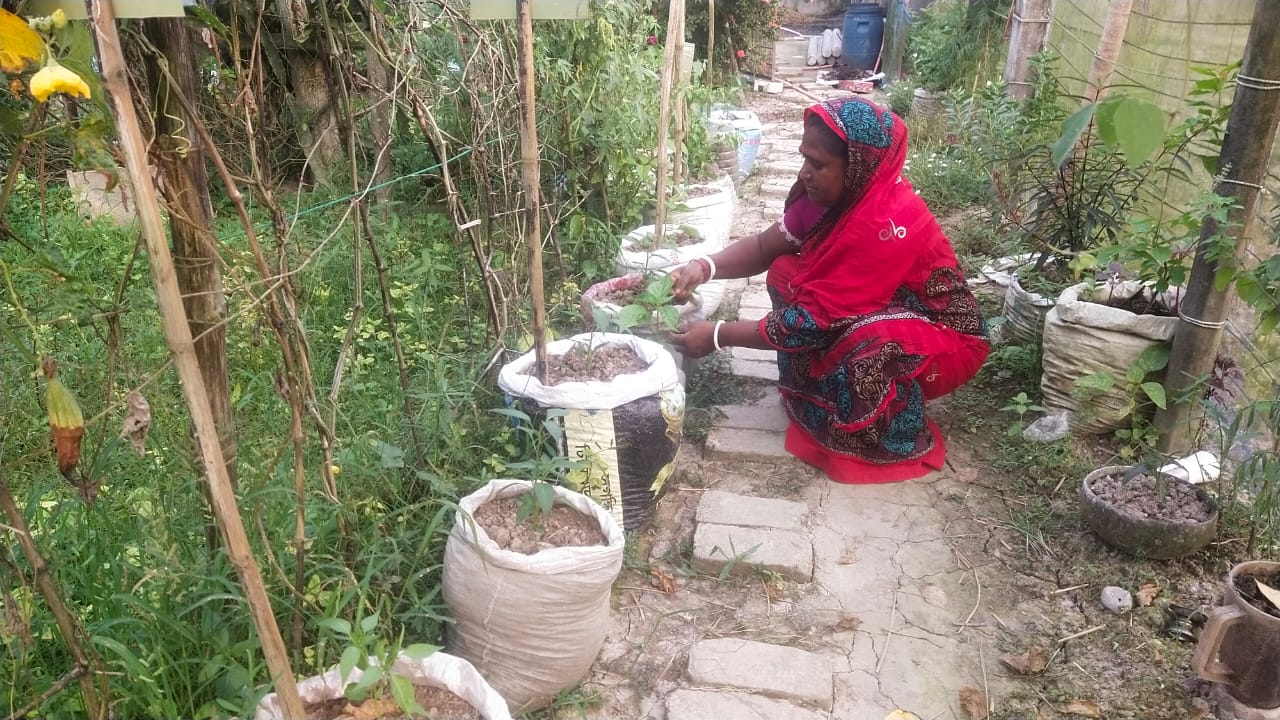
Against these odds, Alpana Rani Mistri, a farmer from Dhumghat village of Ishwaripur Union in Shyamnagar, Satkhira, has been silently working to protect nature. She has adopted a fully nature based farming system, producing crops through natural processes and avoiding harmful chemicals. Her initiative has become an inspiration to others in the community.
Alpana produces and uses a homemade “soil and plant vitamin” that helps to reduce chemical fertilizer use, enriches soil fertility, improves plant growth, and reduces carbon emissions making it a climate-friendly practice.
Ingredients for Soil & Plant Vitamin
- 1 basket dried cow dung cakes
- 2 liters rice-washed water
- 1 kg cooked rice starch
- 1 kg mustard seed cake
- 80 eggshells
- 1 sack burnt cow dung ash
- 250 g chopped banana stem
- 10 liters water
Preparation and Use
- Soak cow dung cakes, rice-wash water, rice starch, and mustard cake in 10 liters of water for 8 days.
- After 8 days, apply one glass of this liquid to each plant every 15 days.
- This provides nitrogen, potassium, amino acids, phosphorus, zinc, and other nutrients, helping plants grow faster, produce more leaves, and improve flowering and fruiting.
- It strengthens plant roots, increases soil microbes, improves fertility, and maintains soil pH balance.
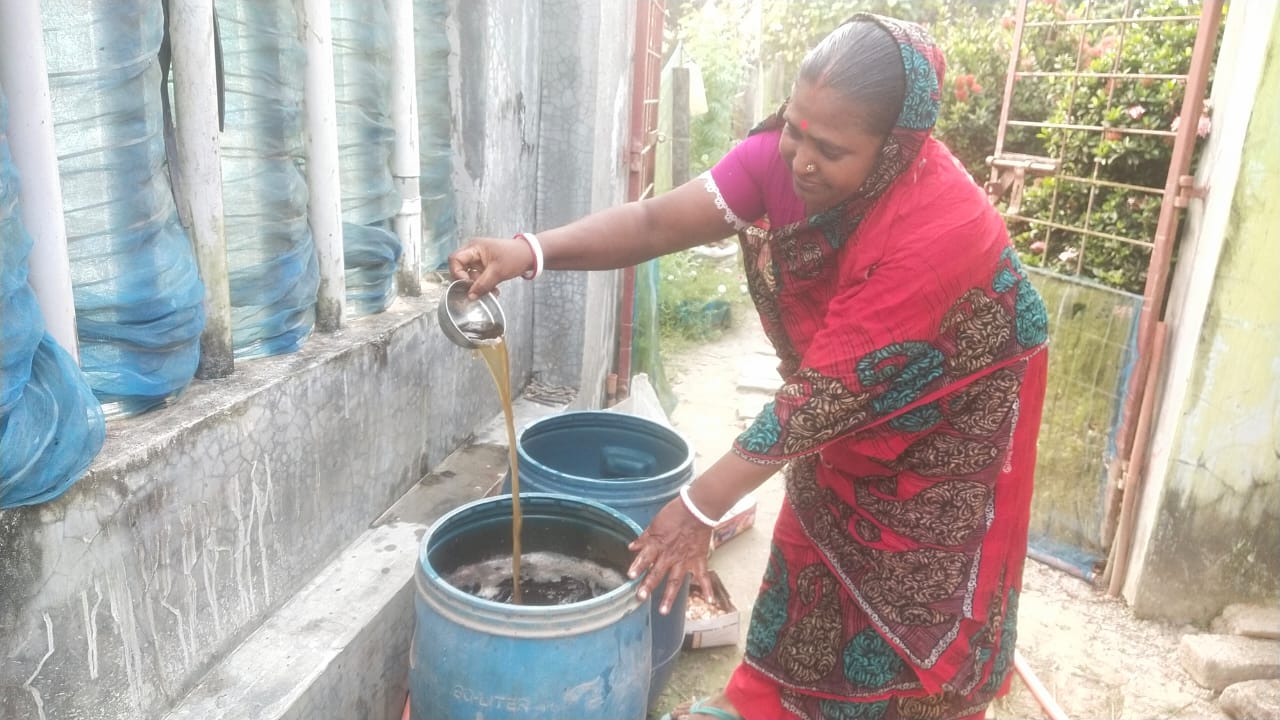
A second mixture is made by combining soaked cow dung cakes, eggshells, ash, and banana stem and fermenting it for 7 days. The resulting organic fertilizer can be used in sacks, pots, trays, towers, or beds. It works as a natural pesticide and helps control pests, fungi, and weeds.
Alpana hopes that more farmers will adopt natural farming methods to ensure safe food, protect the coastal ecosystem, and build a resilient community.