
By Mofijur Rahman from Satkhira
In coastal Khosalkhali village of Burigoalini Union, Shyamnagar, Mitali Rani has transformed her homestead into a diverse “Nutrition Bank,” demonstrating how agroecological practices can strengthen household food and nutrition security in a saline-prone environment. With support from BARCIK, she produces vegetables, fruits, fish, and poultry throughout the year, meeting family needs while generating additional income.
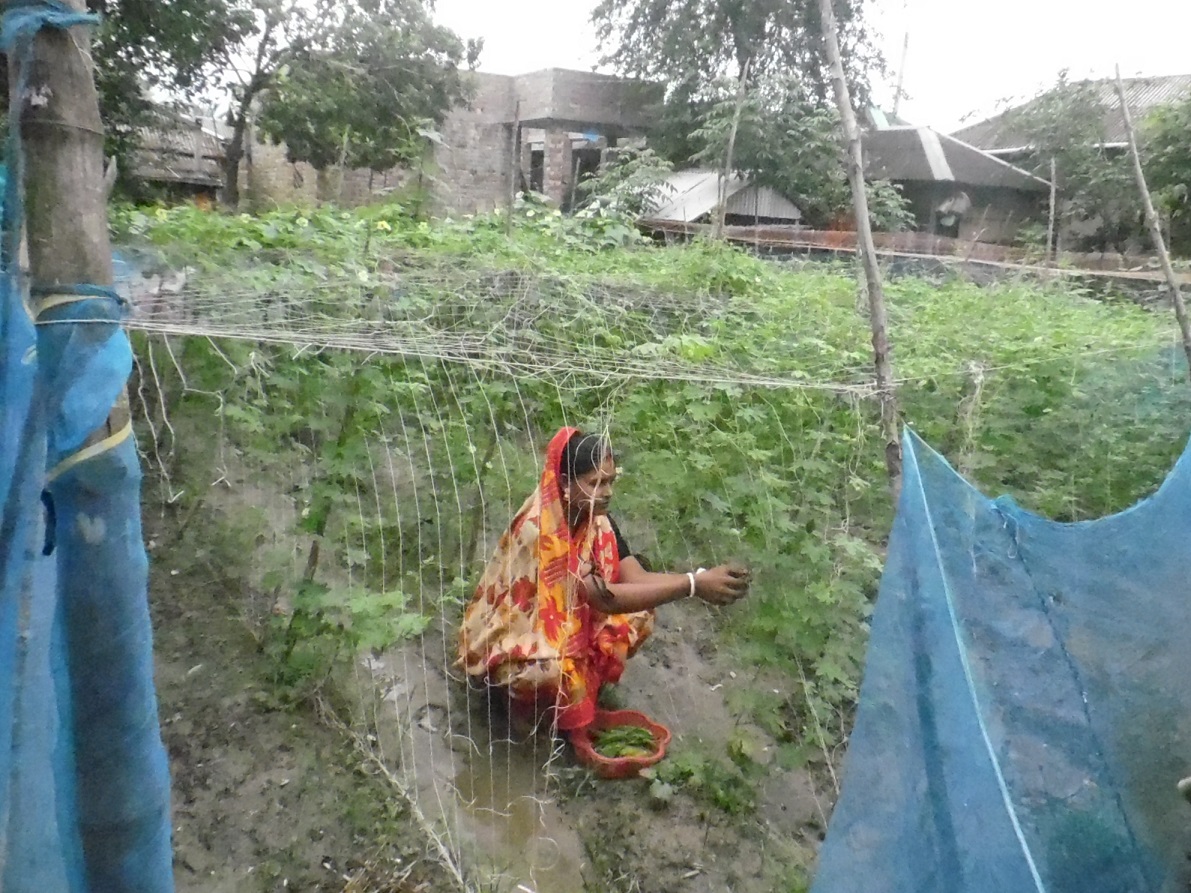
Mitali cultivates around 21 varieties of local and seasonal vegetables, including okra, Malabar spinach, yam, cucumber, chilli, eggplant, red amaranth, onion, garlic, tomato, fennel, ridge gourd, bottle gourd, pumpkin, water spinach, beans and drumstick. She has also planted around 12 types of fruit and timber trees, including mango, guava, banana, blackberry, wax apple, sapodilla, palmyra, betel nut, neem, babla and silk cotton. Her pond contains several fish species, including bhetki, rohu, catla, mrigal, tengra, punti, magur and shrimp. Ducks and chickens further contribute to household nutrition and income.
Seed conservation is central to her practice. She collects dries and safely stores seeds from her own crops and currently maintains around 10–12 types of local vegetable seeds, which she also shares freely with neighbors. Her participation in BARCIK’s training and activities has strengthened her knowledge of agroecology, seasonal vegetable production, homestead gardening and local seed conservation.
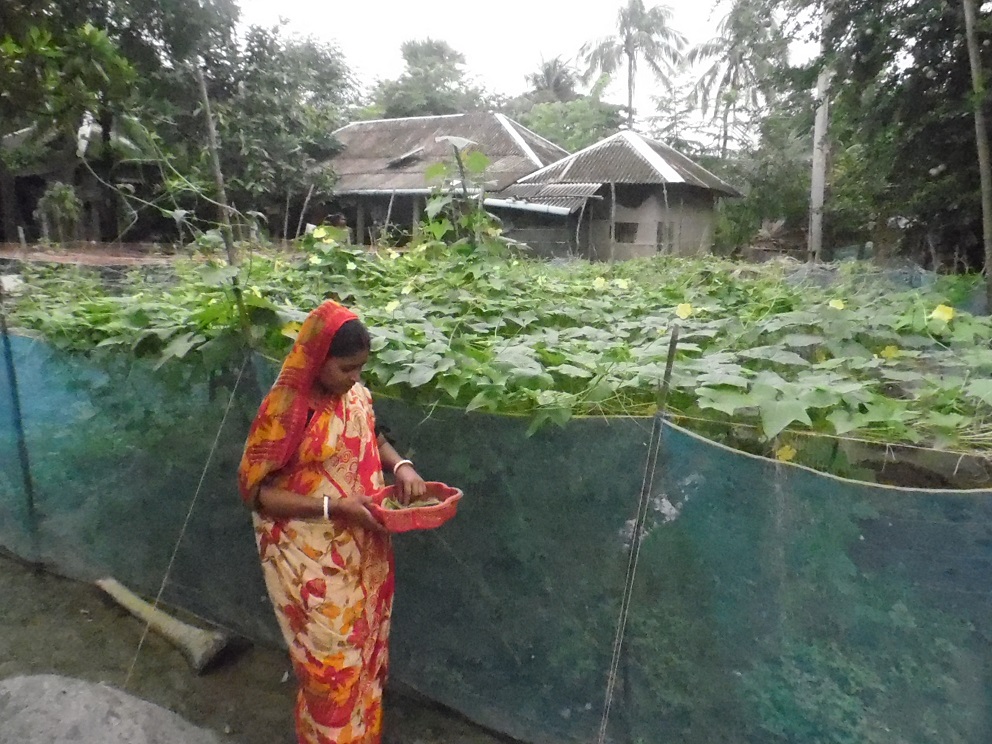
By consuming her own produce, the family has significantly reduced vegetable purchases and saves money. Surplus produce is sold locally, providing additional income for household expenses and children’s needs. Mitali now plays an active role in household decisions related to farming, production planning and income and expenditure. Her homestead has also become a place where neighboring women learn about diversified farming and obtain seeds.
She said, “When I have my own seeds, I no longer worry about the next planting season. My home is now not only for my family but also a place where others can learn and obtain seeds.