
By Shahidul Islam Shahid, from Tanore, Rajshahi
With limited land and a tight household budget, Sagori Sutradhar struggled to provide her family with safe, nutritious food. Today, her small rooftop garden in Gokul Mathura village, Tanore upazila, Rajshahi, supplies vegetables and spices while helping to keep her concrete-roofed home cooler during the summer. Her experience shows how agroecology can help families to meet every day’s needs, even when growing space is scarce.
Learning through practice
Sagori lives with her husband, Ajit Sutradhar, and their two children. Her family depends on agriculture, but limited farmland, drought, irregular rainfall and declining groundwater levels make cultivation increasingly difficult. She became interested in agroecology after seeing the activities of an Agroecology Learning Centre (ALC) near her home. The centre, managed by Jitendra Nath Sutradhar with support from BARCIK, promotes environmentally friendly farming, local seed conservation and practical training. She said “I often saw people bringing seeds to the centre and taking seeds and seedlings home”. She also observed demonstrations on preparing organic pesticides, vermicompost and quick compost. Inspired by these activities, she began collecting seeds, seedlings and other materials from the centre to grow food at home.
Making the most of limited space
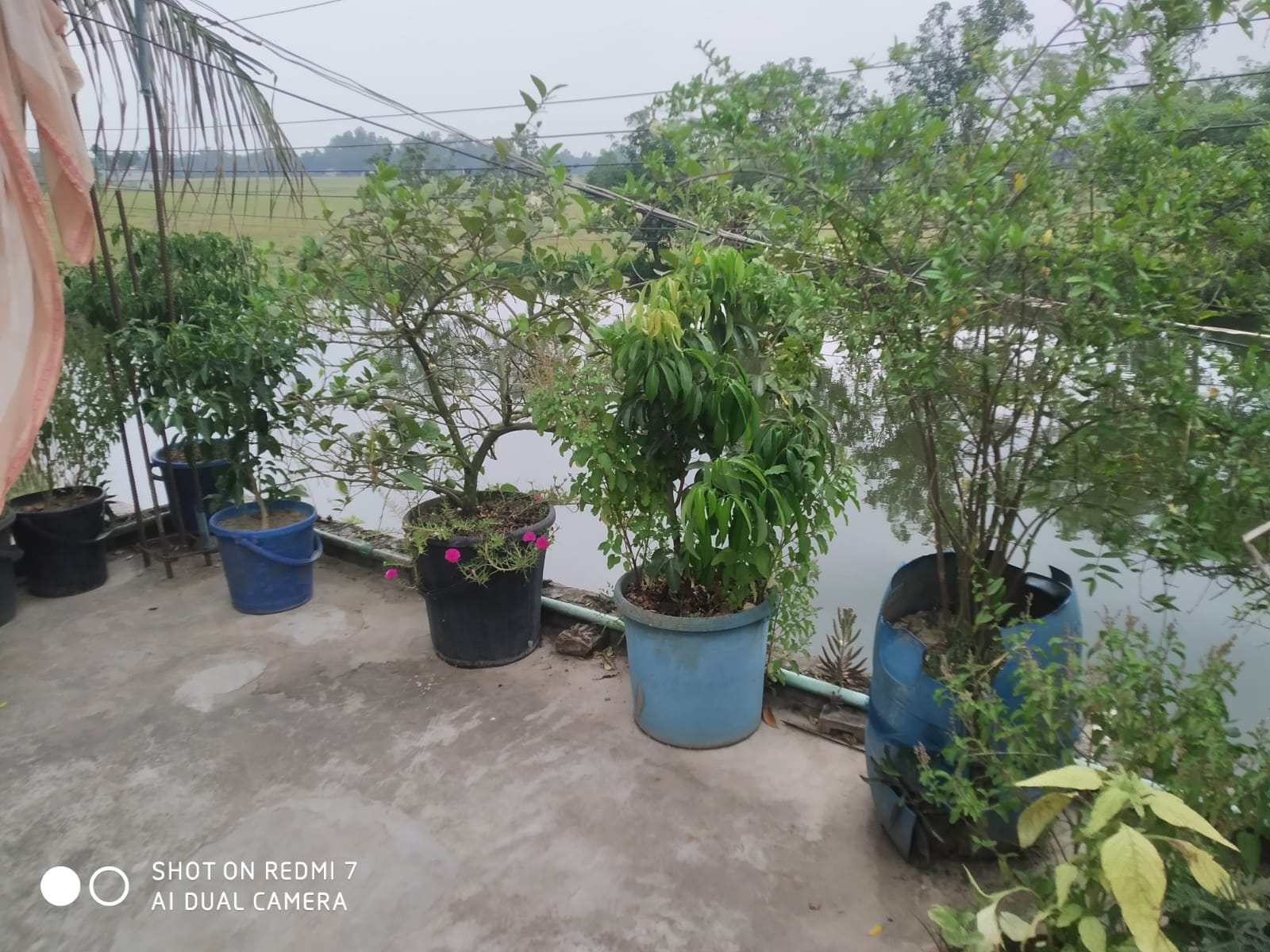
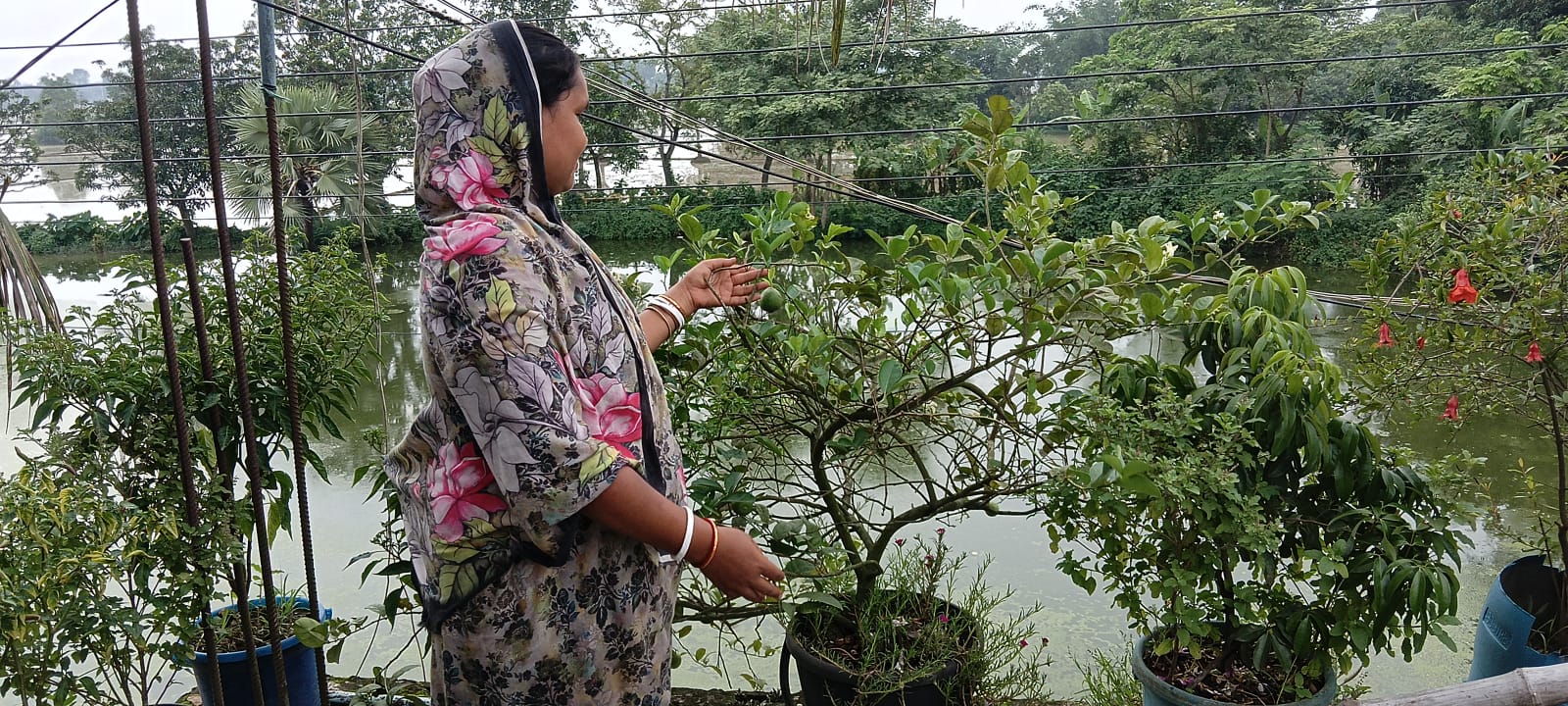
Sagori’s family has only 1.5 decimals of homestead land beside their small concrete house and 17 decimals of farmland. She also has five decimals of inherited homestead land in nearby Belpukur village, where fruit trees help to meet the family’s fruit needs. With little space immediately around her house, she turned to the rooftop. Using discarded plastic containers and other unused household materials, she began growing vegetables, spices and medicinal plants. Her rooftop garden now includes bottle gourd, pumpkin, eggplant, lemon, pomegranate, red, white and sky-blue chillies, and ginger. She also grows medicinal plants such as aloe vera, pathorkuchi and lohachur, along with five types of flowers, including marigold, four o’clock flowers and nayantara. Her husband helps to maintain the garden. Beyond meeting part of her family’s needs, Sagori now saves seeds and shares them with other women, extending the benefits of her initiative to her neighbours.
Food, knowledge and a cooler house
For Sagori, the garden is more than a source of fresh produce. It is a practical response to rising food costs, concerns about chemical use and the challenges of climate change.
The plants also provide shade on the concrete rooftop, helping to reduce heat inside the house during periods of intense sunshine. As temperatures rise and drought becomes more severe, this added benefit makes the garden especially valuable. However, Sagori’s experience demonstrates how agroecology can improve household nutrition, encourage seed conservation and strengthen cooperation among women, even where land is limited. By turning a small rooftop into a productive green space, she has found a practical way to grow safer food while making her home more comfortable.