
By Sultana Khatun from Rajshahi
Minara Begum, 55, lives in Bil Nepalpara village of Darshanpara Union, Paba Upazila, Rajshahi, with her husband. Originally from Kakonhat in Godagari, she married in 1975 and lived in a joint family until 2000. After her parents-in-law passed away, she began living separately with her husband. Their two sons and one daughter are now married and have established their own households. Today, Minara contributes to her community through traditional stove making, seed conservation, home gardening and folk healing practices. Her skills, developed over decades of experience, remain valued by neighbors and people from nearby unions.
Traditional agricultural knowledge and home gardening
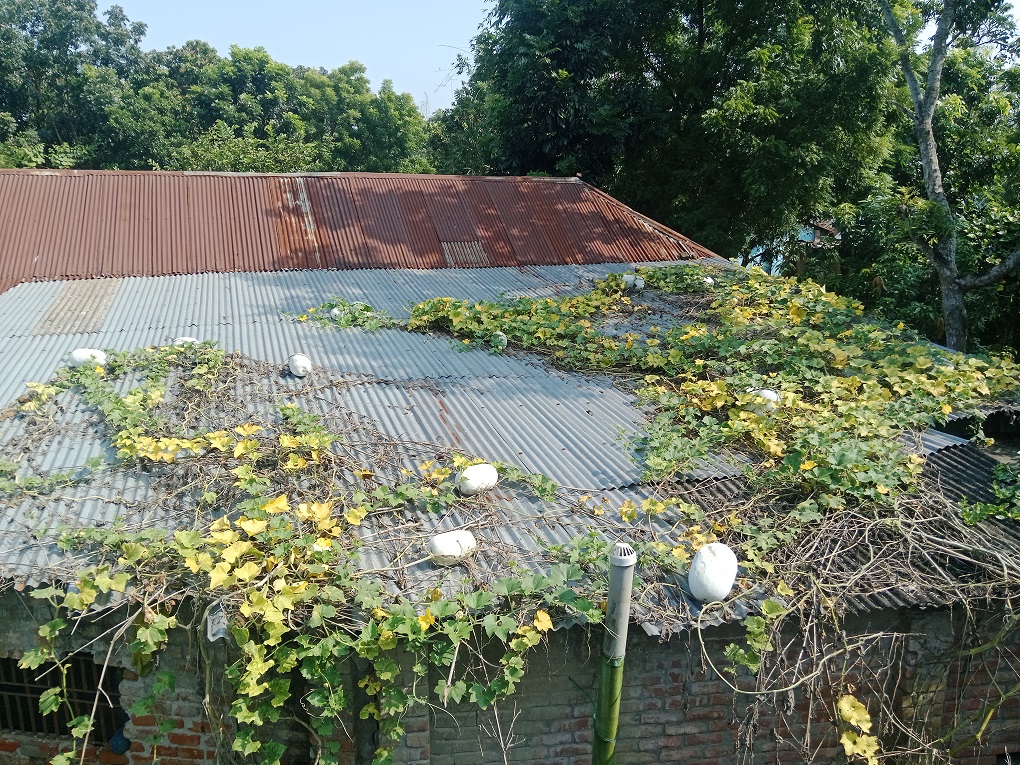
Growing up in a farming family, Minara became familiar with agriculture at an early age. After marriage, she began cultivating vegetables on unused land beside her home. She continues to grow vegetables and preserve produce for household use. She stores around 20 mature ash gourds on her tin-roofed house. Every winter, she also earns Tk 2,500–3,000 by selling bean and Malabar spinach seeds. Minara learned vegetable cultivation from her parents-in-law and relies on locally available materials to manage crop pests and diseases. These include old cooking-stove ash, rice starch water and water used to wash rice.
Making eco-friendly oven
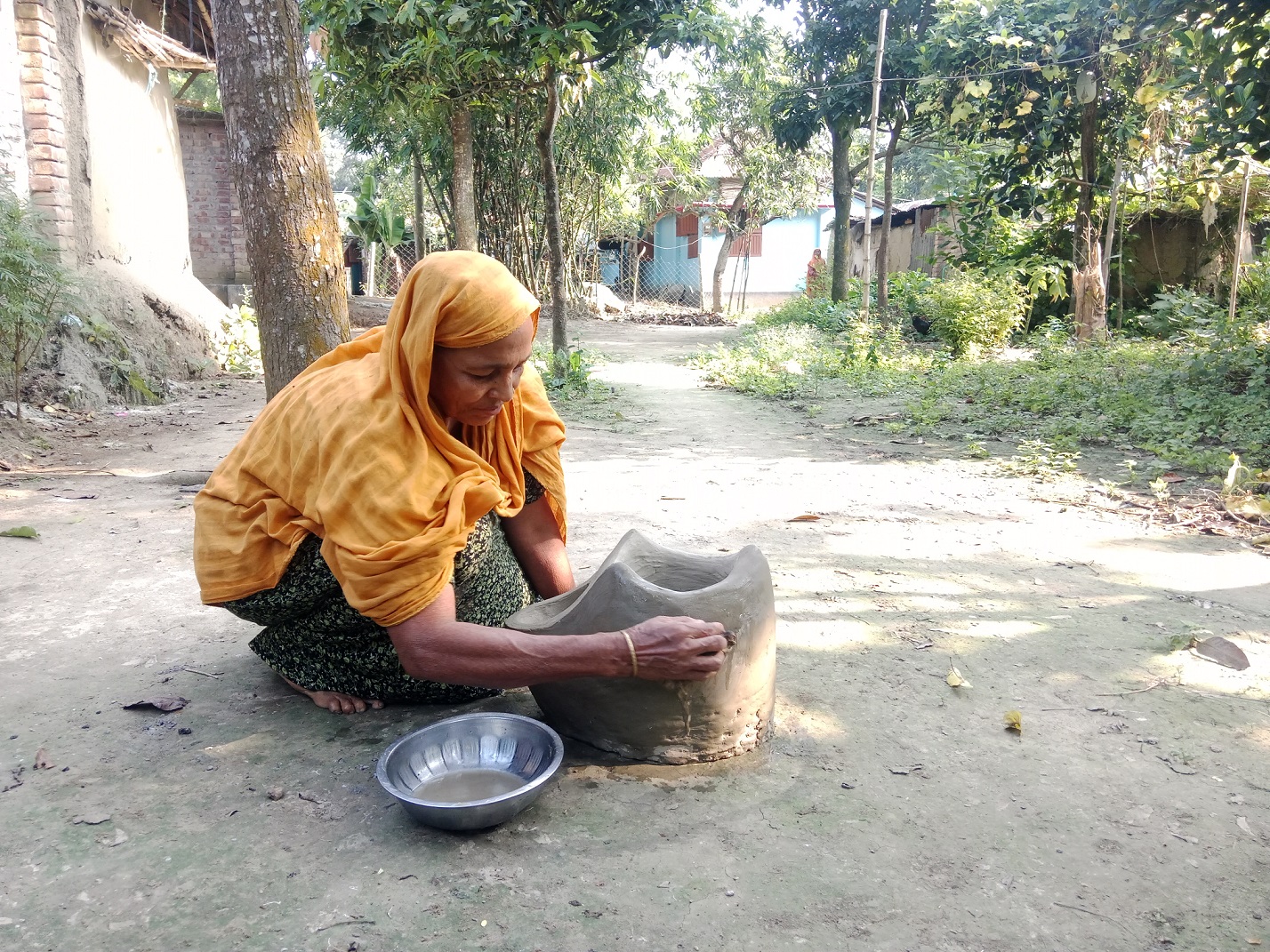
One of Minara’s notable achievements is making approximately 200 earthen stoves for neighbors, relatives and other community members. She can make several designs, including fuel-efficient stoves, boat-shaped stoves, engine-shaped stoves, and single- and double-burner models. People regularly invite her to their houses to build ovens suited to their cooking needs. Her work helps to sustain traditional craftsmanship while promoting locally made cooking solutions.
Preserving traditional healing knowledge
Minara is also known locally for her traditional healing practices. People from Darshanpara Union and neighboring areas visit her for assistance with various ailments. Her practices include traditional remedies for childhood fears, eye discomfort and sprains, as well as massage and the application of oil. These practices reflect locally inherited knowledge that remains part of community life. They should, however, complement rather than replace appropriate medical care, particularly for serious injuries, persistent eye problems or illness in children.
Conserving biodiversity and supporting nutrition
Minara conserves rice, vegetable and other crop seeds in earthen pots using ash and other natural materials to help maintain their quality. She also plants fruit-bearing, timber and medicinal trees around her house. Her small vegetable garden provides food and habitat for birds, insects and other beneficial organisms. She grows medicinal plants such as tulsi (holy basil), neem, thankuni (Indian pennywort) and aloe vera, which she uses in traditional preparations. The garden also contributes to her family’s food and nutrition security by providing fresh vegetables rich in vitamins and minerals. Additionally, she rears ducks, chickens and goats. Selling surplus vegetables and livestock products provides supplementary income to meet household needs.
A commitment to serving the community
Minara wants to continue sharing her knowledge for as long as her health permits. She said, “As long as I remain healthy, I will continue these activities. I want people to remember me after my death, know about my work and pray for me. I want to spend my life serving people. Her contribution highlights the role rural women play in preserving traditional skills, conserving biodiversity, supporting household nutrition and passing local knowledge on to future generations.