
By Rina Akter from Singair, Manikganj
A unique series of awareness lectures held in secondary schools across Singair, Manikganj, is changing how young people perceive gender roles, equality, and justice.
Organized by the development organization BARCIK, the program aims to build gender-sensitive mindsets among students and mobilize them as change agents to prevent child marriage, ragging, bullying, and harassment.
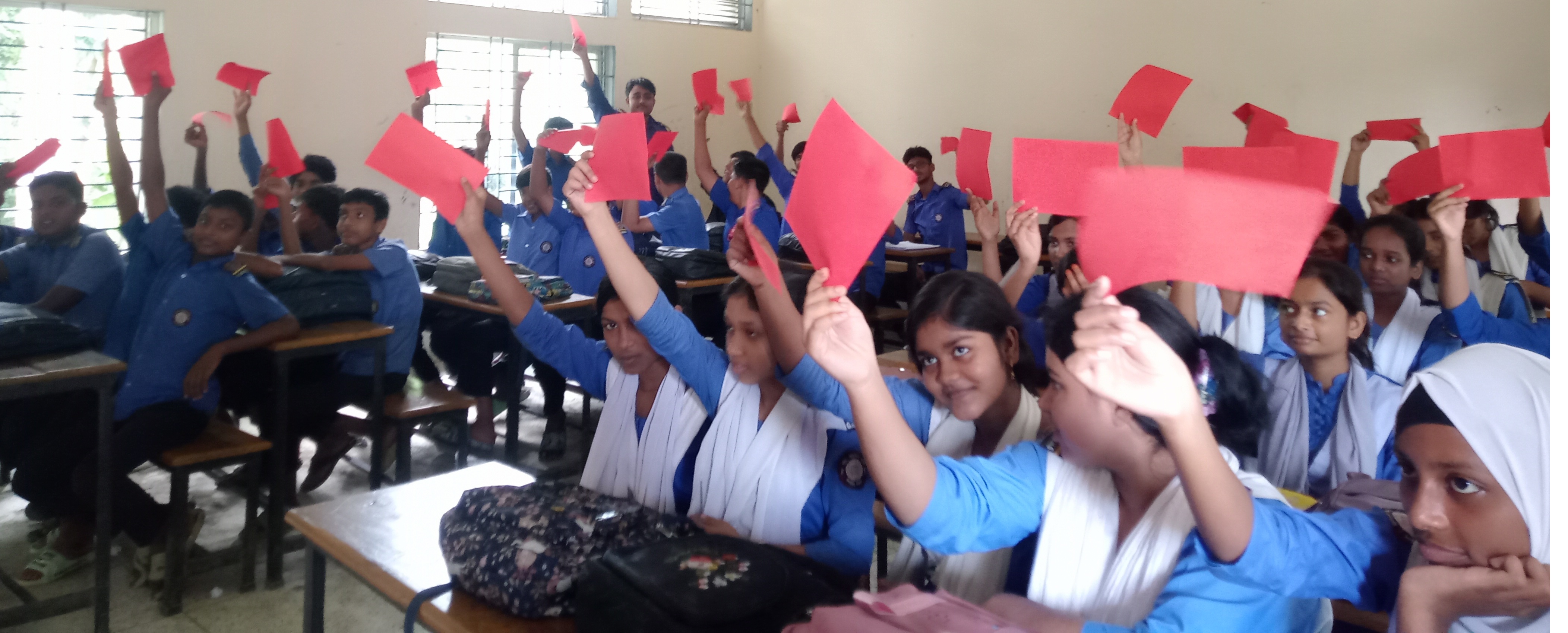
The initiative supports UN Sustainable Development Goals 4 and 5 which focus on promoting quality education and gender equality. Despite the government’s commitment to ending child marriage by 2030, a 2024 UNICEF report found that 51% of Bangladeshi women aged 18–24 were married before turning 18.
A Plan International study revealed that women with secondary or higher education are 61% less likely to marry early that shows that education is a crucial factor in combating child marriage.
However, as part of its ongoing gender project, BARCIK has conducted 11 awareness lectures in 2025, reaching approximately 660 students in local schools. The sessions encourage discussions on gender equality, social behavior, and rights fostering empathy and collective responsibility among adolescents. Following the lectures, many students reported a better understanding of gender issues and pledged to build a more inclusive and respectful society.
They collectively identified child marriage, ragging, bullying, and eve-teasing as major obstacles to national development.
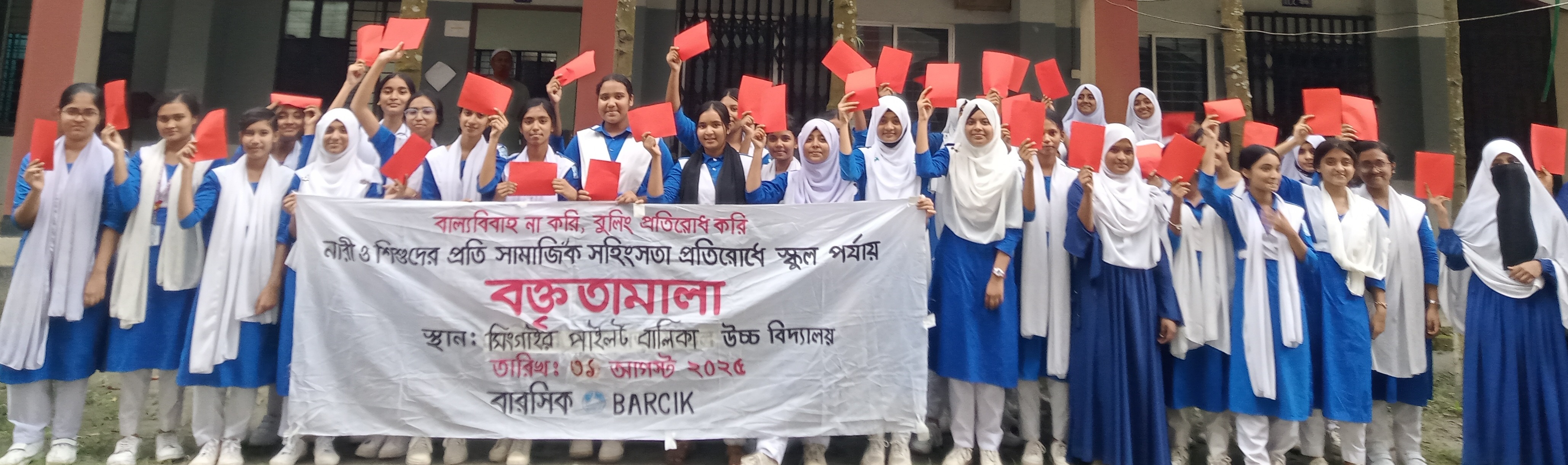
Participating in those awareness sessions students decided to take proactive steps, including Identifying gender-based violence hotspots around schools; appointing a focal person in each institution to monitor and prevent child marriage and dedicating 10 minutes per week in every class to discuss gender and equality topics.
Speakers emphasized that solving these issues requires collaborative action involving teachers, parents, community leaders, and local government representatives.
By working closely with adolescents, teachers, and communities, BARCIK continues to build a gender-sensitive, fair, and equitable society where both men and women can contribute equally to sustainable development.