
By Suparna Mitra, Technical Officer, ENGAGE Project, BARCIK, Shyamnagar, Satkhira
With the support of the European Union and NETZ Partnership for Development and Justice, Bangladesh, a two-day Training of Trainers (ToT) on Climate Advocacy and Networking was successfully held from 21–22 October 2025 at the auditorium of the Rural Reconstruction Foundation in Ramnagar, Rajarhat, Jashore. The event was organized under the ENGAGE (Environmental Human Rights for a Just Transition: Strengthened Local CSOs Transforming Climate Hotspots into Resilient Communities) Project.
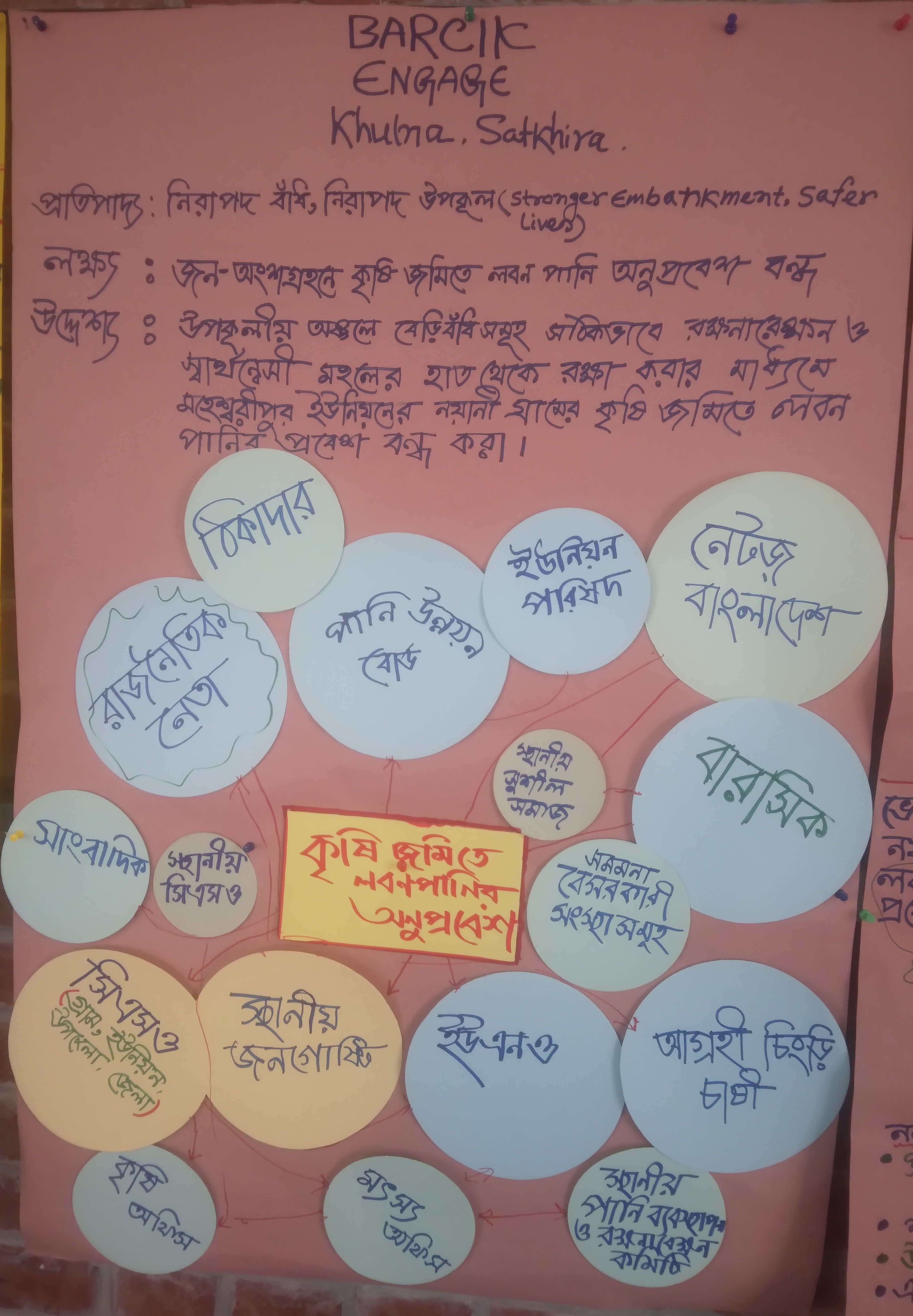
Program Directors, Project Coordinators, Technical Officers and Area Officers from the ENGAGE Project’s implementing organizations — BARCIK, CODEC and DASCOH participated in the training.
The primary objective of the training was to strengthen participants’ capacity in policy and grassroots advocacy through revisiting local human rights, climate and environmental issues; analyzing their impacts; identifying key advocacy priorities; and formulating strategic advocacy plans. The training also aimed to equip participants with the necessary tools to conduct resource and risk assessments and develop effective and actionable advocacy strategies.
Facilitating through a participatory and adult-learning approach, the training treated every participant as a knowledgeable resource person. Special emphasis was placed on exploring the connections between climate change, environmental degradation, and environmental human rights violations.
Key training topics included:
- Identification and prioritization of advocacy issues
- Setting advocacy goals and objectives
- Resource and stakeholder mapping
- Risk analysis and mitigation planning
- Steps in advocacy planning
- Developing advocacy action plans
In addition to conceptual sessions, participants engaged in group discussions, teamwork and interactive presentations, which created an enabling environment for experiential learning and exchange of ideas. Facilitators provided constructive feedback and practical guidance after each presentation, which participants found highly useful for applying in their respective field contexts.
The sessions were facilitated by Ms. Sara Khatun, Project Manager, ENGAGE Project, NETZ Bangladesh, Mr. Moniruzzaman Moni, Technical Coordinator and Mr. Max Stille Executive Director, NETZ.
Participants remarked that the training not only enhanced their professional competencies but also provided new perspectives for designing and implementing community-driven advocacy initiatives. They expressed confidence that the knowledge and strategies gained from the training would enable them to play a vital role in promoting environmental and human rights of climate-vulnerable communities, contributing to the vision of a healthy, sustainable, and just society