
By Poli Rani Pramanik from Rajshahi
A tree is sometimes much more than a tree. For the Oraon, Santal and other Indigenous communities of the plains, the Karam tree is closely connected with their history, beliefs, farming, nature and way of life. For generations, they have celebrated the Karam festival around this tree, praying for good harvests, family well-being, community prosperity and protection from natural disasters. This cultural tradition was highlighted at a two-day Karam festival held at Rajshahi University on 18 and 19 September. The event brought together nature, culture and Indigenous traditions while highlighting the importance of protecting trees, biodiversity and traditional knowledge. The festival was organized by Indigenous students from the plains at Rajshahi University with the participation of young people from the Rajshahi Green Coalition Youth Community. The programme was held at the open stage beside the university’s Central Shaheed Minar.
A tree at the heart of culture and nature
The Karam tree has a special place in Oraon culture. During the festival, people pray for good crops, happiness and prosperity for their families and communities. They also seek protection from floods, droughts and other natural disasters. These traditions reflect a close relationship between people and nature. Food, farming, livelihoods and community well-being all depend on the natural environment. The Karam festival expresses this understanding through cultural practices passed down from one generation to another. The tradition also raises an important point: when a community’s culture is closely connected to trees, land, water, farming and the natural environment, protecting nature is also part of protecting that community’s cultural identity.
From tradition to biodiversity protection
The Karam festival shows that nature is not simply a source of resources. It is part of people’s culture and everyday lives. Respect for the Karam tree, prayers for good harvests and concern for protection from natural disasters all reflect an understanding that human life and nature are closely connected. At a time when local trees, plants, agricultural diversity and traditional knowledge are under increasing pressure, such traditions offer an important reminder. Biodiversity is not limited to forests, rivers and wildlife. It is also found in people’s food, farming, festivals, beliefs and everyday practices. Seen in this way, the Karam festival is not only a religious or cultural event. It is also a cultural expression of the relationship between people and the natural world.
A strong connection with farming
Farming is another important part of the Karam tradition. Prayers for a good harvest are central to the festival. Agriculture, in turn, depends on soil, water, seeds, plants, animals and local ecosystems. This connection reflects an important principle of agroecology: farming is not only about producing more food. It is also about working with the local environment, protecting biodiversity and valuing farmers’ knowledge. The Karam festival reminds us that farming is connected to a particular landscape, culture, knowledge and community. These connections are often passed from one generation to another through traditions such as the Karam festival.
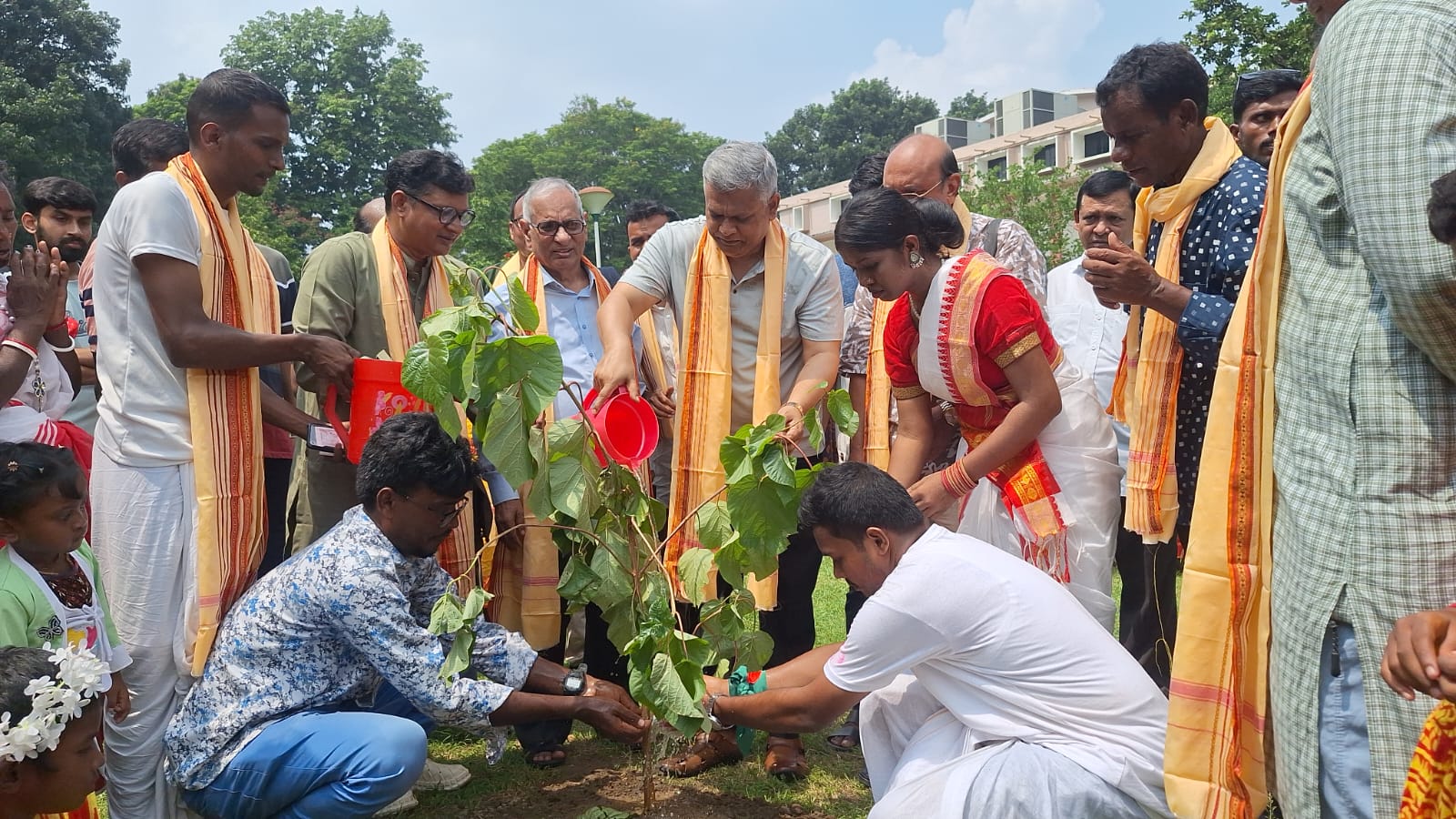
Young people keeping the tradition alive
The active participation of young people was one of the notable features of this year’s festival. For Indigenous students at Rajshahi University, the event provided an opportunity to share their heritage with university student. The festival began on the evening of 18 September with the collection and installation of Karam branches, followed by traditional rituals. The following morning included a rally, discussion meeting and cultural programme. Traditional dances, songs and folk stories highlighted the cultural heritage of the Oraon community. The festival ended in the evening with the ceremonial immersion of the Karam branches. The participation of young people went beyond celebrating their culture. It also created an opportunity to discuss tree conservation, biodiversity, the relationship between nature and culture, and the importance of environment friendly farming. Chhabi Bir, a student of the Department of Zoology at Rajshahi University, said, “This is the first time we, the Indigenous students from the plains, have celebrated the festival on the university campus. We are very happy to have received a much more positive response than we expected.” The festival also gave Indigenous students an opportunity to express and share their cultural identity within a diverse university environment.
Keeping tradition alive across generations
Lalu Sardar, a 72-year-old Indigenous community member, said, “Karam Puja is our biggest and most important festival. Its main purpose is to pray for the well-being of our families and community. Through this festival, we pray that our homes, children and families remain free from illness and danger.” His words reflect the social and family importance of the festival. It is not only a religious occasion; it also brings families and communities together and strengthens social ties. Ranikanta Tiki, founding president of the Oraon BD Cultural Forum, said, “The festival is mainly about preserving the ancient traditions of the Oraon community. The enthusiasm for the festival has not decreased. Rather, opportunities and interest in celebrating it have increased among Indigenous communities in the plains.” The continued celebration of Karam shows that it is not simply a tradition from the past. It remains a living part of Indigenous culture and continues to be passed from one generation to the next.
Education and cultural identity
At the discussion meeting, Rajshahi University Vice-Chancellor Professor Faridul Islam said that the Oraon community plays an important role in the country’s economy through their hard work. He also stressed the importance of education and encouraged families to send their children to schools, colleges and universities so that they can participate fully in society. He urged the community not to consider itself marginalized or isolated, but to use education and skills to strengthen its participation in national life. Education and cultural identity do not have to be separated. Young people can pursue modern education while continuing to value their own knowledge, culture and traditions.
Protecting nature means protecting culture
The Karam festival carries a simple but important message: nature and culture cannot always be separated. A tree can be part of a community’s religious beliefs, farming practices and social life while also being part of local biodiversity. Protecting that tree and the environment around it therefore, means protecting more than a species. It also helps to preserve the knowledge, beliefs and cultural practices connected to it. The Karam festival at Rajshahi University was therefore more than a two-day cultural event. It created space for Indigenous students and community members to celebrate their heritage, share knowledge across generations and draw attention to the relationship between people and nature. The Karam tradition reminds us that biodiversity does not exist only inside protected forests or conservation areas. It also lives in people’s cultures, farms, food, beliefs and everyday lives. Protecting biodiversity therefore requires respect not only for trees and other species, but also for the knowledge and traditions of the people who have lived alongside them for generations. Karam is more than the name of a tree. It is a cultural symbol of the relationship between people and nature, a tradition in which prayers for good harvests, community well-being and respect for nature come together. When nature survives, culture survives too. And when both culture and biodiversity are protected, communities have a stronger foundation for a sustainable future.