
By Gunjon Rema from Kalamakanda, Netrakona
Banila Mrong of Chandradinga village is a farmer who works alongside her husband and keeps livestock and poultry to meet her family’s food needs and earn additional income. Keeping chickens is an important part of her household farming system. Previously, Banila used the traditional method to hatch chicken eggs, but not all the eggs produced chicks. Some eggs were wasted, while the mother hen remained occupied with brooding for a longer period.
She learned about the Hajol method, a traditional technique for hatching chicken eggs, at a workshop organized by BARCIK. The training covered how to make and use a Hajol and how it can be used for hatching eggs. After the training, Banila decided to try the method with her own chickens.
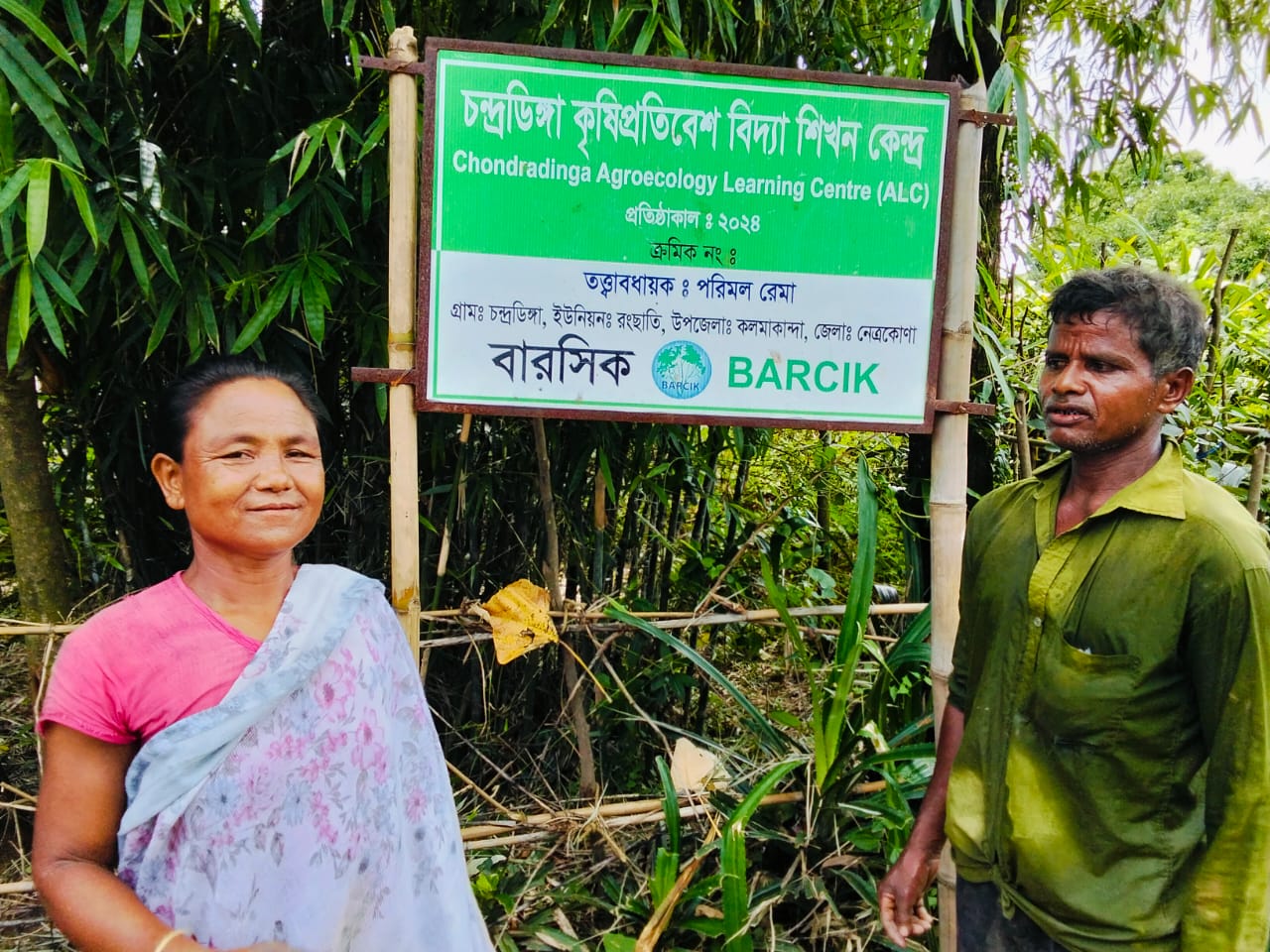
The results encouraged her. Banila says that previously, when she placed 16 eggs under a hen, she usually got 10–12 chicks. After using the Hajol method, she found that all 16 eggs hatched. She also noticed that the mother hen began laying eggs again sooner, allowing her to return to egg production without spending a long period brooding.
According to Banila, the method has made chicken rearing more productive and profitable. For her, its value is not only in producing more chicks but also in making better use of the limited resources available to a farming household. After seeing the results herself, Banila began sharing her experience with other farmers. Three farmers in her village became interested in the method, and she personally made Hajols for them and showed them how to use them.
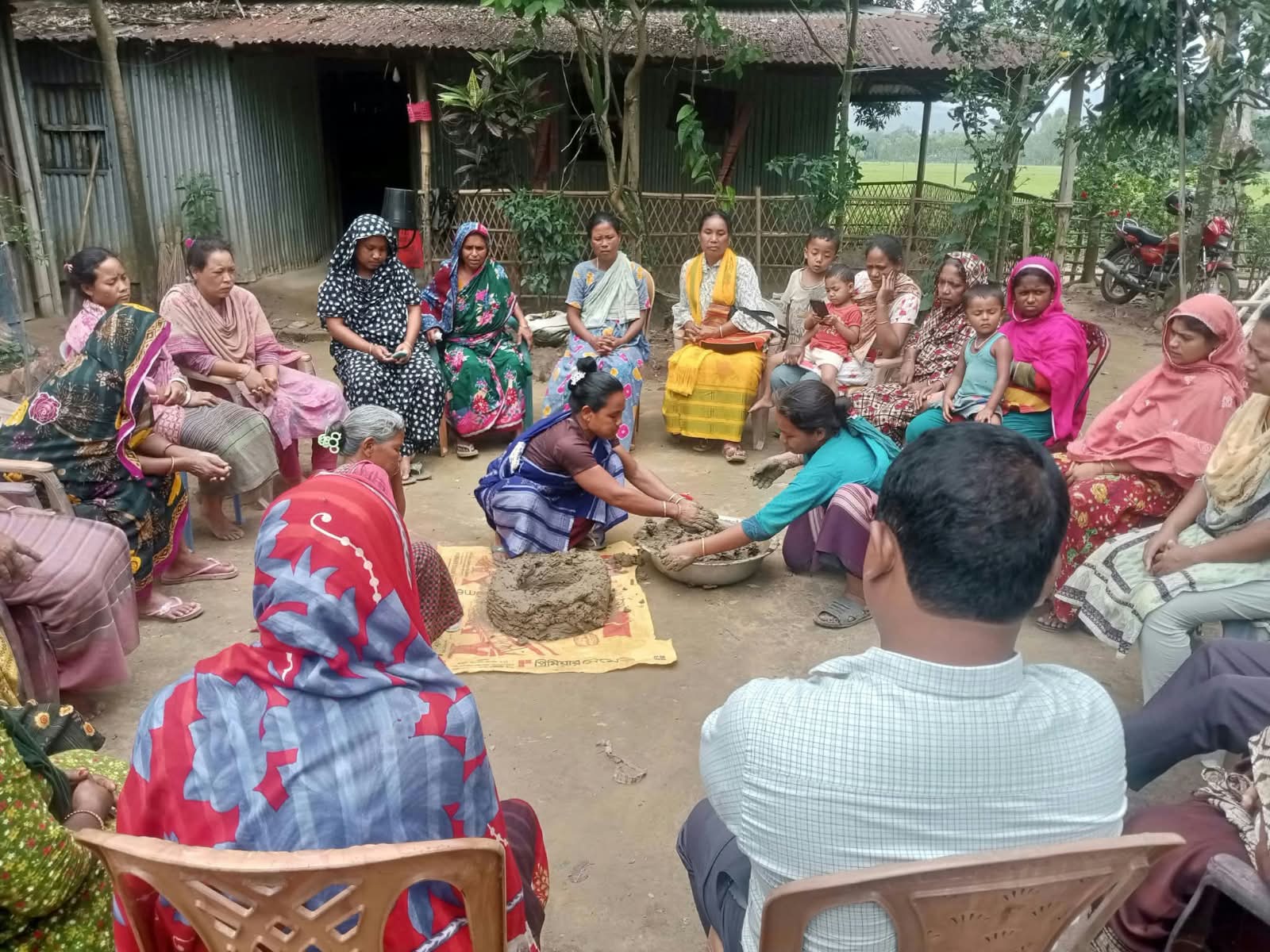
Her experience also led to a new role. At a training session on making and using Hajol in Nayapara village, Banila served as a trainer and shared her practical experience with other farmers. She was able to pass on what she had learned from the workshop and from using the method herself.
Banila’s experience shows how a simple farming technique can move from training to practice and then from one farmer to another. Rather than keeping the knowledge to herself, she tested it, observed the results and shared what she learned with her community.
Her journey from learning the Hajol method at a BARCIK workshop to using it successfully, helping three other farmers and becoming a local trainer shows how practical knowledge can spread through farmers’ own experience and cooperation.