
By Parboti Rani Singha, Netrokona
Soni Das, 28, from Rameshwarpur village in Atpara Upazila, Netrokona, has transformed her small homestead into a diverse agroecological farm. Growing up in a poor family in Bisharpara village of Kalmakanda, she learned farming from her mother while struggling to survive in the Haor region. Married at the age of 14, she continued that struggle in her new home, relying on agriculture and just 10 decimals of homestead land to support her family of four, including her husband, Ratan Das, and their two children.
From conventional farming to agroecology
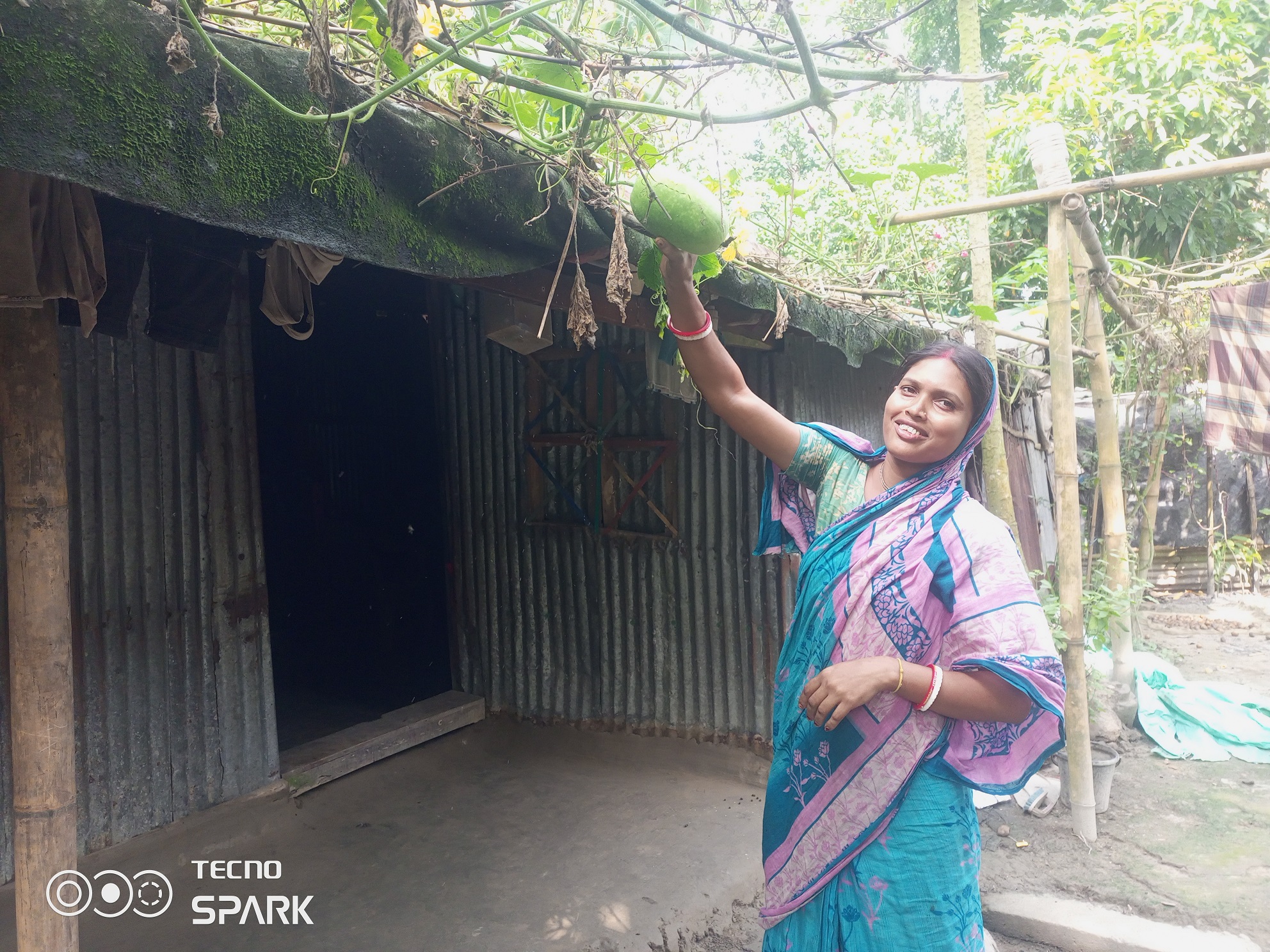
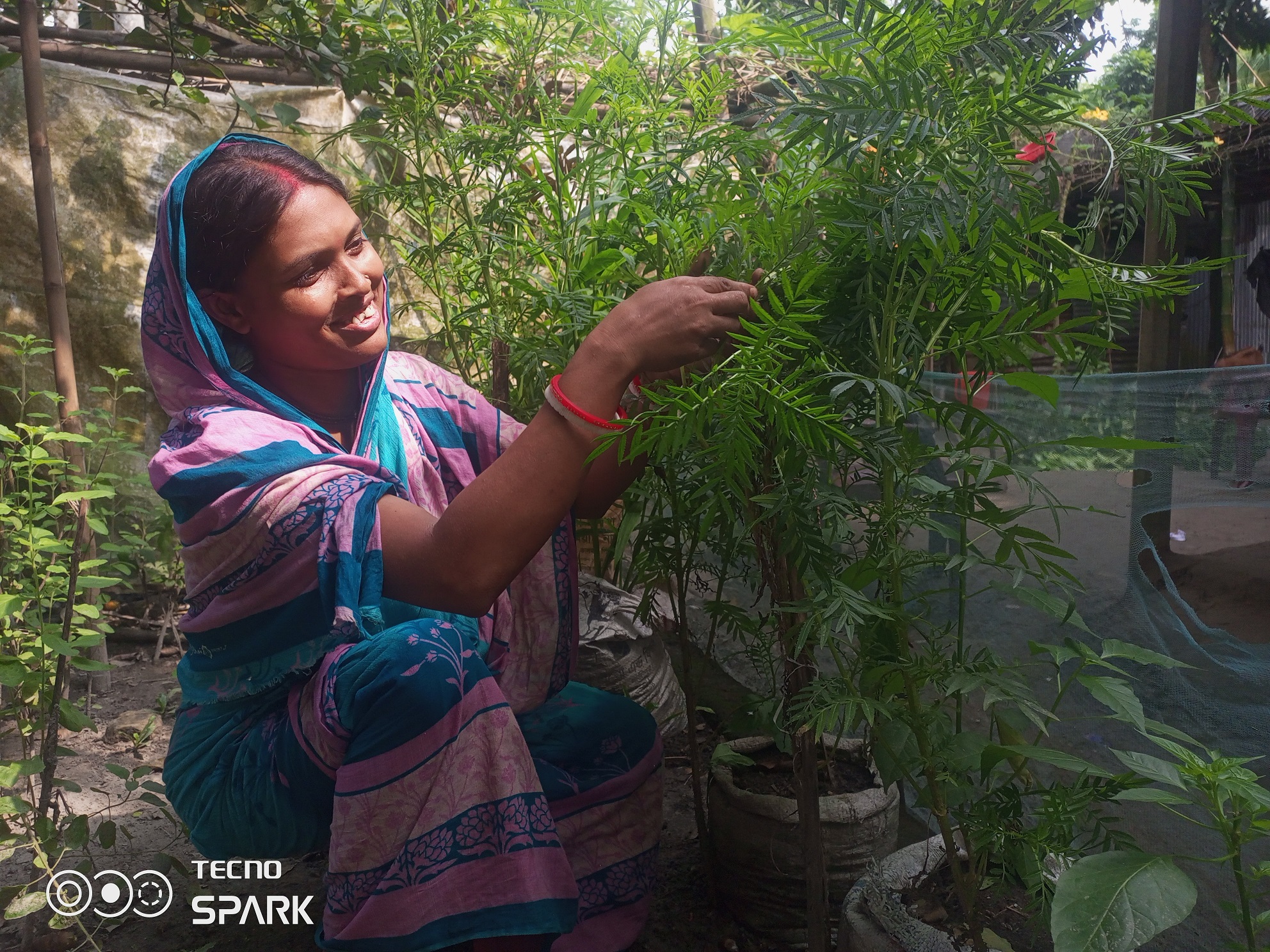
Before adopting agroecological practices, Soni cultivated only a few conventional crops. Today, she conserves native seeds and knows how to select, collect and store them at the right time. She makes effective use of her limited land, growing a wide range of crops throughout the year, including onion, garlic, bottle gourd, eggplant, taro, tomato, chilli, turmeric, beans, Malabar spinach, okra, snake gourd, bitter gourd and cucumber. She also grows uncultivated plants such as water spinach, thankuni and gima shak. Instead of harmful chemical inputs, she uses organic fertilizers and bio pesticides. She independently manages seed selection, planting, crop care and pest and disease control. She has also developed the confidence to identify farming problems and find solutions herself. Soni has been associated with BARCIK since 2015. Through its activities, she received training and opportunities to participate in farmer-led rice research, biodiversity information sharing and community events. She applied the knowledge gained to her homestead, gradually expanding crop diversity and local seed conservation.
Better nutrition and household income
Agroecology has improved her family’s access to diverse and nutritious food. Their dependence on markets for seeds, vegetables and fruits has become minimal. Using homemade organic fertilizers and natural pest management has also reduced production costs. Her family earns approximately BDT 50,000 annually from homestead farming and related activities. This includes around BDT 5,000 from homestead production, BDT 40,000 from livestock and BDT 3,000 from poultry. Surplus vegetables and fruits are sold in local markets, while some produce is shared with neighbours.
A stronger voice in family and community decisions
Soni’s role in family decision-making has changed significantly. Previously, agricultural decisions were largely made by men. Now, she and her husband discuss and jointly decide what to grow, where and when to plant, which seeds to conserve and how to manage their land and farming resources. Her opinions are particularly valued in crop selection, seasonal planning and trellis construction. She also actively participates in decisions about household income and expenditure, savings, food purchases and their children’s education and care. Her contributions to farming and family income are recognized by her husband and other family members. Responsibilities such as buying and selling poultry and harvesting crops are now shared, reflecting a more cooperative family environment. Her knowledge and achievements have also increased her standing in the community. Neighbours visit her for advice, quality seeds, vegetables and guidance on planting and caring for crops. She has gained the confidence to seek services independently from the Department of Agricultural Extension, livestock offices, the Department of Social Services, the Department of Youth Development and the Union Parishad whenever needed.
A dream of a community seed house
Since joining BARCIK in 2015, Soni has learned about agroecology, organic fertilizer production, natural pest management, crop diversification and native seed conservation. Applying these practices has transformed her homestead into a source of safe vegetables and fruits throughout the year. Her family’s dependence on purchased seeds and vegetables has fallen considerably. Her dream of producing safe food through conserving native seeds is now becoming a reality. Looking ahead, she hopes to establish her own seed house where other people can access local seeds and learn modern agroecological practices to build healthier and more sustainable lives.