
By Mukter Hossain, from Manikganj
The International Day for Disaster Risk Reduction 2025 was observed at the Notakhola Agroecology Learning Center located at the home of Ershad Munshi in the char (river island) area of Harirampur upazila, Manikganj, under the theme “Together for Action, Resilience for All.”
The event was jointly organized by the Notakhola Agroecology Learning Center and Notakhola Women’s Development Organization with support from BARCIK. The program included a rally and discussion meeting chaired by Mr. Ershad Munshi, Director of the Learning Center.
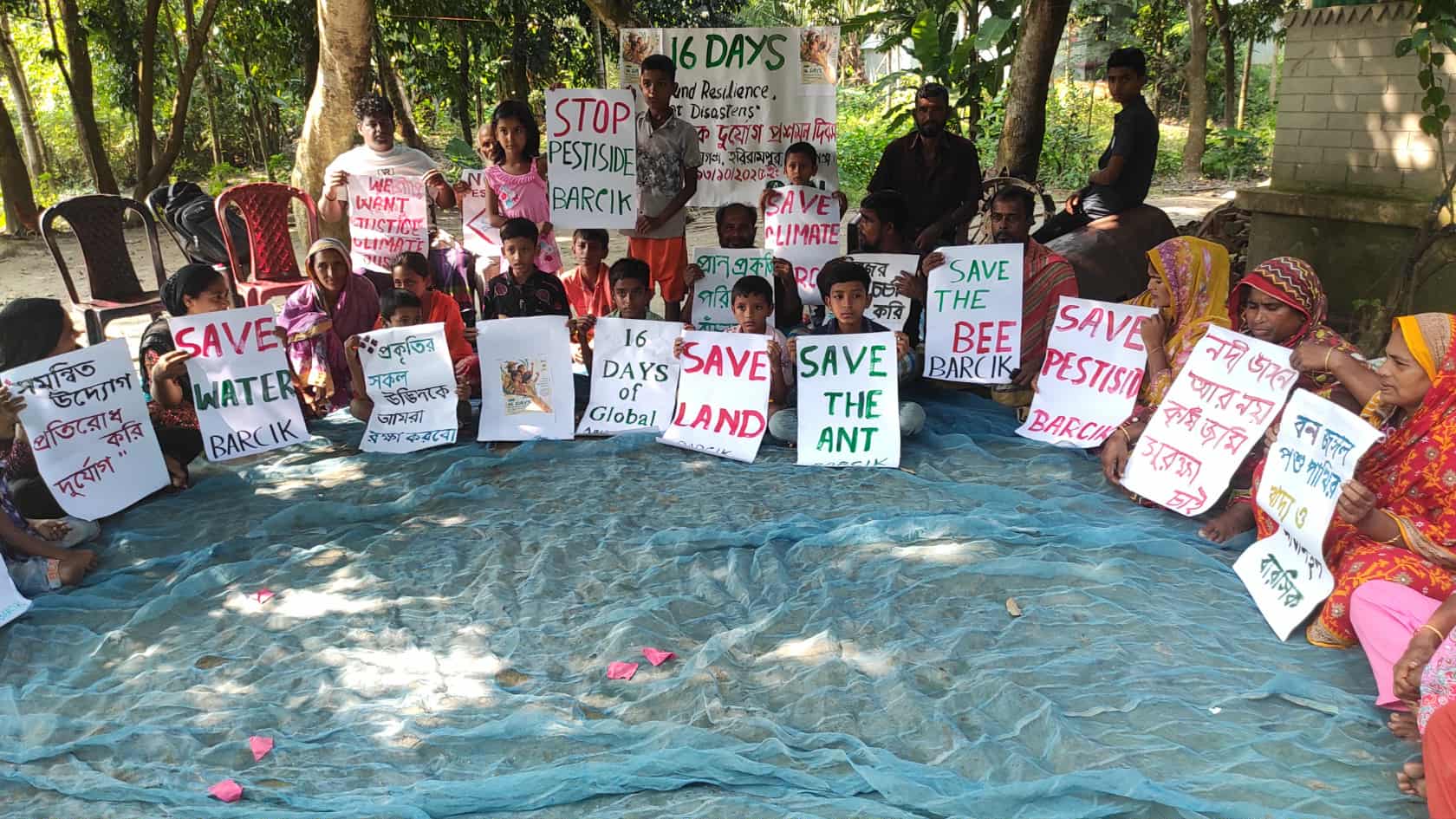
Mr. Motaleb Hossain, Member of Lechraganj Union Parishad; Mr. Forhad Shikder, Health Assistant of Lechraganj Union; Ms. Aklima Begum, President of Notakhola Women’s Development Organization; Ms. Julekha Akter, member of the organization; Mr. Subir Kumar Sarkar, BARCIK Program Officer (Ghior); and Mr. Mukter Hossain, BARCIK Program Officer (Harirampur). Farmers, teachers, students, women, and youth from the surrounding villages participated in the event.
The guests discussed about the harmful effects of chemical fertilizers and pesticides and highlighted local initiatives for disaster risk reduction. Carrying banners, leaflets, and posters, they joined a rally demanding a ban on the production and use of hazardous agro-chemicals to protect the health of women and children. They also called for wider practice of agroecology to produce safe and nutritious food.
The discussants said that chemically produced foods are causing increased health problems among people, while pesticide use contaminates the air, harming men, women, and children alike. The excessive use of toxic chemicals also poses serious threats to the environment and biodiversity.
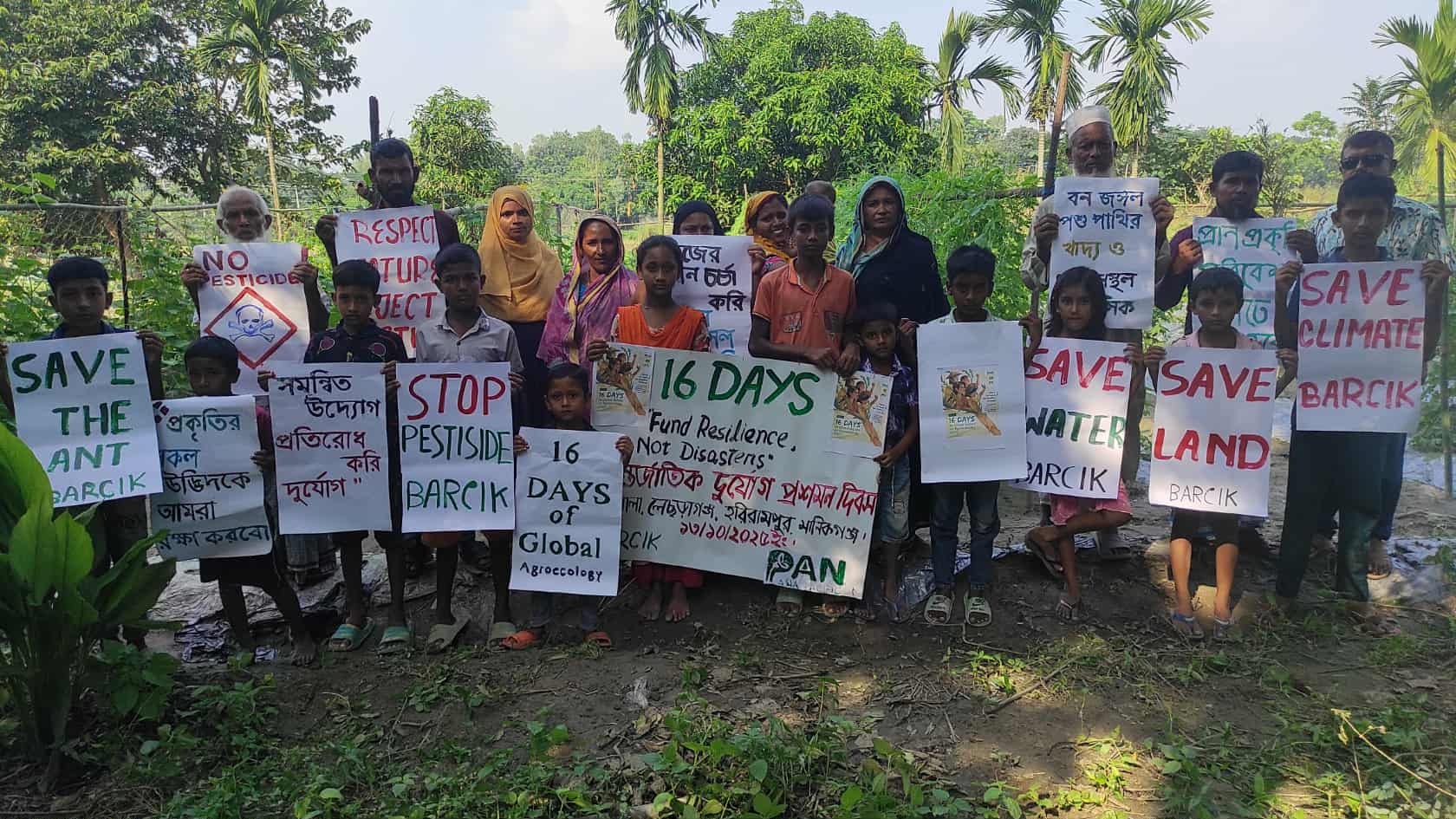
They further discussed the vulnerability of Harirampur’s char areas, particularly Lechraganj, Sutarari, and Azimnagar unions which are frequently affected by floods, droughts, heavy rainfall, and river erosion. These disasters damage croplands, forests, and livestock every year.
However, despite such challenges, local farmers have been adopting innovative practices to strengthen resilience such as cultivating native crop varieties, conserving local seeds, producing and using vermicompost, growing early-maturing Parangi Aus rice, practicing mixed cropping, and cultivating vegetables like chili, eggplant, and pointed gourd on raised land. They have also established local seed banks to promote crop diversity and reduce risks.