
By Abdur Rob from Netrakona
BARCIK, with support from Oxfam, organized a two-day workshop at Salma Begum’s “Agroecology Learning Center” in Gobindashree Uchahati. The workshop focused on climate change, agroecology, and adaptation strategies for the Haor region.
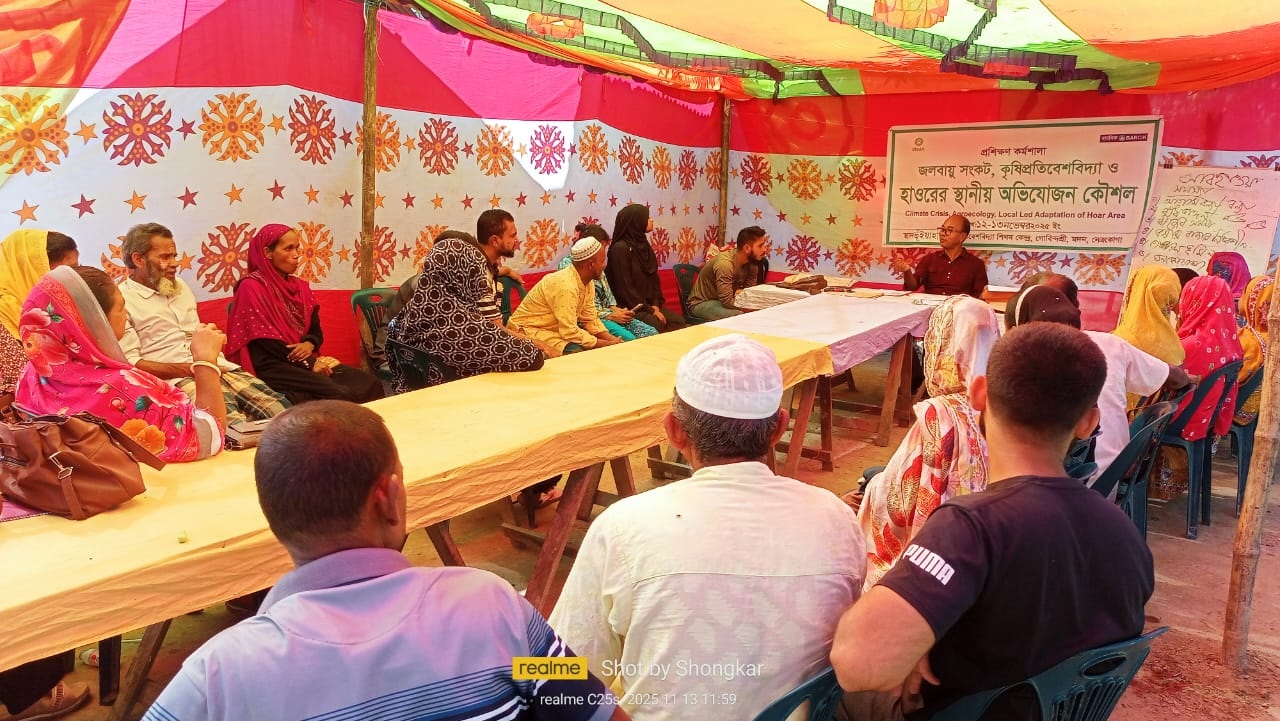
The event was chaired by Salma Akter, overseer of the learning center, with BARCIK’s regional coordinator Shonkar Mrong serving as trainer. A total of 26 participants including farmers, women, youth, and adolescents from Gobindashree and Madan union villages attended. Discussions covered agroecology, weather, climate hazards, climate justice, women’s adaptation strategies, food sovereignty, and disaster preparedness.
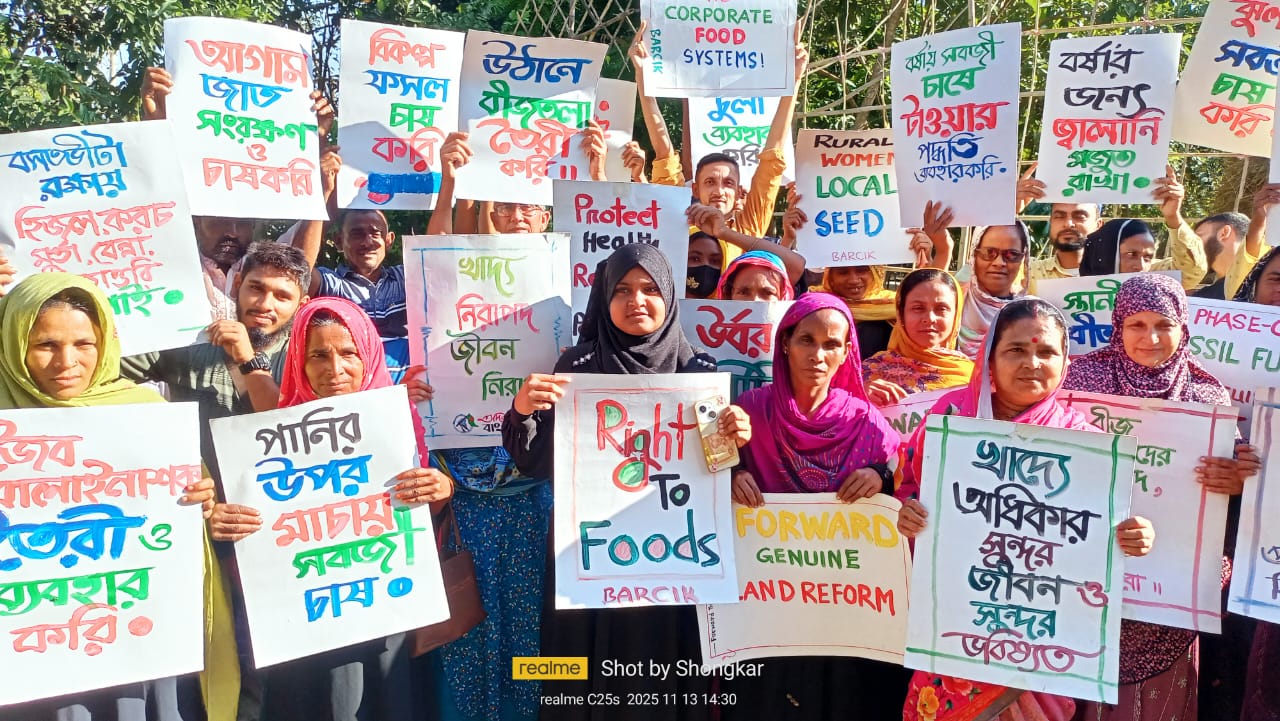
Participants shared local adaptation practices such as storing natural water in Haor depressions, using compost and vermicompost instead of chemical fertilizers, preparing organic pesticides, planting protective trees around homesteads, and practicing raised-bed, tower, and floating vegetable gardening. They also implement seasonal seedbeds, portable ovens, straw storage, and irrigation techniques to cope with floods, irregular rainfall, heat, and labor shortages.
The workshop concluded with a visit to Salma Akter’s learning center. Field facilitator Abdur Rob coordinated the event.