
By Md. Shahidul Islam from Rajshahi
Highly Hazardous Pesticides (HHPs) are among the gravest threats to human health, the environment, biodiversity, farmers’ safety, and the overall food system. Globally, these pesticides have been identified as extremely dangerous by international bodies such as the World Health Organization (WHO), Food and Agriculture Organization (FAO), and United Nations Environment Programme (UNEP). While many of these toxic chemicals are being phased out or banned worldwide, several still remain in circulation in Bangladesh, sometimes openly, sometimes under different brand names.
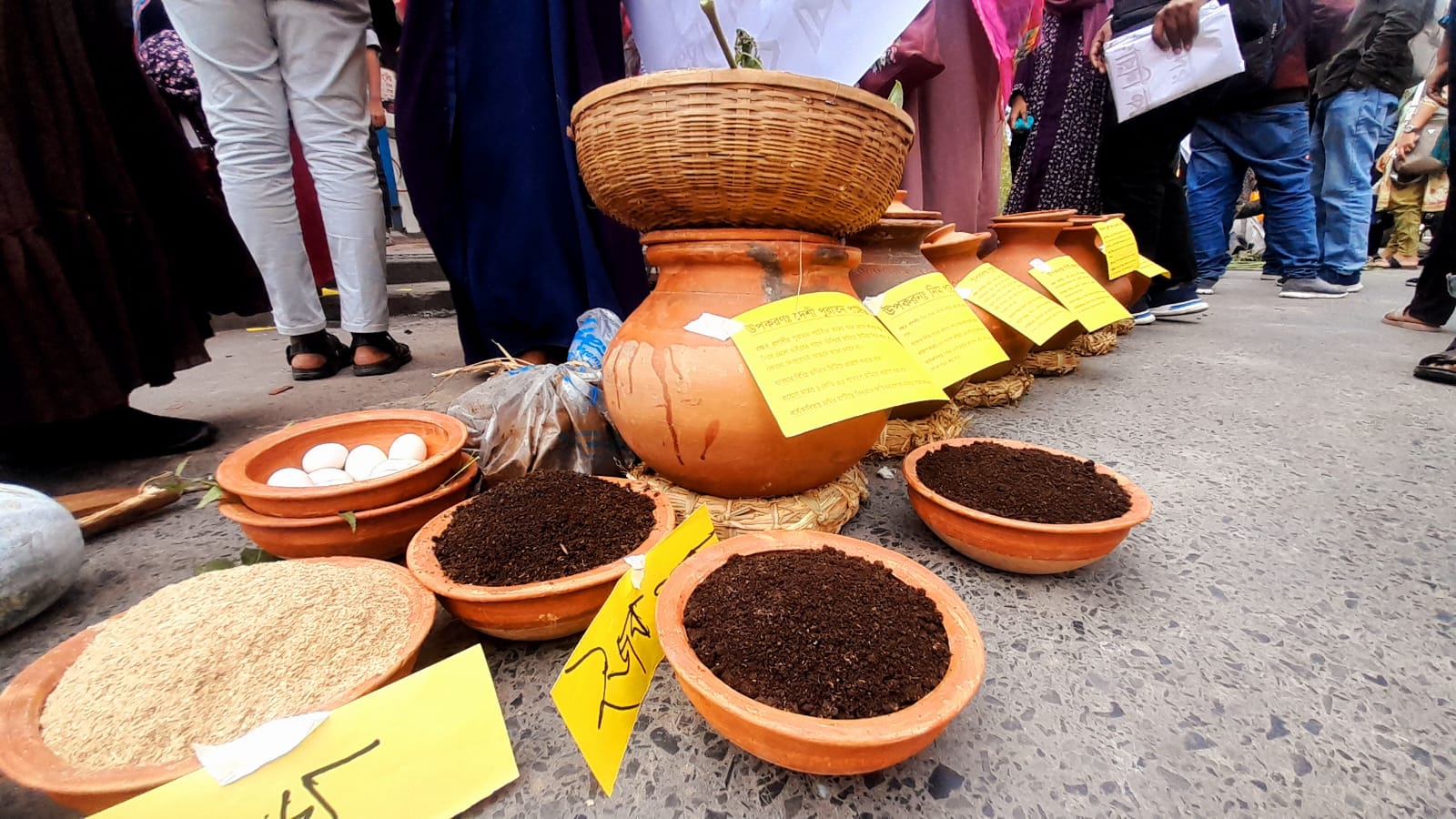
Farmers from the Barind region gathered at Zero Point, Shaheb Bazar in Rajshahi recently, to form a human chain demanding a complete ban on Highly Hazardous Pesticides. Carrying baskets of their own pesticide-free vegetables, grain crops, organic fertilizers, and bio-pesticides, the farmers turned the protest into a powerful exhibition of safe and sustainable agriculture.
Presenting field-based research findings, BARCIK researcher and regional coordinator Md. Shahidul Islam said that many pesticides already banned in different countries such as Paraquat, Glyphosate, Chlorpyrifos, Abamectin, Glufosinate Ammonium, Carbendazim, Propiconazole, Zinc Phosphide, Bromadiolone, and Carbofuran. These pesticides are still widely available in Bangladesh. Although Carbofuran is officially prohibited, it continues to be sold under various labels.
Mr. Islam said, “These chemicals are silently destroying human health and nature. They are neurotoxic, damage the liver, kidneys and reproductive system, increase the risk of cancer and hormonal disorders, and pollute soil, water and air. They are deadly for bees, fish, birds and overall biodiversity”.
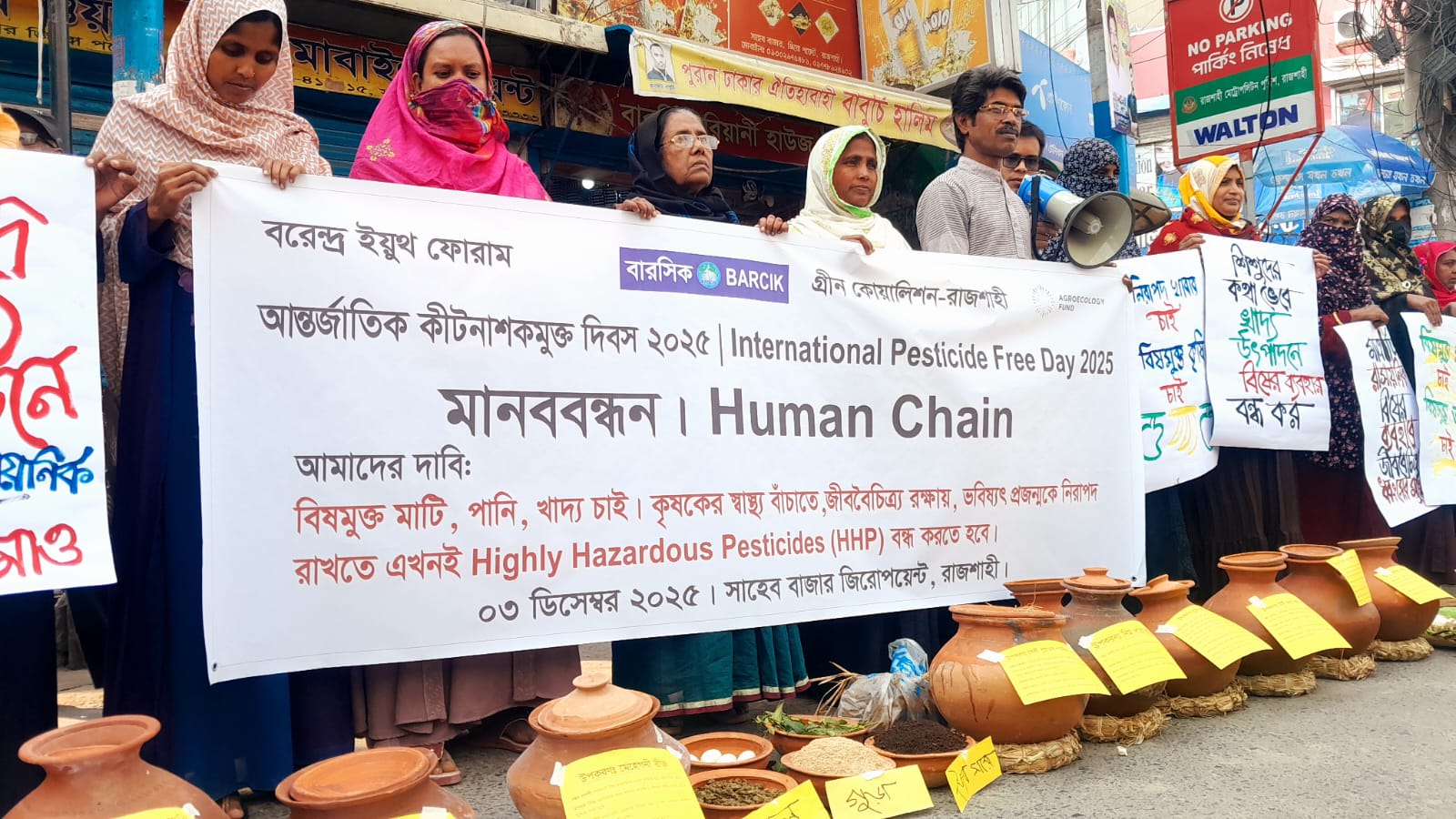
The human chain was organized on the occasion of International Pesticide-Free Day 2025 by BARCIK, the Green Coalition, and the Barind Youth Forum. Affected farmers, local citizens, and representatives of civil society actively participated in the event.
Renuka Begum, a safe food producer from Bargachhi village in Paba upazila, shared her personal experience saying, “We farmers often do not know how harmful these poisons are. When the damage happens, it happens silently. That is why I stopped using pesticides. I produce crops and vegetables using only organic fertilizer, cow dung compost, and bio-pesticides.”
Sultana Begum, a woman agroecology practitioner from Bilnepal Para village in Darshan Para Union, said, “We prepare organic fertilizers and bio-pesticides ourselves and teach other women in our village. Using resources around us such as cow dung, neem leaves, mahogany leaves and cow urine we control pests naturally. Our costs are low, and both our environment and our lives remain healthy.”
During the program, participants displayed safe food, vegetables, organic inputs, neem leaves, mahogany leaves, and various uncultivated edible plants, sending a strong message of agricultural and environmental awareness. Farmers emphasized that food produced through natural, poison-free methods is healthier and environment-friendly.
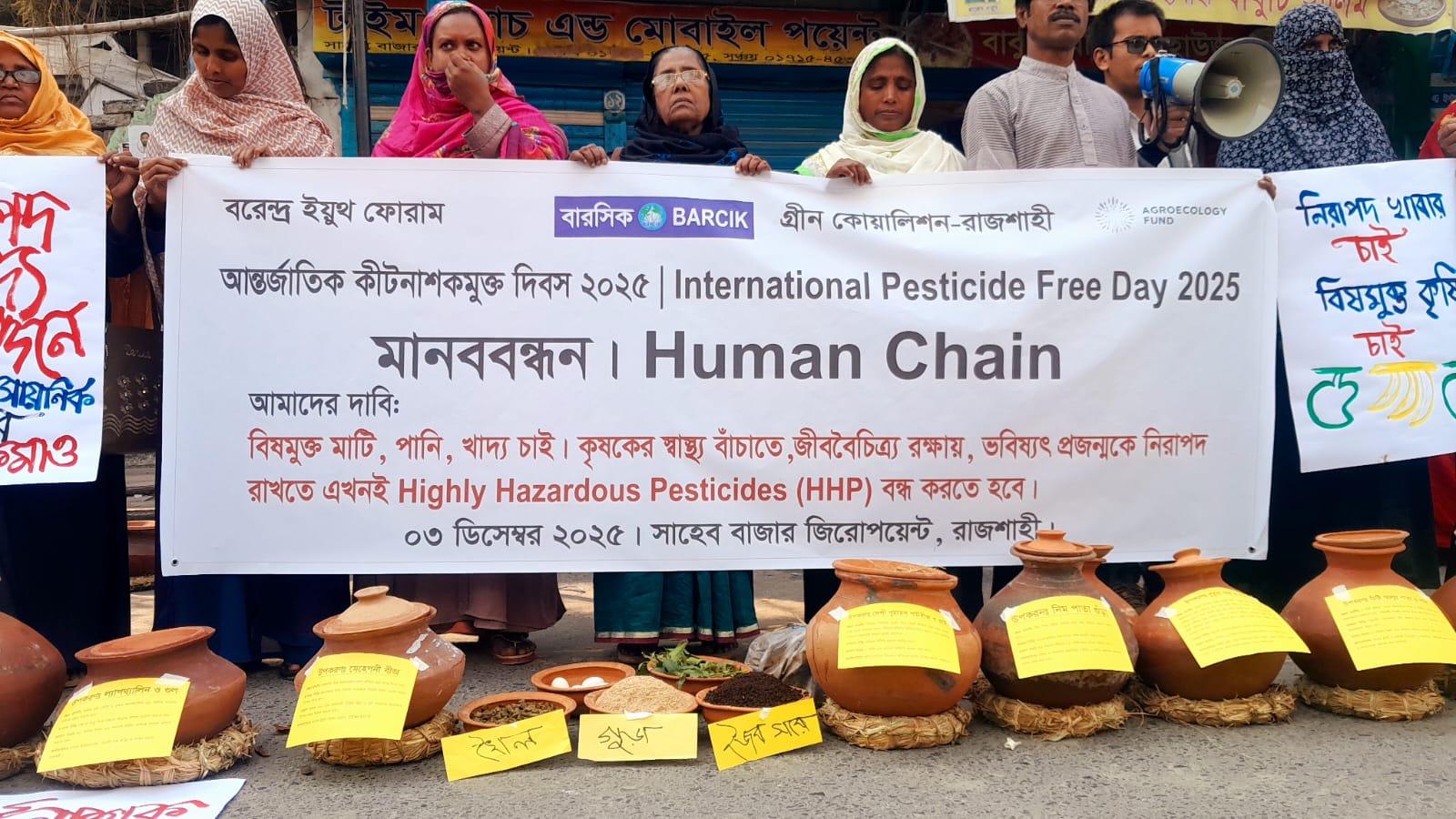
Speakers at the event included Atikur Rahman, Joint Secretary of Barind Youth Forum; freedom fighter Jamal Kaderi; Rahima Begum, President of Green Coalition (Poba); Raihan Kakib Jewel of Barnai Folk Literature Council; and indigenous leader Subhash Hembrom.
At the end of the human chain, Green Coalition President Rahima Begum placed four key demands before the government that included: Completely stop the sale and use of Highly Hazardous Pesticides in the Barind region; Take immediate action to remove banned pesticides that are still available in markets; Provide support to farmers for adopting safe, organic, and natural farming methods and Introduce regular monitoring and awareness programs to ensure poison-free soil, water, and food.