
By Atikur Rahman Atik from Rajshahi
Agroecology-practicing farmers in Bargachhi village of Poba upazila, Rajshahi, have called for stronger controls on highly hazardous pesticides and the expansion of safe, agroecological farming.
The demand was raised at a community discussion organized by Green Coalition and BARCIK, where around 30 women and men farmers displayed locally produced chemical-free crops and indigenous seeds and shared their experiences of agroecological farming.
Farmers said that excessive pesticide use is contributing to declining bird populations, increasing pest problems and the reduction of native fish in nearby water bodies and rivers. They emphasized on the need to promote botanical pesticides, organic fertilizers and locally available alternatives.
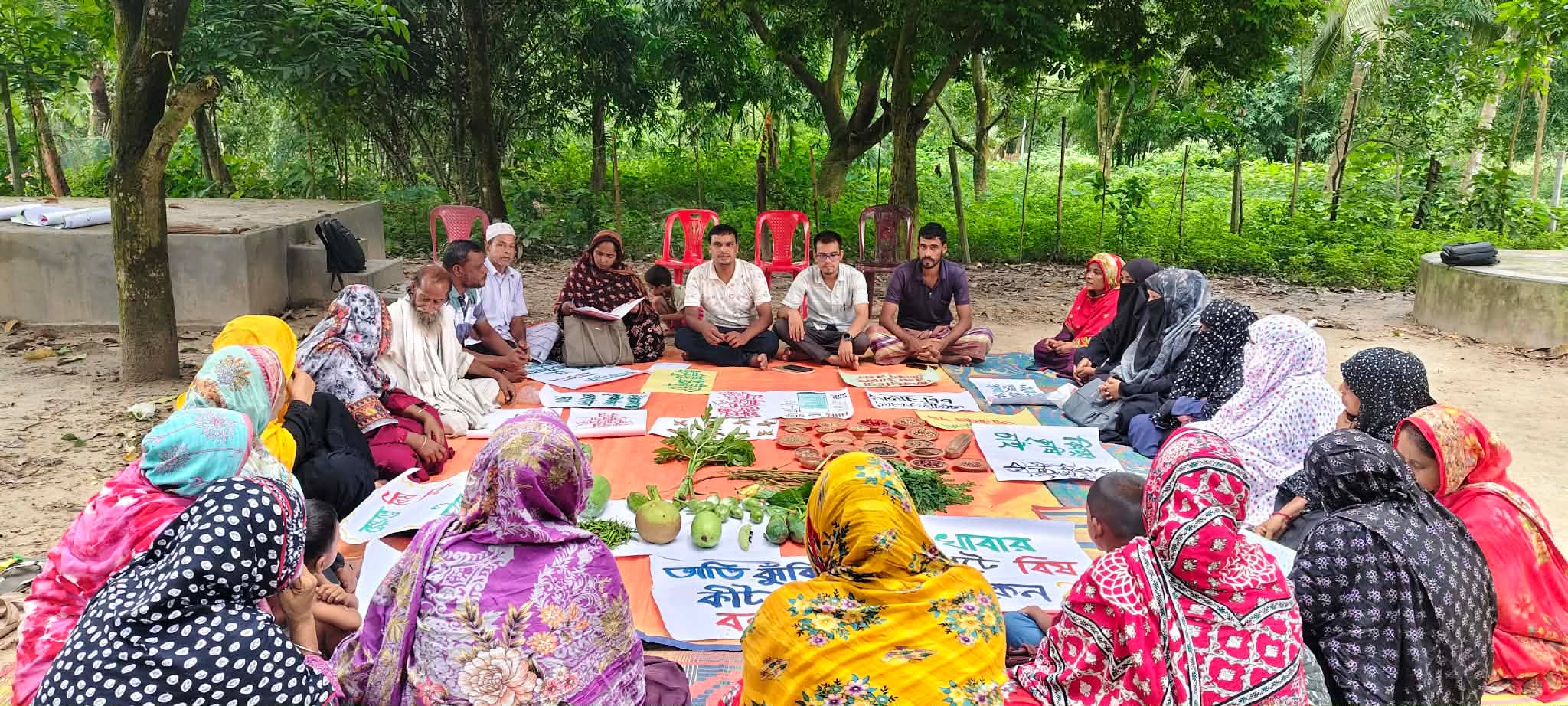
Young farmer Hridoy Hasan said that reducing pesticide costs would benefit farmers economically and that they should be supported to learn and use locally made biological pest-control methods. Farmer Rubina Begum shared her experience of using neem leaves, ash, mahogany seeds and other locally available plant materials to control pests.
Farmer Abdul Jabbar also shared his experience of successfully using neem extract in papaya cultivation, demonstrating that safe production is possible without hazardous pesticides when appropriate agroecological practices are applied.
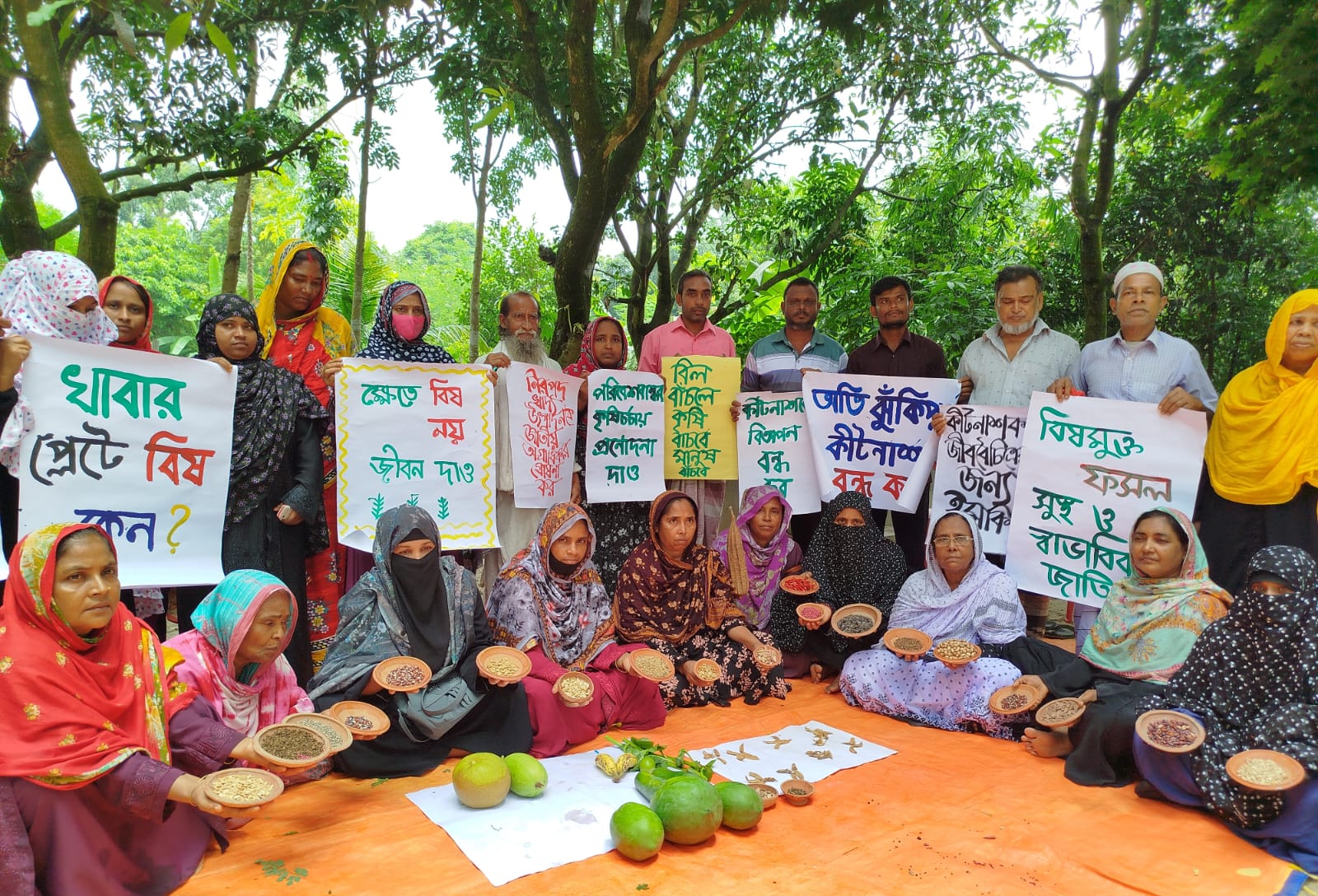
Bargachhi currently has 30 model Shotobari households, two (2) Agroecology Learning Centres and a community seed bank. Farmers produce and conserve local seeds and exchange them seasonally, while the learning centres support training on organic pest management and other agroecological practices.
Women farmers also called for stronger seed sovereignty through local seed production, conservation and exchange, alongside restrictions on the sale and use of harmful pesticides.
The meeting called for increased government support for local seed production and conservation, expansion of community seed banks, recognition of farmers’ local knowledge and agroecological practices, and stronger regulation of highly hazardous pesticides and their unrestricted sale.