
By Md. Nazrul Islam from Manikganj
At 77, Kulsum Begum faces an uncertain future on the banks of the Padma River in Gangadhardi village, Lechraganj Union, Harirampur, Manikganj. Repeated river erosion has taken away her family’s land and security. Now, living in a small shelter on government-owned land, she struggles to care for her 45-year-old son, who cannot leave his bed or communicate verbally. After an event marking International Day for Disaster Risk Reduction on 14 October 2026, Kulsum sat alone, quietly reflecting on a life shaped by poverty, loss and relentless struggle. Married at around 12 or 13, she once lived with her husband and family on land that offered some security. Repeated erosion gradually destroyed their assets, and after her husband died, she was left to manage life alone. Recently, financial hardship forced her to sell the roofed structure that was among her few remaining possessions. It is due to be dismantled soon.
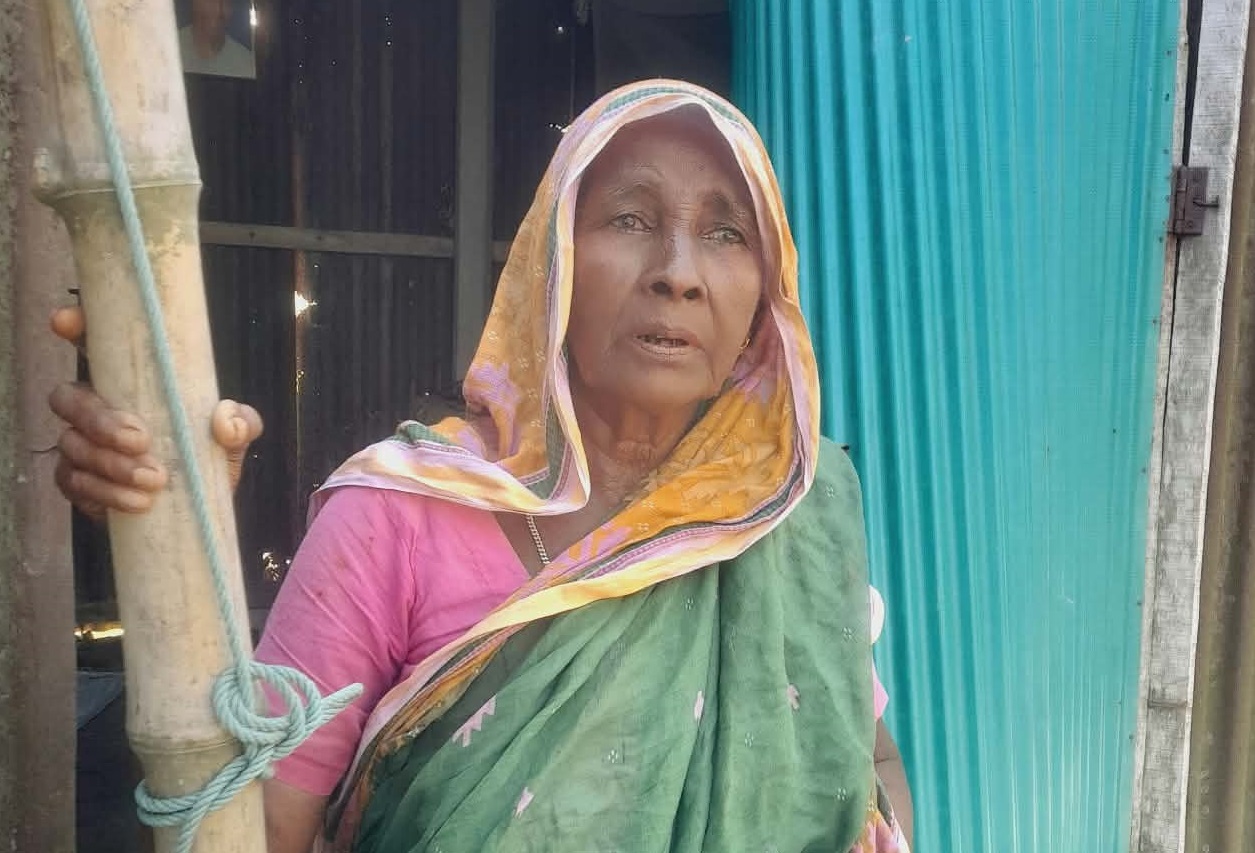
Earning a living with dignity
Despite her age and responsibilities, Kulsum refuses to beg. Instead, she cultivates vegetables on available land, including government-owned and abandoned plots. Without chemical fertilizers or pesticides, she grows papaya, bottle gourd, beans and mustard. She also collects wild leafy vegetables from the surrounding fields and sells them at the local market. These activities provide much of her income and help her to feed herself and her son. She recalls a time when the family kept cattle and goats and shared the work together. Caring for her son now makes livestock rearing impossible. Her struggle is compounded by social neglect. She says some neighbours make hurtful remarks about her son and appeals to them to respect his dignity rather than ridicule him.
A struggle for social protection
Although her son receives a small disability allowance, Kulsum has not received the government’s old-age or widow allowance. She says she has repeatedly raised the issue with the local union council member without success. She said, “I will keep struggling with my son as long as I have the strength to work. I will not beg. I am only asking the government for what I am entitled to.” BARCIK staff members Sheikh Ratan and Mukter Hossain have begun assisting her. BARCIK official Mukter Hossain explained that the online application could not be submitted because Kulsum did not have a mobile SIM registered in her own name. The organization is coordinating with the union council to help complete the application using a registered SIM.
Beyond sympathy: A question of rights
Kulsum’s story reflects the hardship faced by many women in riverine communities, where erosion can destroy homes, livelihoods and family security. Her determination to grow food rather than depend on charity demonstrates remarkable resilience, but resilience alone cannot replace social protection. Her situation highlights the need for accessible government allowances, support for caregivers and effective protection for older people living in disaster-prone areas. For Kulsum, receiving the benefits she is entitled to would be an important step towards dignity and security in her remaining years.