
By Shimul Biswas from Manikgonj
Amid growing environmental challenges such as climate change impacts, agricultural land degradation, and encroachment and pollution of rivers and canals, the importance of united local initiatives continues to rise. In this context, the Green Coalition Committee held its biannual coordination meeting in Manikganj to promote sustainable development based on environment, ecology, and agriculture.
The meeting took place at Arab Bhaban in the Beutha area of Manikganj recently. Members of the Green Coalition from district and upazila levels, farmer representatives, women and youth organizers, teachers, social activists, and other local stakeholders participated in the event.
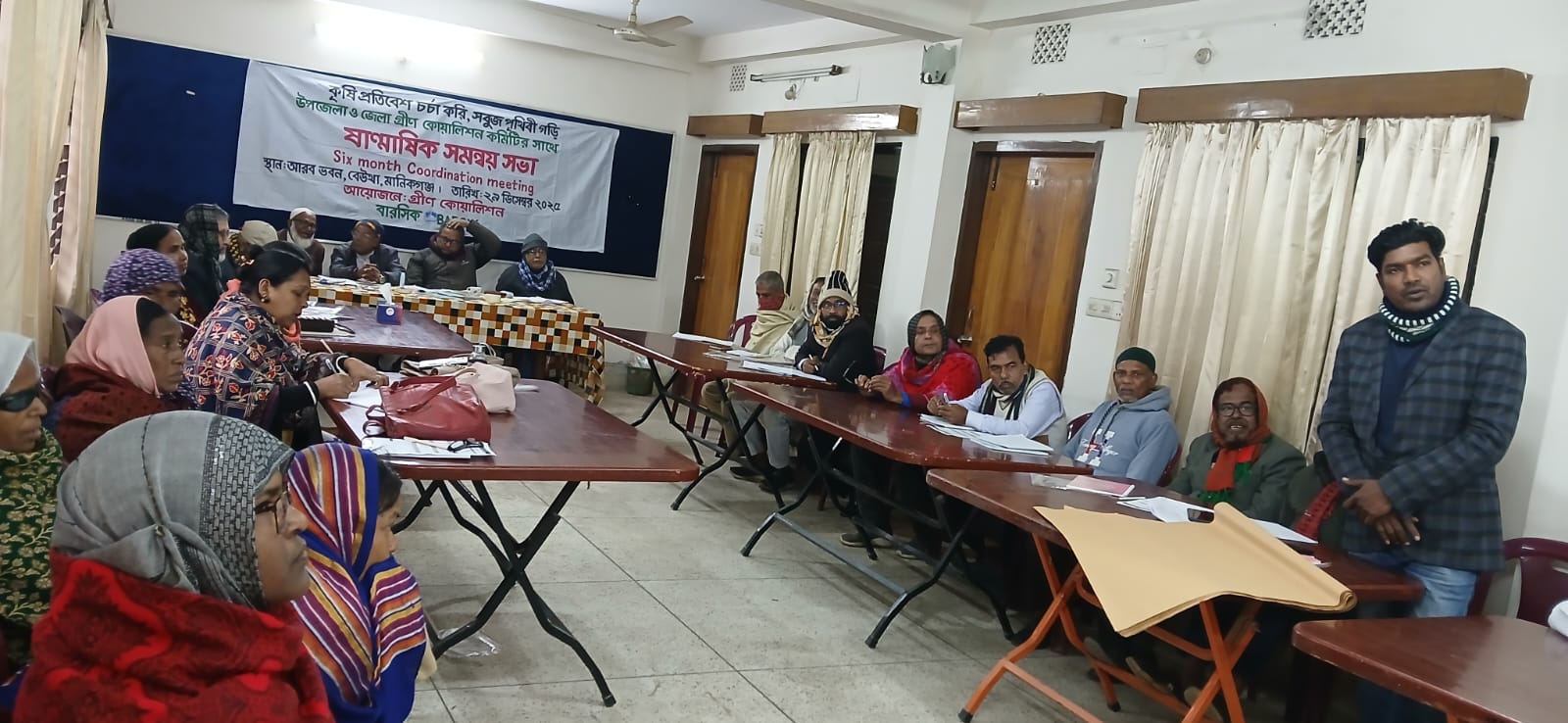
The meeting was chaired by Green Coalition President and freedom fighter Shamsul Alam Khan, while Program Coordinator Shimul Biswas moderated the session. BARCIK’s Regional Coordinator Bimal Roy delivered the welcome address, stating that environmental protection is about nature and directly linked to people’s lives, livelihoods, and future security.
BARCIK Director Syed Ali Biswas played a key role in guiding the discussion. He described the Green Coalition as a social alliance against systems of control over nature and people, emphasizing the protection of soil, water, and air as the foundation of human life.
He said, “Farmers alone cannot carry this movement forward. Teachers, journalists, lawyers, and professionals from all sectors must be involved.” Stressing the importance of strengthening Green Coalition committees from union to national levels the participation of other stakeholders is crucial according to him.
Participants reviewed activities from the past six months, including tree plantation and maintenance, conservation of indigenous and endangered seeds, awareness campaigns against illegal fishing nets, human chains and memorandums to prevent river and canal encroachment, and advocacy on the harmful effects of chemical fertilizers and pesticides.
The discussants said that these initiatives have increased environmental awareness and created a platform for collective local voices. They emphasized that the Green Coalition is not merely project-based but a long-term, people-driven social movement.
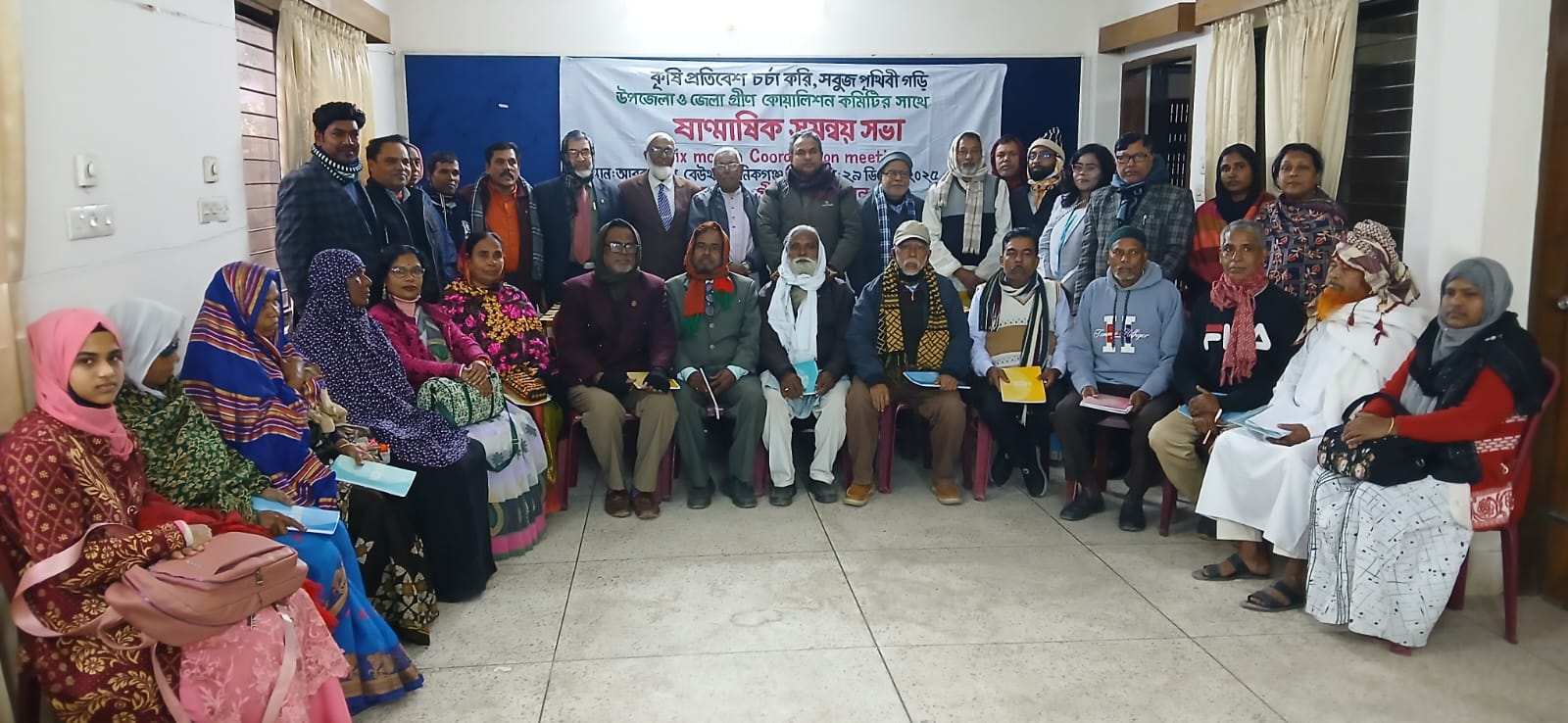
Challenges such as lack of awareness, financial and logistical constraints, resistance from vested interests, and weak enforcement of environmental laws were also discussed. However, participants said these challenges are strengthening coordination skills and evidence-based advocacy among local organizers.
The meeting concluded with consensus on future actions, including addressing waterlogging, ensuring regular care of planted trees, promoting plastic and waste management campaigns, creating fair market linkages for organic products, and enhancing coordination with local government and administration.
Concluding the session, President Shamsul Alam Khan said, “Environmental protection is a collective social responsibility. Sustainable change is only possible when everyone stands for the environment from their own position.”