
By Maruf Hossein Milon, from Coastal Region
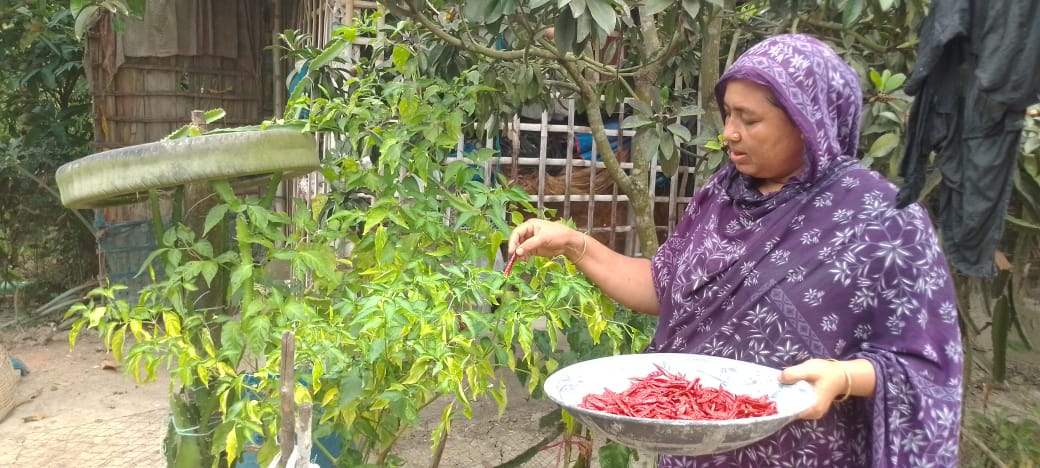
Climate change, soil salinity and the scarcity of freshwater for irrigation pose persistent challenges to agriculture in Bangladesh’s coastal region. Despite these difficulties, Amena Begum, a woman farmer from Tengrakhali village in Ramzan Nagar Union, Shyamnagar upazila of Satkhira, has been working to conserve agrobiodiversity through native seed conservation, organic vegetable cultivation and seed sharing. Over the past eight years, she has developed a rich collection of traditional and local seeds, contributing not only to her family’s food and nutritional security but also to farmers’ access to seeds and self-reliance.
Farming against the odds
Amena lives with her husband, Rafiqul Islam, their son, and her parents-in-law in a five-member family. She has been associated with BARCIK since January 2020. Alongside managing household responsibilities and raising livestock and poultry, she actively engages in farming. Her homestead covers 45 decimals of land, with another 60 decimals of paddy land. She raises ducks, chickens, geese, goats and sheep while cultivating a variety of vegetables. Despite limited land and the challenges of the coastal environment, she has transformed her homestead into a diverse farming space to meet her family’s needs. Her interest in conserving local seeds grew after several disappointing experiences with commercially purchased seeds. On some occasions, pumpkin and bottle gourd seeds produced plants but no fruits. In another instance, seeds purchased as red amaranth produced a different variety. These experiences made her realize the importance of conserving her own seeds. She gradually began selecting seeds from healthy, productive plants and preserving them for future cultivation. Over time, seed conservation became an essential part of her farming practice.
A living seed bank of local biodiversity
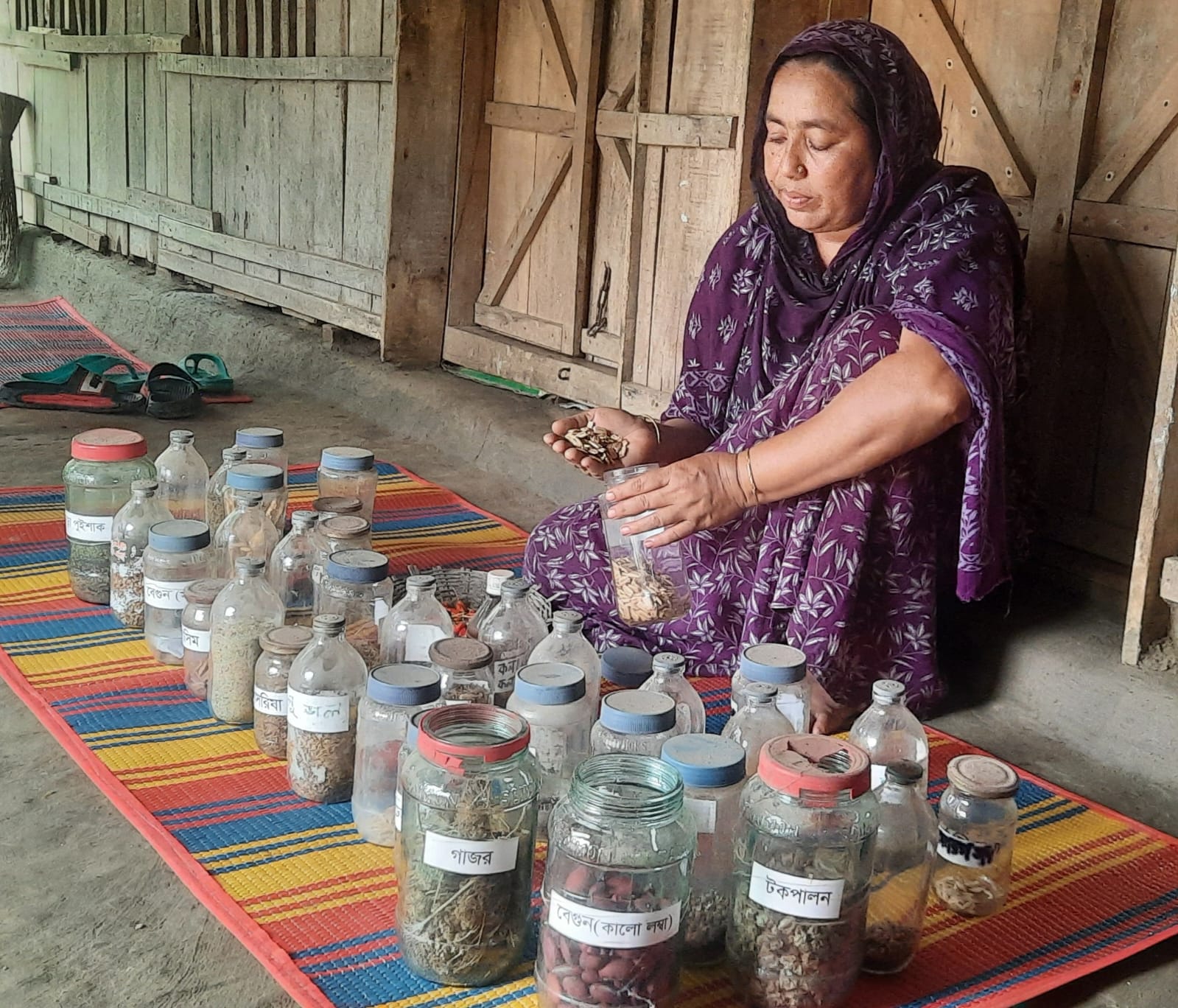
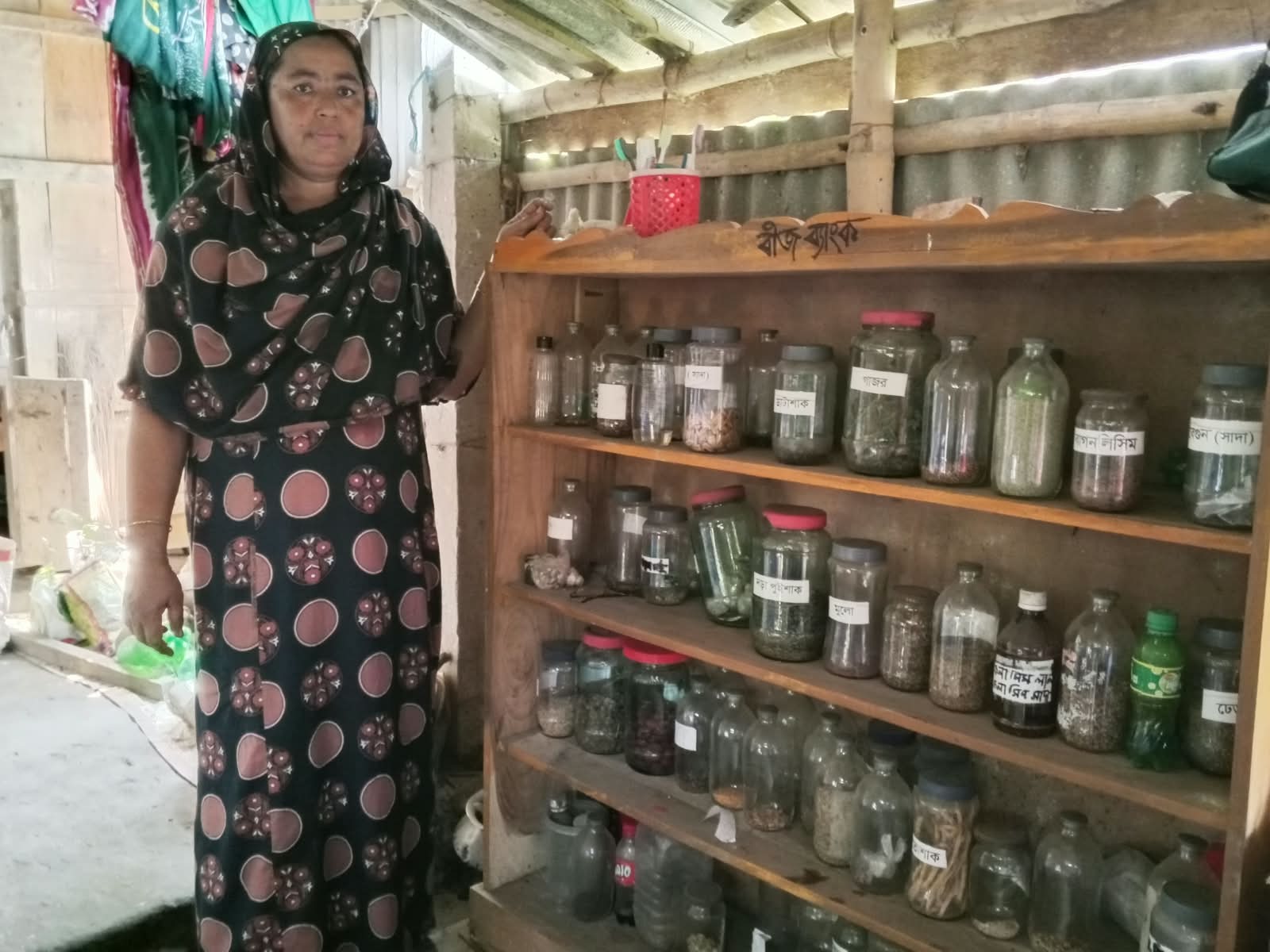
After eight years of dedicated effort, Amena has developed a collection of approximately 68 varieties of traditional and local seeds. Her collection includes different varieties of vegetables, leafy greens, gourds, beans, chillies, tomatoes, eggplants, roots and tubers, as well as rice and other plants. Among the varieties are pumpkin, bottle gourd, cucumber, bitter gourd, ridge gourd, okra, spinach, amaranth, papaya, brinjal, beans, radish, ginger, turmeric, garlic, coriander, fennel and several local varieties of tubers and rice. She carefully selects seeds from healthy plants with good yields. After allowing them to mature, she collects and dries them thoroughly before storing them in glass bottles. When necessary, she dries the seeds again in sunlight to maintain their quality for the next planting season. By using her own seeds, Amena has reduced her dependence on purchased market seeds and gained practical knowledge about seed selection, harvesting and storage. Her collection is a valuable example of how farmers can conserve local genetic resources and maintain agricultural diversity at the household level.
Sharing seeds and strengthening community relationships
Amena’s seed collection benefits her family and neighbouring households. She regularly distributes seeds and vegetables free of charge to relatives and neighbours according to their needs. This enables other families to cultivate vegetables in their homesteads and strengthens local cooperation. “I find great joy in keeping seeds at home. Having my own seeds means I can cultivate crops at the right time and obtain good yields. I want to conserve more varieties, but water scarcity often prevents me from doing so,” says Amena. Her words reflect both the confidence she has gained through seed conservation and one of the major challenges facing coastal agriculture: the shortage of suitable irrigation water. So far, she has distributed approximately 52 varieties of local seeds to more than 2,700 people free of charge. Her homestead also generates income from different sources. She earns around Tk 30,000 annually from selling seeds and seedlings, Tk 50,000 from vegetables and Tk 70,000 from livestock and poultry. These activities have strengthened her family’s financial position and increased her recognition within the community.
From a seed conserver to a community leader
Amena’s contribution extends beyond farming. She now participates in important household decisions, including income and expenditure management and savings. She is an active practitioner at the Vetkhali Agroecology Learning Centre, manages a seed bank and serves as president of the Vetkhali Khalpar Farmers’ Organization. Through the organization, she regularly works to promote farmers’ and women’s rights. She advises women on local seed cultivation and income-generating activities, encouraging them to become economically self-reliant. Her environmental activities include mobilizing women to plant palm seeds along roads beside local canals. She also supports pregnant women and assists households when domestic animals give birth. Additionally, she helps disadvantaged people access government and non-government services at union and upazila levels. These activities have strengthened her leadership and demonstrated how women’s agricultural knowledge can contribute to wider community development.
A vision for a model agriculture farm
Amena dreams of expanding her collection of local seeds and developing her homestead into a model agroecological farm. Her experience demonstrates how a woman’s knowledge, dedication and practical skills can conserve agricultural biodiversity even with limited resources and under challenging environmental conditions. Her collection of 68 seed varieties represents more than an individual achievement. It is an important contribution to conserving local genetic resources, strengthening household food and nutritional security and promoting farmers’ control over seeds. With appropriate technical and material support, Amena’s initiative could inspire more farmers, particularly women, to conserve local seeds and adopt environmentally friendly agricultural practices.