
By Atikur Rahman Atik from Rajshahi, Bangladesh
Participants at an advocacy meeting on agroecology and safe food have called for integrated initiatives to reduce the harmful use of agricultural chemicals, conserve agrobiodiversity, protect farmers’ rights and ensure food safety from production to consumption.
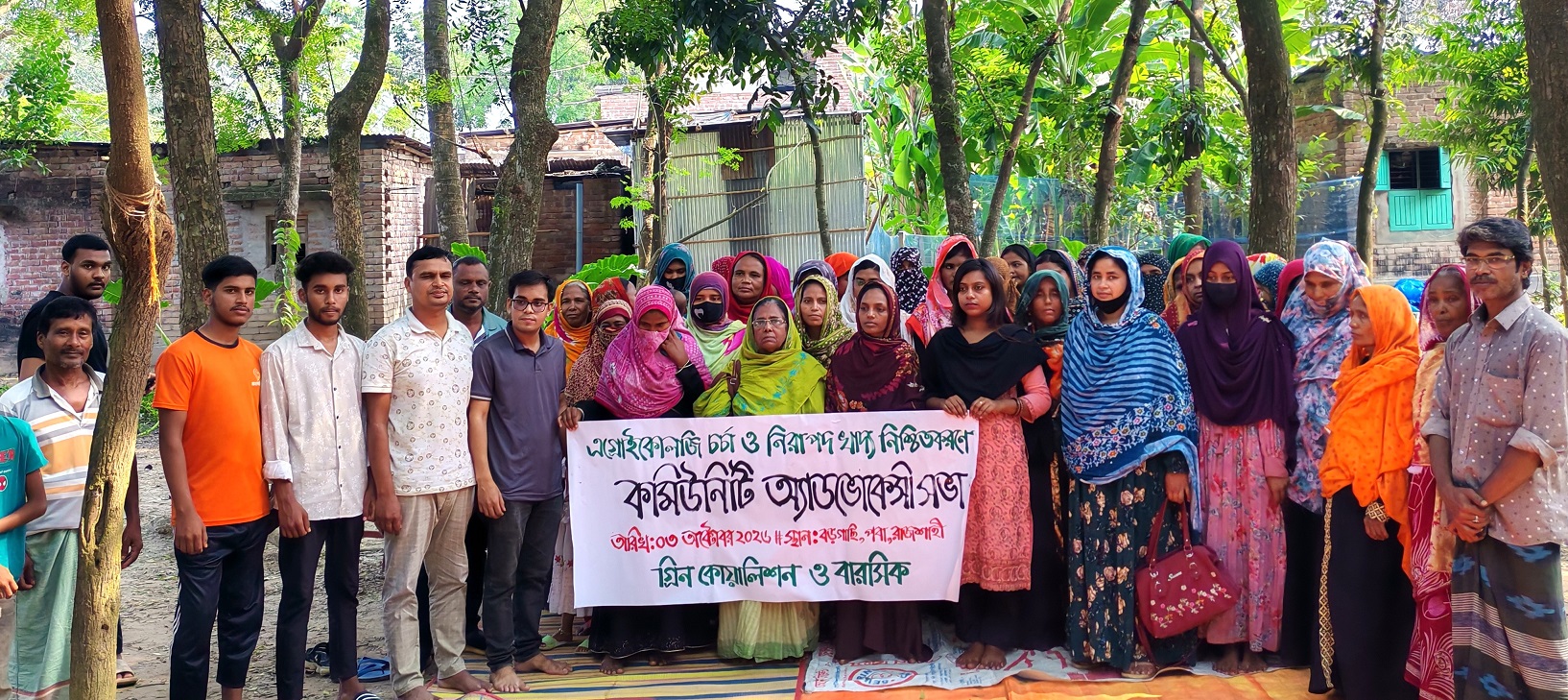
The meeting was jointly organized by BARCIK and Green Coalition at Borgaachhi village in Paba Upazila, Rajshahi. A total of 56 women, men and young people attended.
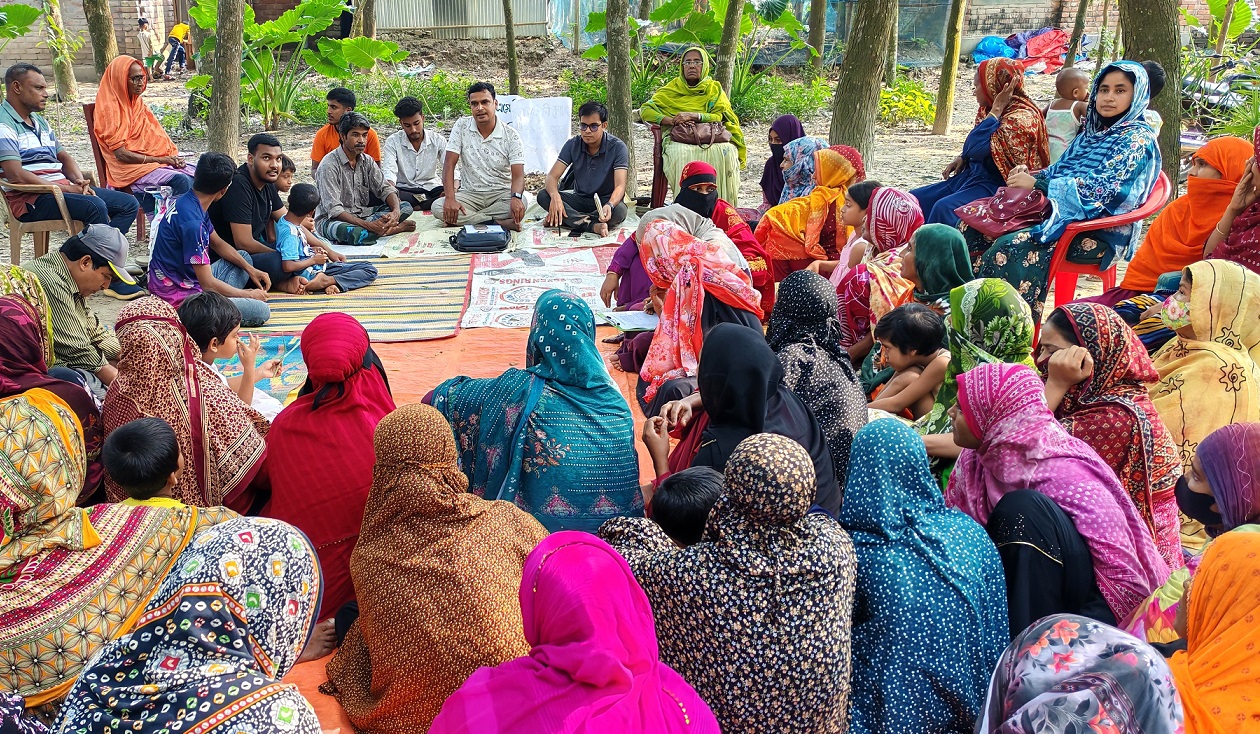
Speakers included Md. Touhidul Islam, Programme Officer (Agriculture) at BARCIK’s Rajshahi Resource Centre; Md. Atiqur Rahman, President of Barendra Youth Forum; Rahima Begum, President of Paba Upazila Green Coalition and a women’s leader; and Poly Rani, Community and Campaign Facilitator of BARCIK, alongside local farmers and youth representatives.
Speakers of the event said that agricultural development should go beyond increasing production and give equal importance to soil health, water resources, ecological balance, biodiversity, and food and nutrition security. They called for expanding agroecological practices based on local knowledge, indigenous seeds, organic fertilizers, natural pest management and crop diversity as alternatives to chemical-dependent farming. They described agroecology as not merely a production method but an integrated approach to environmental sustainability, food sovereignty and farmers’ rights.
Highlighting agricultural challenges in the Barind region, participants identified drought, excessive dependence on groundwater, declining soil fertility and the uncontrolled use of chemical inputs as major concerns. They stressed the need to conserve local seed varieties, promote water-efficient farming, improve soil health through organic methods and utilise farmers’ experiences and traditional knowledge.
On food safety, speakers focused on the importance of maintaining quality and safety throughout the food chain, including production, processing, storage, transportation and marketing. They called for controlling hazardous pesticide use, testing pesticide residues in food, strengthening market monitoring and raising consumer awareness.
Participants urged relevant government and non-government organizations and local stakeholders to work together to implement these recommendations. They stressed that developing agroecology-based agricultural and food systems is essential to protecting farmers’ rights, conserving the environment and ensuring consumers’ access to safe food.