
By Sattaranjan Saha from Harirampur
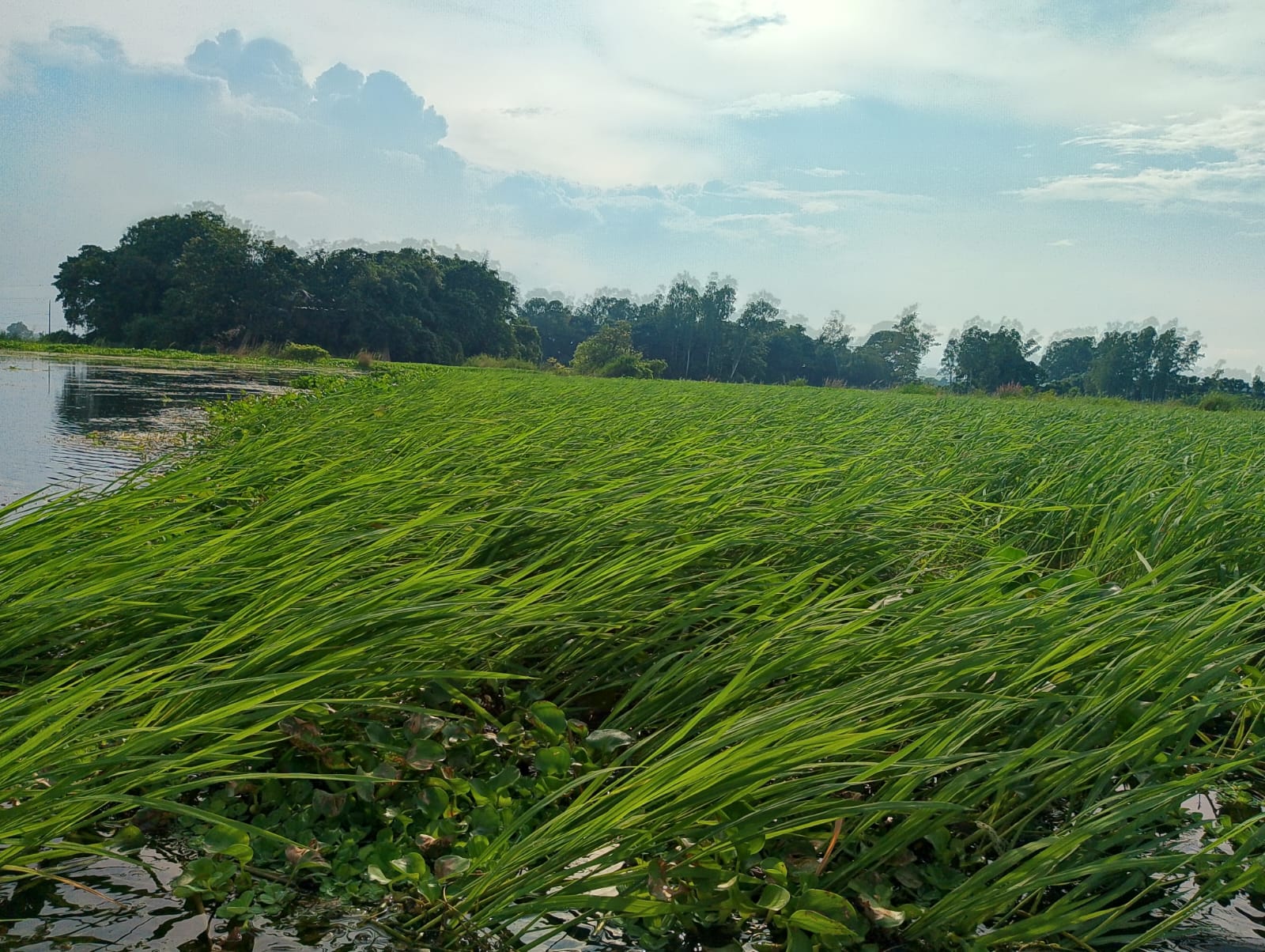
In the low-lying wetlands of Manikganj, farmers have long cultivated traditional rice varieties known as Digha rice, which are well adapted to the monsoon and naturally rising floodwaters. Varieties such as Hijla Digha, Molla Digha, Borga Digha, Chhoto Bhaualya and Boro Bhaualya grow taller as water levels rise, making them particularly suitable for wetland farming.
Farmers while sharing their experiences mention that these locally adapted varieties help to maintain soil health, support aquatic biodiversity and provide food and fodder. Digha rice is also used to make rice, pitha, muri, chira and khoi, linking farming with local food culture. Its straw is used as cattle feed, organic matter and fuel.
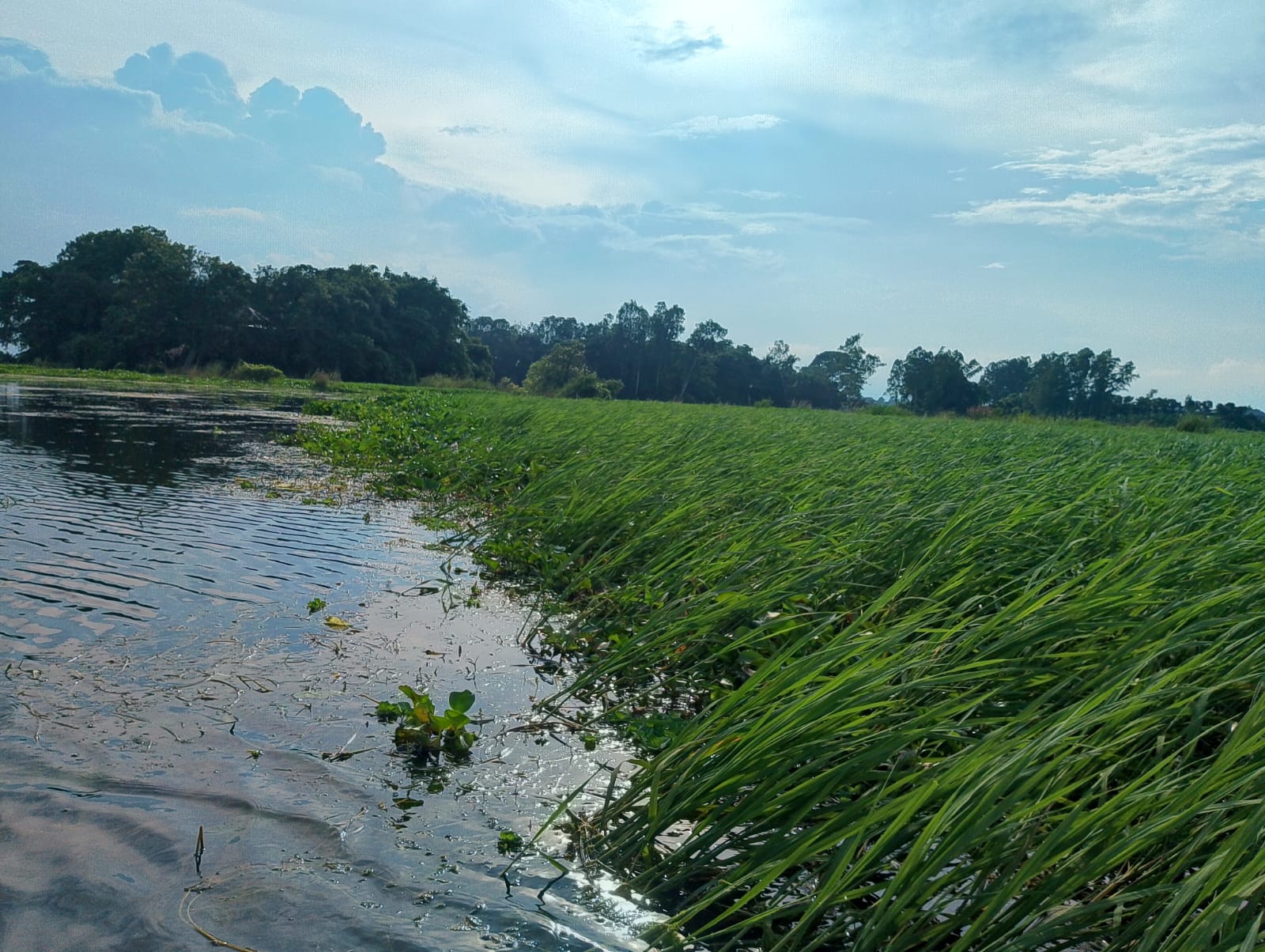
Wetlands such as Bhatshala, Diyar, Kailaduhir, Kurir, Shailkura and Adashari remain important sources of livelihoods. However, upstream embankments and bridges, along with declining river flows, have reduced water flow into these wetlands. As a result, cultivation of Digha rice is declining and aquatic species such as snails, mussels, eels, native puti, chanda, magur and gutum fish are becoming increasingly scarce.
With the aim to cope with monsoon flooding, farmers traditionally sow Digha rice in Baishakh, before floodwaters arrive. The rice plants then grow with the rising water. Flood-borne silt naturally enriches the soil, reducing the need for chemical fertilizers. Farmers also grow vegetables in bags and raised soil beds and use cow dung and decomposed water hyacinth to produce organic fertilizer.
Abdul Baten, a farmer-researcher from Sultanpur, said farmers’ traditional knowledge and environment friendly practices help to sustain both agriculture and biodiversity. He said that farmers conserve their own seeds that enable them to continue cultivation independently and adapt to changing conditions.
Manowara Begum, 42, of Kanthapara, Harirampur, said environmentally sound farming benefits people, soil, water, air and aquatic life. She explained that floodwaters bring native fish and other aquatic organisms, while fertile silt allows farmers to grow crops with little or no chemical fertilizer.
Lata Begum, 38, of Bijuri, Manikganj Sadar, said farmers sow Hijla Digha and Digha rice before the monsoon and harvest them in Kartik–Agrahayan. She said, yields of about 7–8 maunds per 30 decimals of land. The straw is used as cattle feed and, when decomposed in the soil, contributes organic matter and reduces production costs.
Sabita Bepari, a farmer-researcher from Terodona, Harirampur, emphasized the importance of soil, water, air, moisture and seeds in sustainable farming saying ‘farmers conserve local seeds, exchange them among communities and use locally available resources such as cow dung and decomposed water hyacinth to maintain soil fertility.’
Farmers’ centuries-old knowledge demonstrates that local rice varieties and traditional practices can strengthen resilience to floods and other climate-related challenges. Protecting wetland ecosystems, conserving seed diversity and promoting low-cost, nature-based farming can therefore benefit both rural livelihoods and biodiversity.