
By Sandra Nandini Bala from Dhaka
BARCIK organized a day-long workshop on gender justice and inclusive development at the Women Voluntary Association (WVA) auditorium in Dhaka to raise gender awareness and promote women’s socio-economic rights. At least 30 low-income women and men of different ages from Hazaribagh and Mohammadpur participated in the workshop, facilitated by trainer Khodeja Sultana Lopa.
The workshop explored gender-based divisions of labour, women’s economic participation, unequal access to resources, child marriage and violence against women. Through interactive discussions, participants examined how social norms and stereotypes contribute to gender discrimination and restrict women’s opportunities.
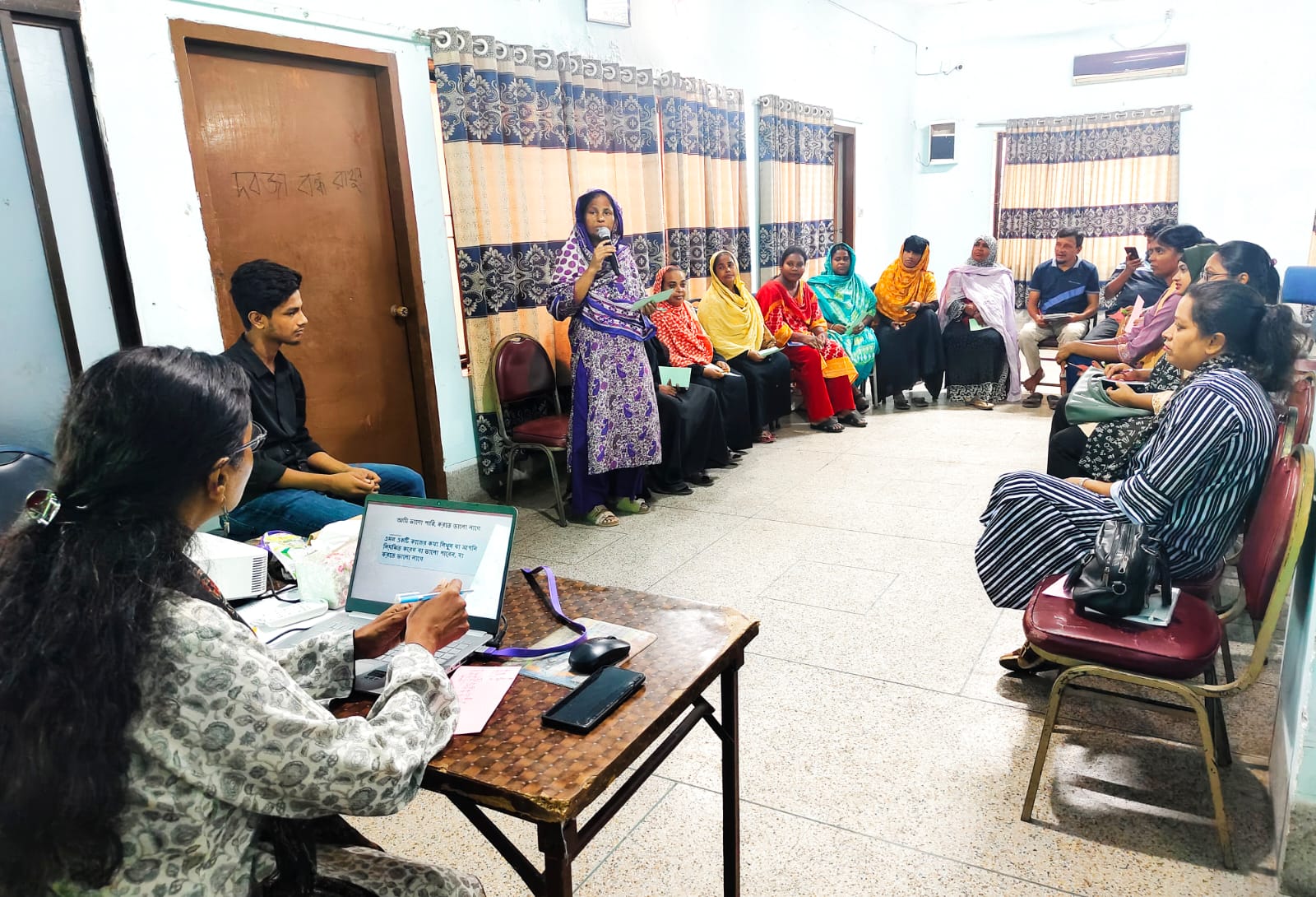
Citing the Bangladesh Bureau of Statistics (BBS) Time-Use Survey, the discussion highlighted that women spend an average of 5.9 hours a day on unpaid household and care work, compared with 0.8 hours for men. The facilitator explained the difference between biological sex and socially constructed gender roles.
The workshop also highlighted inequalities in agriculture and land ownership. Although women play a significant role in agricultural production, their access to land and other resources remains limited. Participants discussed the need for equal wages, fair resource distribution and women’s meaningful participation in household and public decision-making. Male participants acknowledged that ensuring equal rights for women is essential to social progress.
Child marriage and violence against women were also key topics. Citing the 2019 Bangladesh Multiple Indicator Cluster Survey (MICS), conducted by BBS and UNICEF, the discussion noted that nearly 47% of women aged 20–24 had been married before the age of 18. Data presented during the workshop also highlighted the widespread experience of violence against women by husbands or intimate partners.
The trainer outlined the legal provisions of the Child Marriage Restraint Act 2017, including the minimum legal marriage ages of 18 for women and 21 for men, as well as penalties for adults involved in child marriage, parents or guardians, marriage registrars and others responsible for solemnizing such marriages.
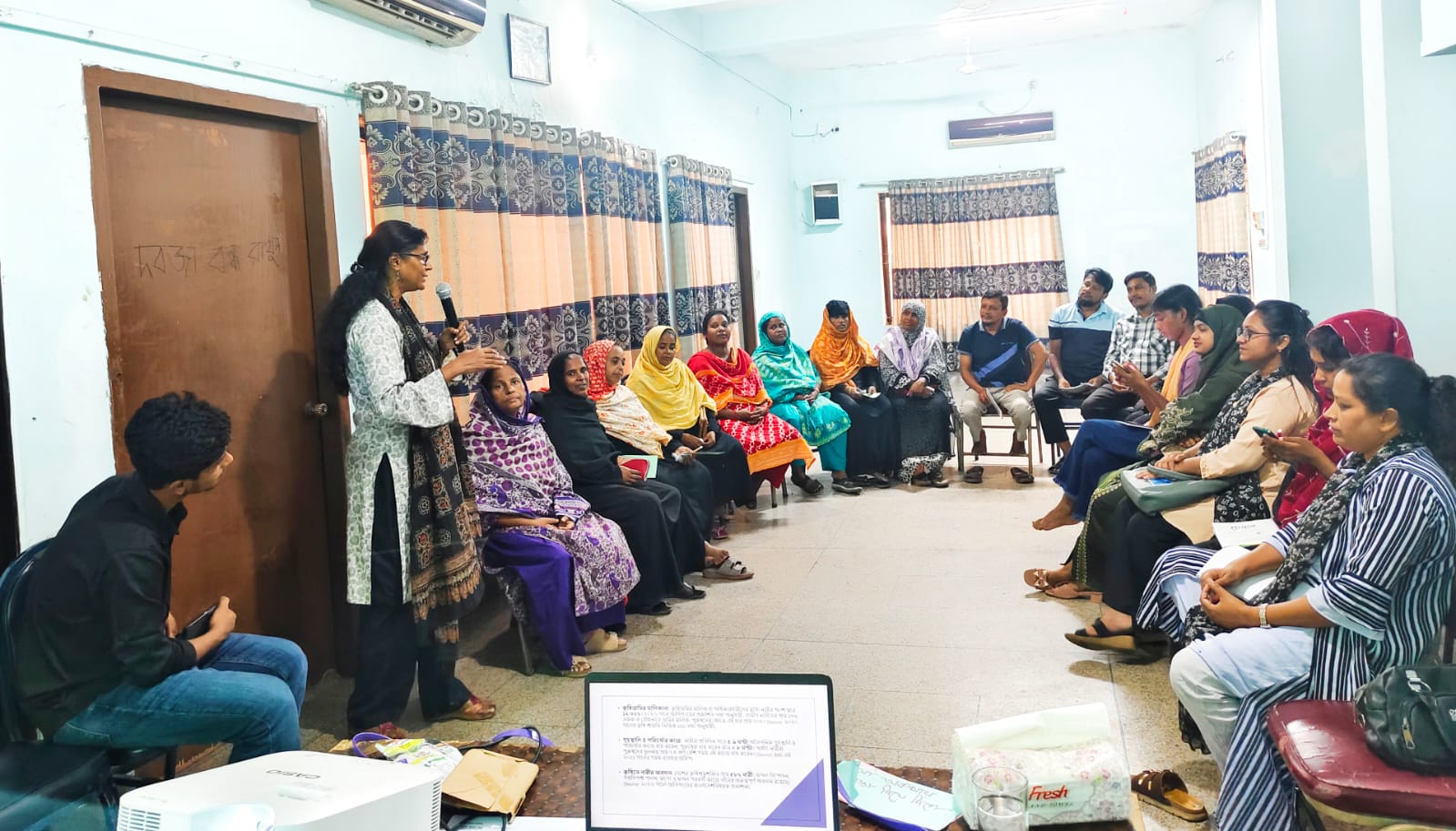
The discussion further challenged the misconception that women’s education negatively affects family life. The trainer emphasized that educated women contribute to household economic stability, children’s development and informed decision-making. She urged male family members to support women’s higher education and recognize its benefits for families and society.
In the closing session, Khodeja Sultana Lopa described social workers as important agents of social change. She stressed that their attitudes, behaviour and communication should inspire others and help build a more equitable society.
The workshop concluded with participants pledging to challenge gender discrimination and contribute to positive social change in their respective communities.