
By Mofijur Rahman and Biswajit Mondal from Shyamnagar, Satkhira
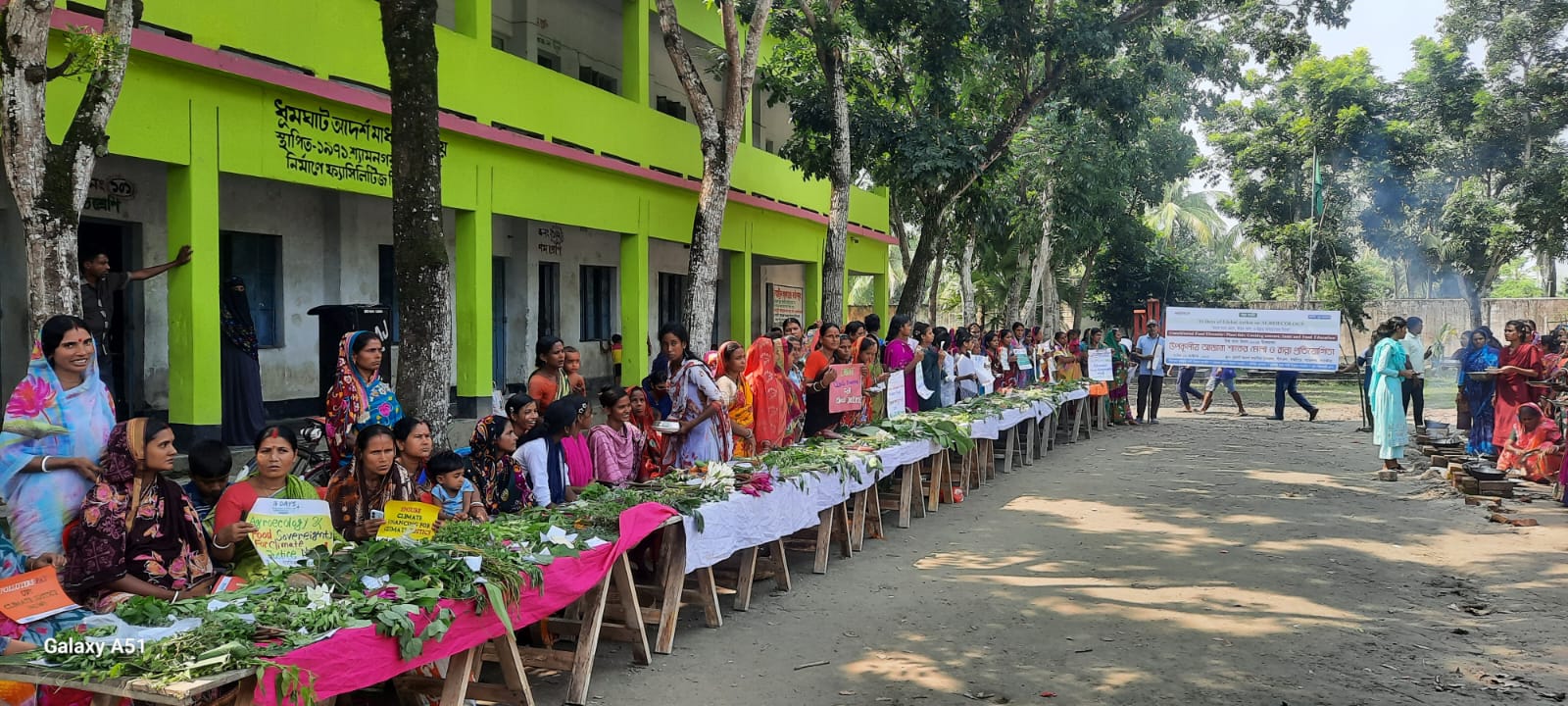
A “Coastal Ajaba Shak Fair and Cooking Competition” was held on recently at the Dhumghat Adarsha Secondary School ground in Ishwaripur Union under Shyamnagar upazila of Satkhira to preserve local food diversity and uncultivated edible plants of the coastal region,.
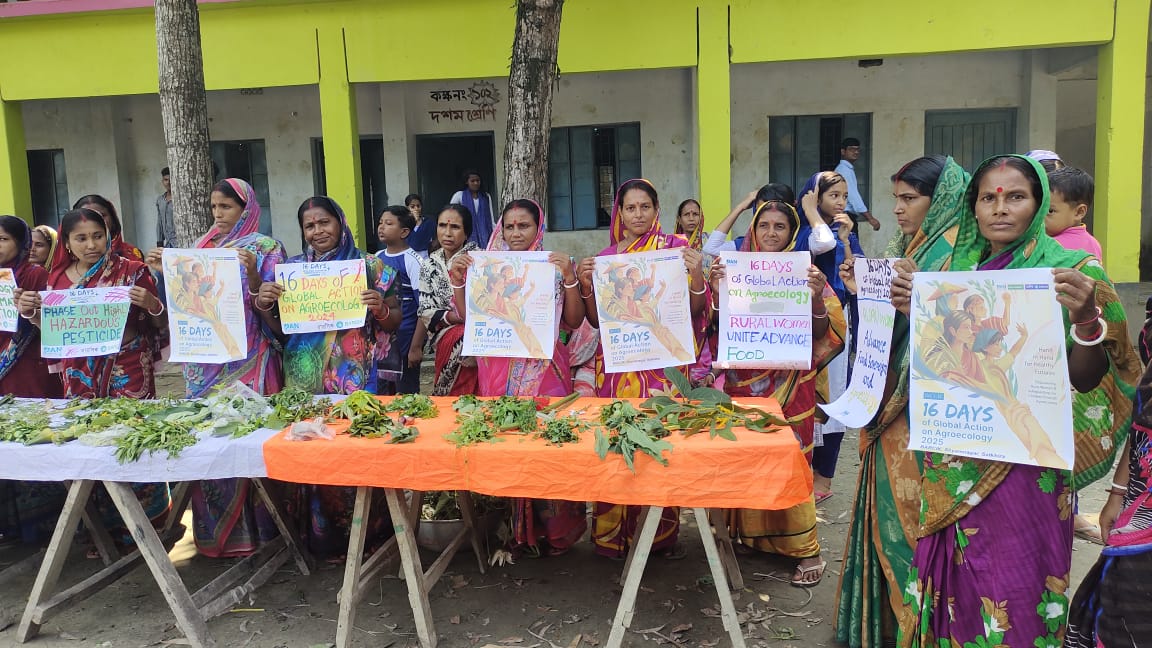
The event was jointly organized by Green Coalition and local community-based organizations, with support from BARCIK. It was arranged in observance of the “Sixteen Days of Global Action on Agroecology 2025” and World Food Day.
Farmers, teachers, students, journalists, local government representatives, and civil society members participated in the event.
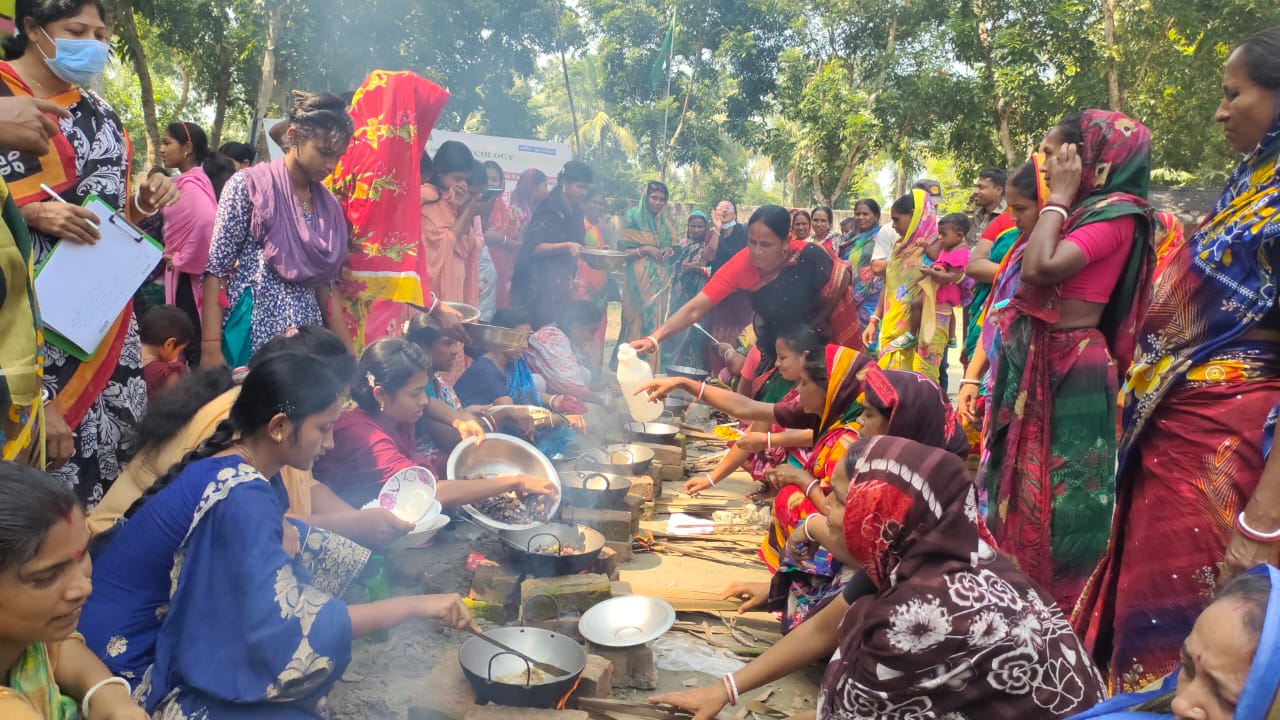
Twenty members from five local community organizations of Shiltala village participated and among them ten in the uncultivated plant exhibition and ten in the cooking competition. The exhibition featured 90 species of local and uncultivated plants, including thankuni, helancha, shapla, gadomoni, adabruni, pepul, ipil-ipil, durba, tulsi, senchi, bamon ati, bilkumari, kolmi, kochushak, nata, ashwagandha, shishakanda, ghumshak, dumur, akand, matiphora, titbegun, nimukha, bounuti, and dhutura, among others. Participants shared information about each plant’s nutritional value, habitat, seasonal availability, uses as human or animal food, and modes of consumption.
The event was presided over by Green Coalition president Jillur Rahman. Among the speakers were assistant head teacher Abdul Alim, Union Parishad member Kamla Rani Mridha, sub-assistant agriculture officer Rajib Bachhar, farmers Alpona Rani, Mita Rani, and Chittaranjan, and BARCIK staff members Ramkrishna Jowardar, Bishwajit Mondal, Mofizur Rahman, Milon, and Barsha Rani, among others.
Assistant head teacher Abdul Alim said, “Participants identified around 70 to 80 species of uncultivated plants. The local community has learned new things about their nutritional benefits and conservation methods.”
Event chair Jillur Rahman said, “Through this fair, we have revalued local food resources and women’s traditional knowledge. The event clearly shows the vital role women play in ensuring household food security.”
Agriculture officer Rajib Bachhar said, “This initiative has raised awareness about the conservation of uncultivated plants and the preservation of local food culture. Participants have gained practical knowledge about the nutritional and medicinal properties of these plants.”
Farmer Alpona Rani Mistri shared, “The coastal region was once rich in natural biodiversity, with a wide variety of cultivated and wild crops. But due to modern agriculture, market-based food habits, natural disasters, increasing salinity, loss of natural habitats, and excessive use of chemical fertilizers and pesticides, this biodiversity is disappearing. We must build awareness to protect these vital plant species.”
In the cooking competition, local women prepared traditional dishes using various leafy greens, roots, and tubers. A five-member jury evaluated the dishes based on taste, nutrition, and presentation.