
By Monika Paik from Shyamnagar, Satkhira
Ratna Rani, 35, a homemaker from Pankhali village in Burigoalini Union, Shyamnagar, has transformed her livelihood through agroecological practices and climate-resilient farming. Previously dependent entirely on her husband’s irregular agricultural income, she had little opportunity to contribute to household decisions or earn independently.
Living in a highly climate-vulnerable coastal area, Ratna faced salinity, water scarcity, extreme weather and declining soil fertility. High dependence on chemical fertilizers and pesticides also increased production costs while reducing profitability.
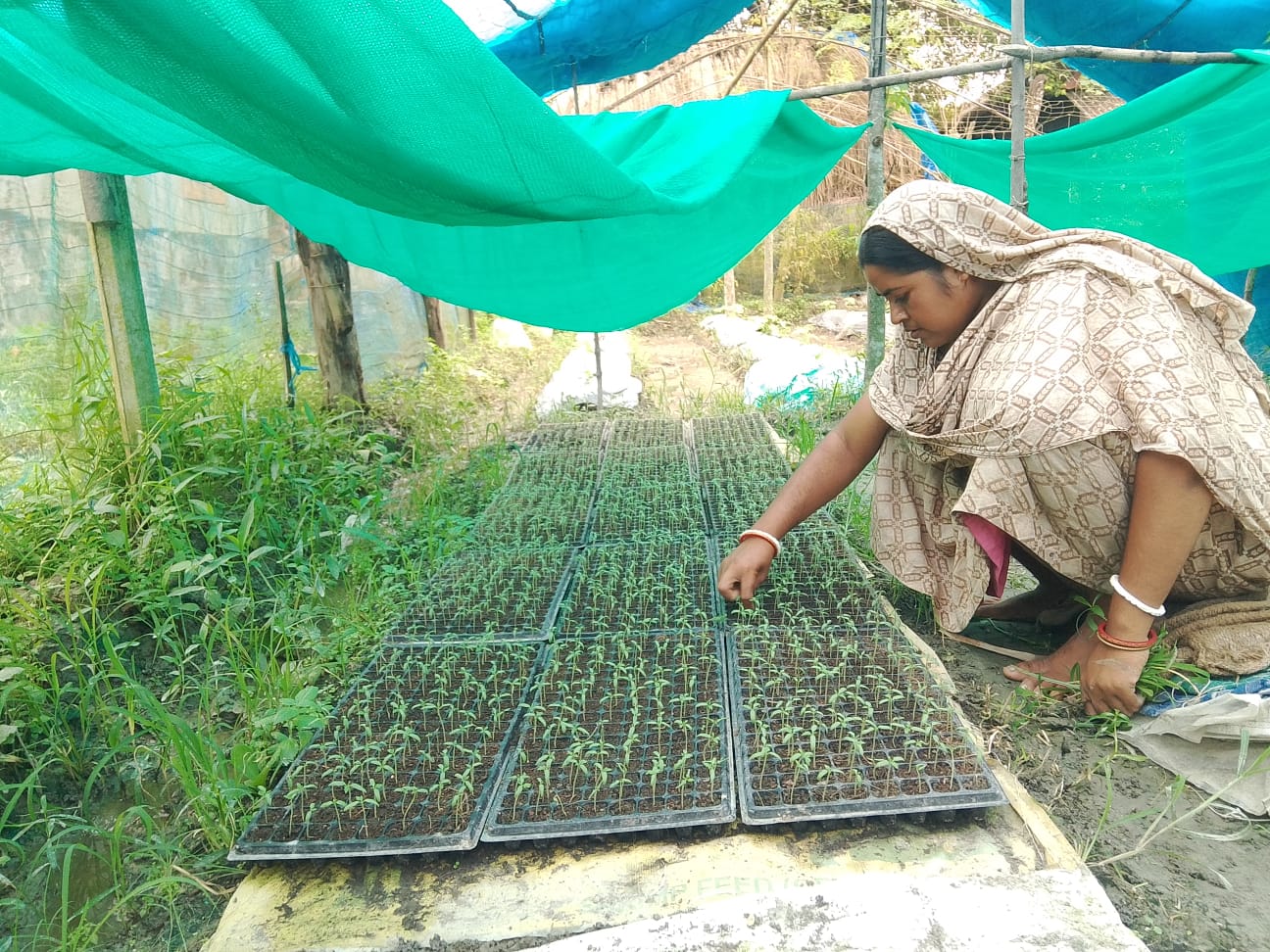
Ratna came in toch of BARCIK in early 2025 and received practical training on climate-resilient agriculture, agroecology, vermicompost production, seasonal vegetable cultivation and local seed conservation. She began applying these techniques on her homestead and farmland from mid-2025.
She now produces vermicompost at home and uses it in her vegetable garden. To cope with coastal conditions, she applies tower, mulching, bed, trellis and sack gardening techniques, which helps her to grow vegetables throughout the year. She also raises indigenous poultry and livestock, using their waste as compost materials. Instead of chemical pesticides, she uses neem extracts, ash and pheromone traps for pest management.
Ratna also produces seedlings from her own conserved seeds and sells surplus vegetables, organic fertilizer and earthworms. According to her, her expenditure on chemical inputs for vegetable cultivation has fallen from around BDT 5,000 to BDT 2,000, significantly increasing her savings and profit.
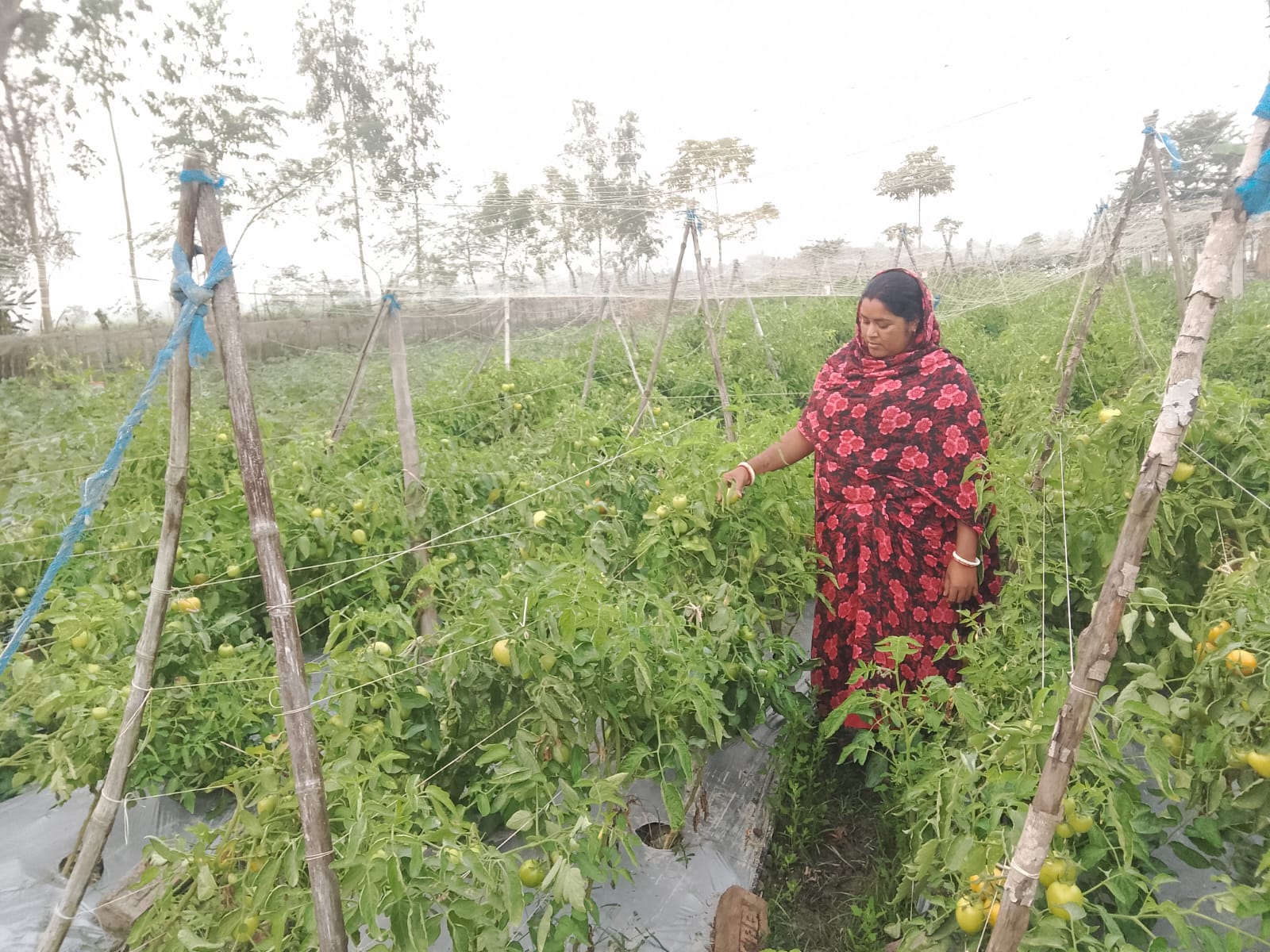
Her new skills have improved household nutrition and income as well as her confidence and social status. She can now contribute to household expenses and healthcare costs and has a stronger voice in family decisions. Other women in the community increasingly seek her advice on climate-resilient and agroecological practices.
Ratna’s experience shows how agroecology, local knowledge, women’s skills development and access to practical training can strengthen livelihoods and empower women in climate-vulnerable coastal communities.