
By Sultana Khatun, Paba, Rajshahi
In Bil Nepalpara village of Darshanpara Union in Paba upazila, Rajshahi, farmer Sultana Khatun, 34, has turned her home into a community seed bank that is helping farmers preserve and exchange local seeds. BARCIK has been working in the village since 2016. Sultana began growing diverse vegetables around her home and saving and exchanging seeds. Her homestead was selected as a BARCIK Model Shatabari, where local seeds were first collected and preserved for family and community use. In 2018, it became a dedicated “Seed Home,” and in 2024 it was developed as an agroecology learning centre where farmers and people from different occupations exchange practical knowledge.
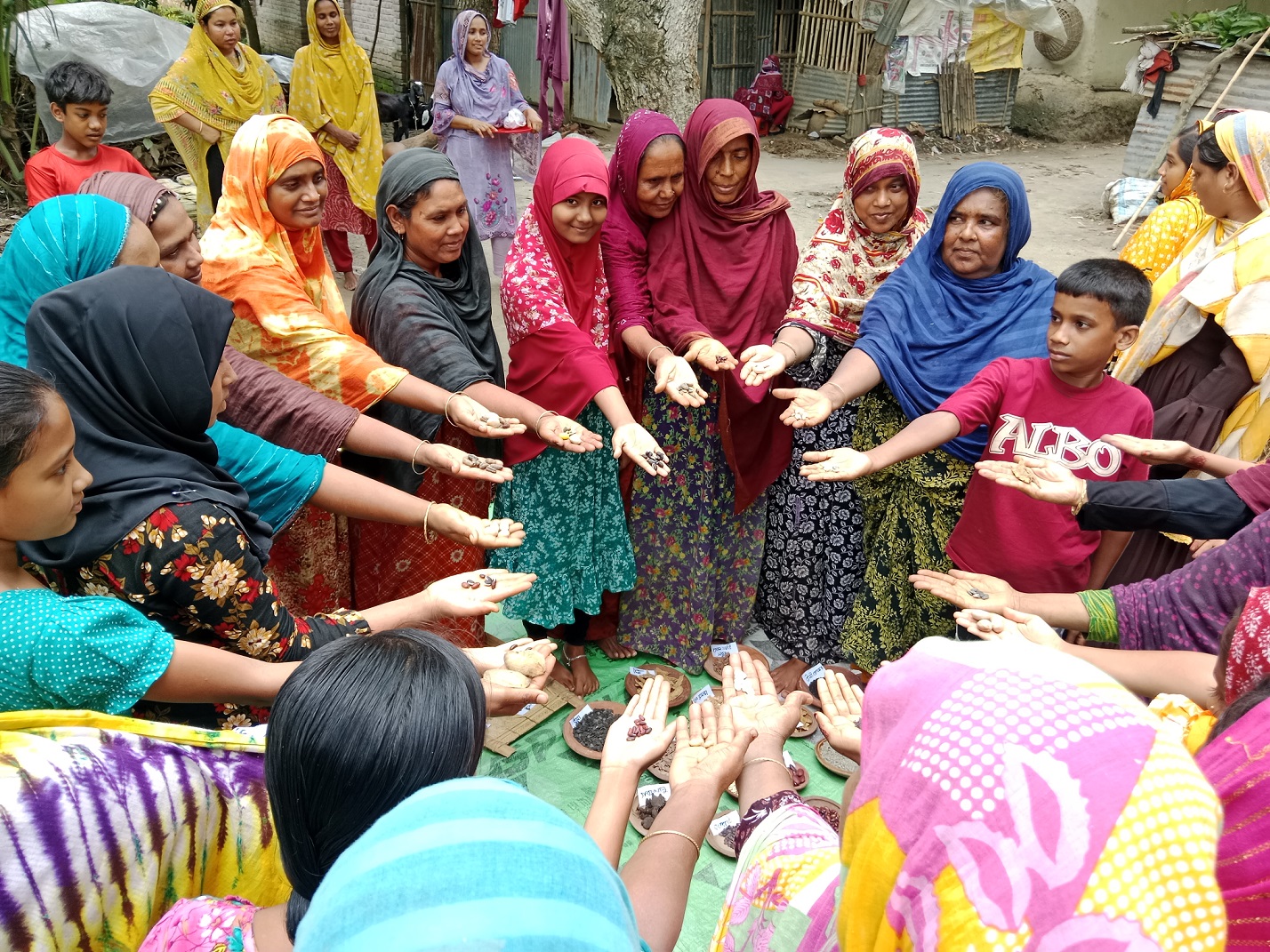
It later became a Community Seed Bank, now preserving 198 varieties of seeds, including rice, vegetables, pulses, oilseeds, herbs, flowers, fruits, forest species and medicinal plants. The collection includes varieties such as amaranth, linseed, millet, barley, khesari and local rice.
The seeds are conserved using traditional methods. Farmers use clay pots, glass containers, earthen jars, neem leaves and ash to protect them from insects without chemical treatment. Farmers from surrounding villages can take seeds according to their needs and return good seeds after harvesting. About 2,500 people exchange seeds with the bank each year. The practice helps families grow vegetables throughout the year for household consumption, while surplus produce can be sold or exchanged with neighbors.
Panna Begum, 45, a farmer from Tetulia Danga village, said, “We conserve local seeds ourselves and use them to grow vegetables. People in our neighborhood take the seeds they need from the community seed bank and return seeds after harvesting. This means we have vegetables throughout the year. We can eat them, sell the surplus and exchange them with neighbors. The vegetables are also safe and free from harmful chemicals.”
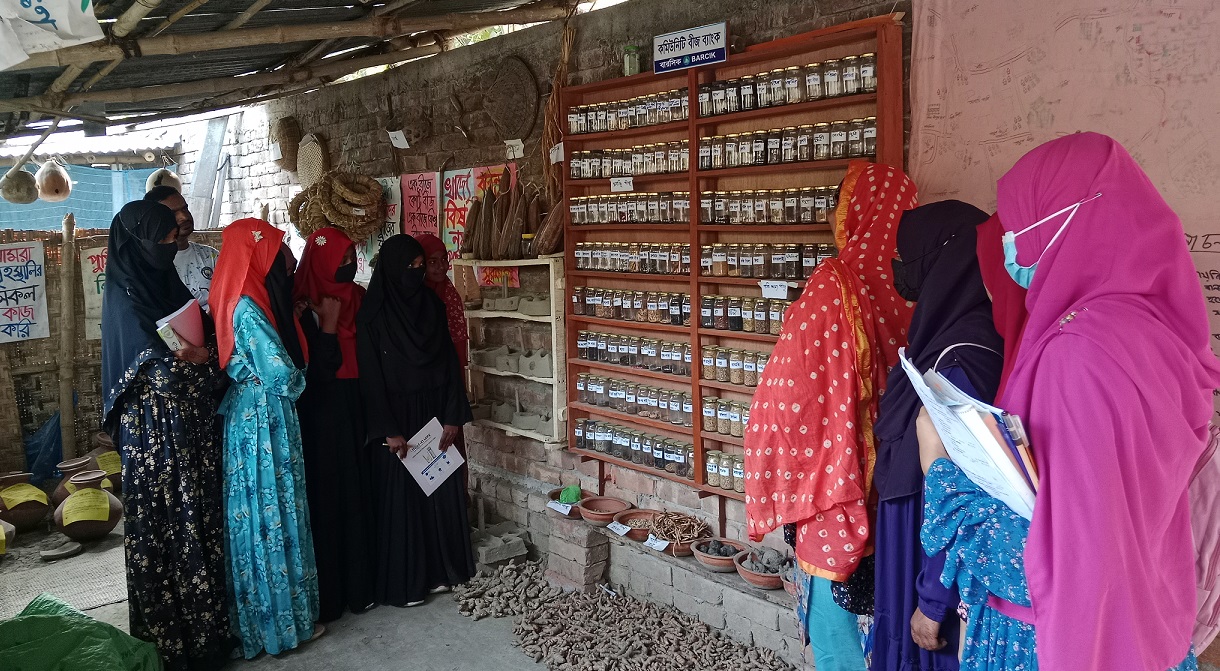
The seed bank has also become a place for learning and exchange. Farmers, agriculture officials, journalists and visitors from different backgrounds have visited to share experiences and learn about local seed conservation. With BARCIK’s support, eight more small seed homes have been established in different parts of Darshanpara Union. Together, they are helping meet local demand for traditional seeds.
For farmers in the drought-prone Barind region, the community seed bank is more than a storehouse of seeds. It provides access to locally adapted varieties, reduces dependence on purchased hybrid seeds and keeps traditional farming knowledge alive.
Greater official recognition and support for community seed banks could make it easier for farmers to conserve and access local varieties while reducing the need to buy expensive seeds from outside.