
By Atikur Rahman Atik from Rajshahi
A global climate strike was held in Rajshahi under the theme “From Drought to Justice: Barind to the Global Climate Conference,” calling for the climate crisis in Bangladesh’s drought-prone Barind region to be prioritized in national and global climate discussions, including COP31.
The event was jointly organized at Saheb Bazar Zero Point by the Barind Youth Forum, Green Coalition and BARCIK. Farmers, women, youth, teachers, students, researchers, workers, environmental activists and representatives of marginalized communities participated.
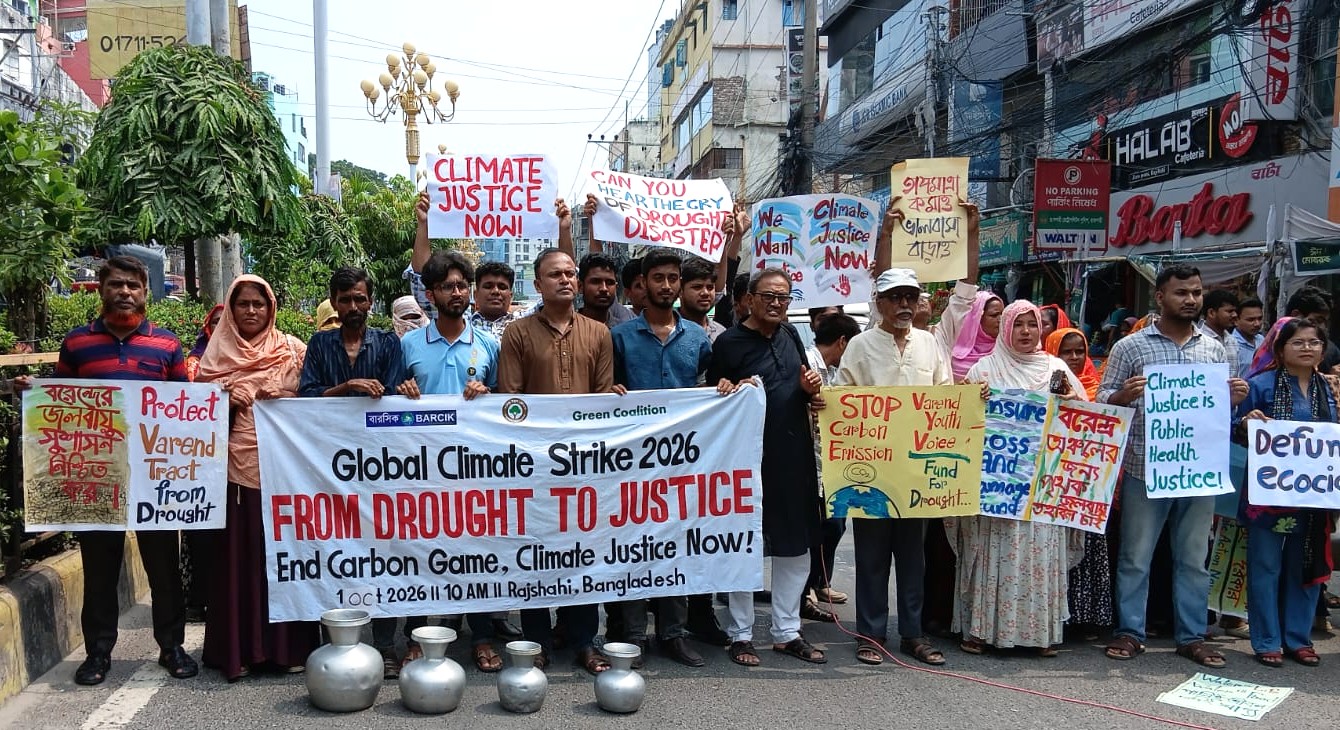
Speakers of the event said prolonged drought, heatwaves, groundwater depletion, threats to agriculture and food security, degradation of rivers, canals, ponds and wetlands, biodiversity loss and livelihood insecurity are interconnected challenges requiring a long-term and integrated climate adaptation framework. They also called for fair climate finance and compensation for climate-vulnerable communities.
Mahbub Siddiqui, President of Green Coalition in Barind, said the region’s traditional ponds, canals and small rivers have been degraded, while excessive groundwater extraction and inadequate recharge are worsening the water crisis. He called for dedicated climate funding for Barind.
BARCIK Regional Coordinator Md. Shahidul Islam said drought, water scarcity and livelihood insecurity demonstrate the local impacts of the global climate crisis. “Alongside climate justice, we must ensure people’s rights to water, food and livelihoods,” he said.
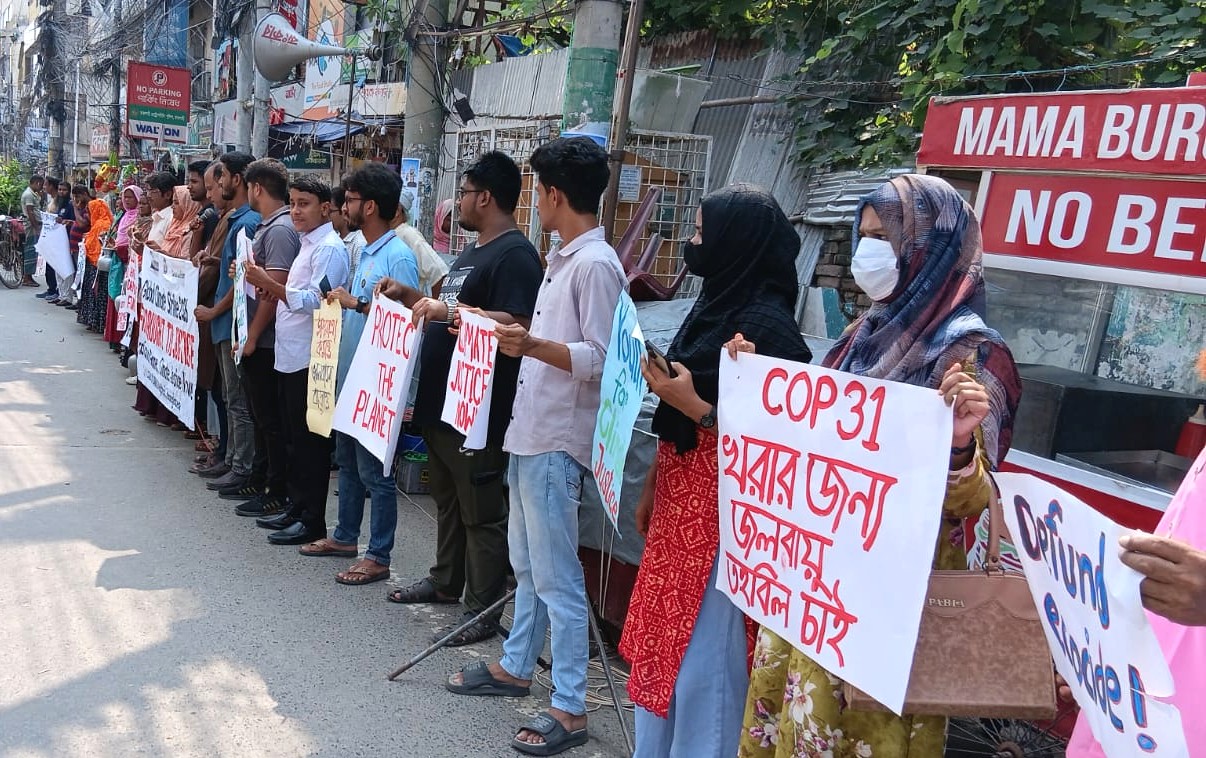
Md. Atikur Rahman, President of the Barind Youth Forum, said Barind’s climate challenges are not isolated local problems and urged their meaningful inclusion in COP31 discussions on climate finance, adaptation, and loss and damage.
Participants presented five key messages: recognize Barind as a climate frontline region; make water security central to climate security; promote climate-resilient food systems; ensure fair financing for adaptation and loss and damage; and guarantee meaningful participation of vulnerable communities.
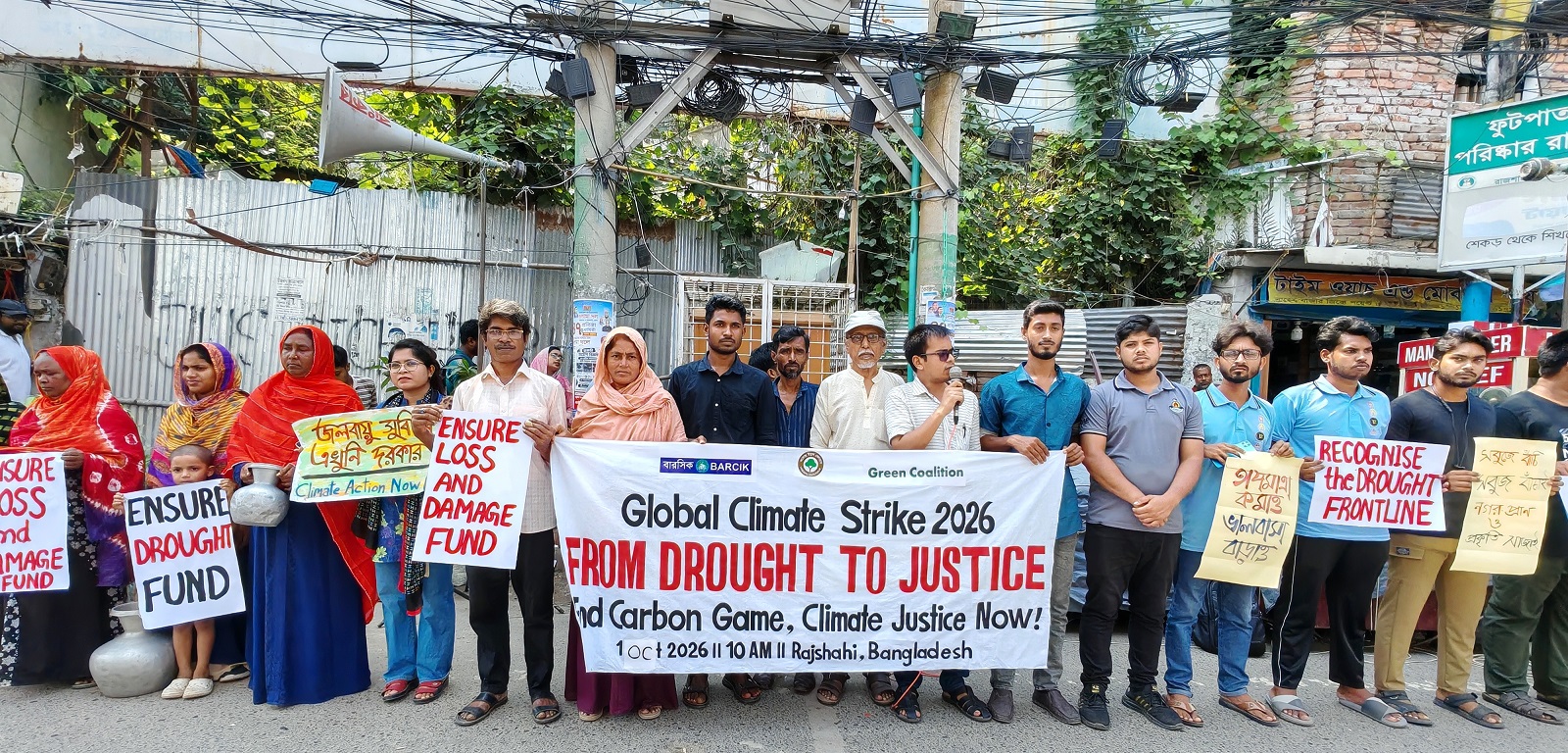
The Barind Youth Forum also presented 12 climate justice demands, including a long-term Barind Climate Resilience Framework; regulation of groundwater extraction; restoration of rivers, canals, ponds and wetlands; promotion of agroecology and water-efficient farming; protection of local seeds and agricultural biodiversity; a dedicated drought fund and support for affected communities; fair prices, livelihoods and social protection; heatwave early-warning systems and worker protection; and direct, transparent and accountable climate finance for vulnerable communities.
The organizers urged national and international climate policies and financing mechanisms to give special priority to Barind’s drought, water scarcity and heatwave risks.