
By Sultana Khatun from Paba, Rajshahi
In the dry Barind landscape of Rajshahi, maintaining crop diversity is not simply a farming choice. It is an important way for rural families to strengthen food security and adapt to changing conditions.
In Bil Dharampur village of Darshanpara Union, women farmers have long cultivated a wide range of seasonal vegetables around their homesteads. Among them is 55-year-old Mahamuda Begum, who has turned her 55-decimal homestead into a diverse food-producing space.
Mahamuda lives with her family of four. Her husband is a farmer, while she manages a wide range of crops around their house, including beans, bottle gourd, sweet pumpkin, ash gourd, Indian spinach, kathua data, red amaranth, eggplant, onion and garlic.
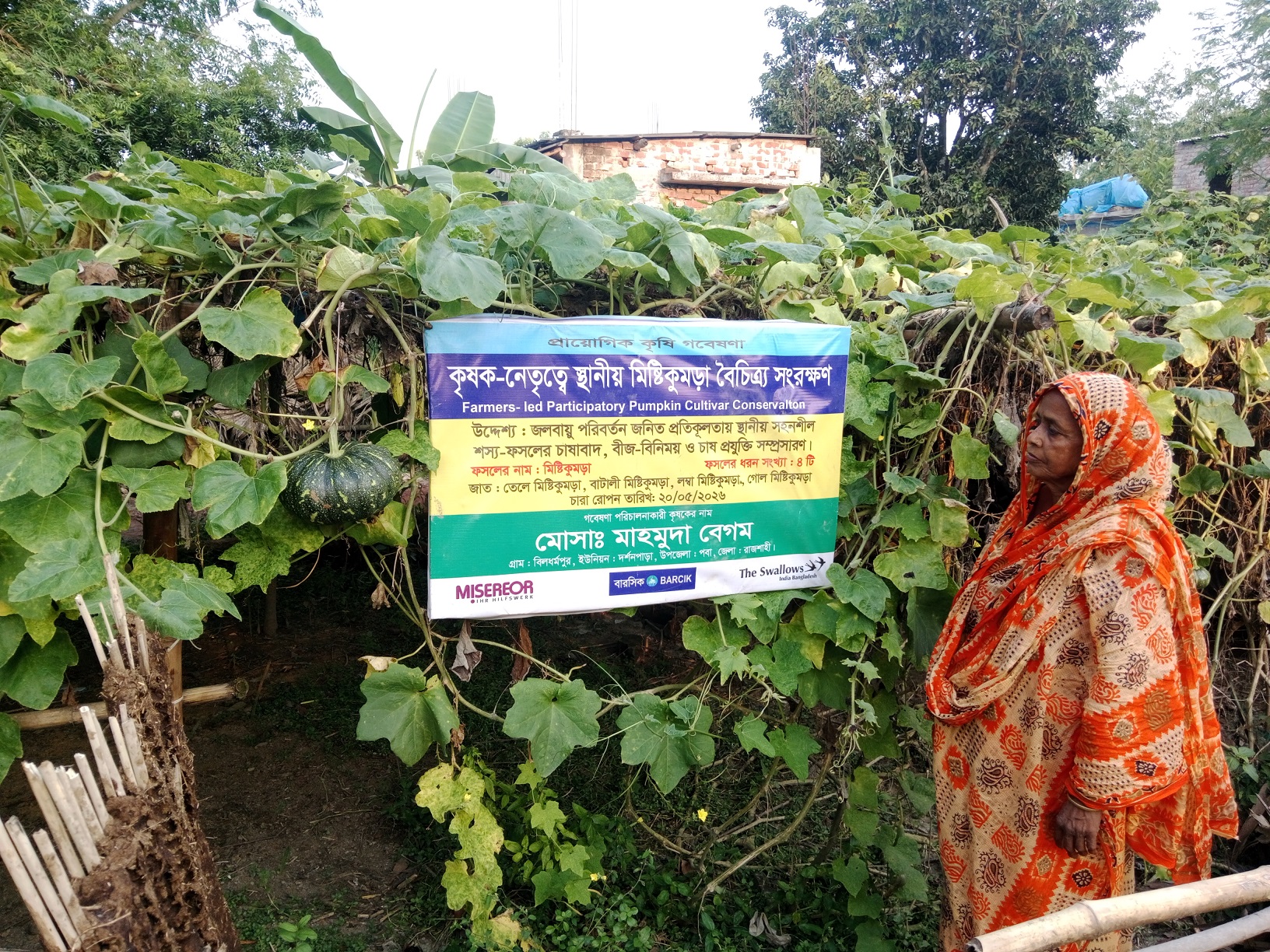
The village also has a women’s organization called the Bil Dharampur Women’s Development Organization. Based on the interests and needs expressed by its members, a variety trial was initiated at Mahamuda’s Model Shotobari to compare four locally collected varieties of sweet pumpkin.
Four local varieties, one farmer-led experiment
The trial involved four traditional varieties such as tele sweet pumpkin, batali sweet pumpkin, long sweet pumpkin and round sweet pumpkin. Each variety was planted separately on its own trellis so that farmers could observe and compare their growth and performance. The plants began producing flowers and fruits between 55 and 65 days after sowing.
For Mahamuda, the experiment was not simply about identifying the highest-yielding variety. It was an opportunity to learn which varieties were best suited to local conditions while maintaining access to local seed. After meeting her family’s food needs, she exchanged some of the pumpkins with neighbors and sold the remaining produce in the market.
The four trellises generated a total of Tk 5,200 from pumpkin sales. She also kept four pumpkins one from each varietyfor seed. She said, “I kept one pumpkin of each variety for seed. I can use the seeds for cultivation next season and exchange them with neighbours.”
Batali comes out on top
The results of the trial were particularly encouraging for Batali pumpkin. Farmer Shefali Begum, who observed the trial, says that Tele and Batali pumpkins performed particularly well. For Mahamuda, however, Batali emerged as the clear favourite. She said, “Through this research, I was able to identify the pumpkin variety that is most suitable for our area. Batali produced the highest yield and it is also very tasty.”
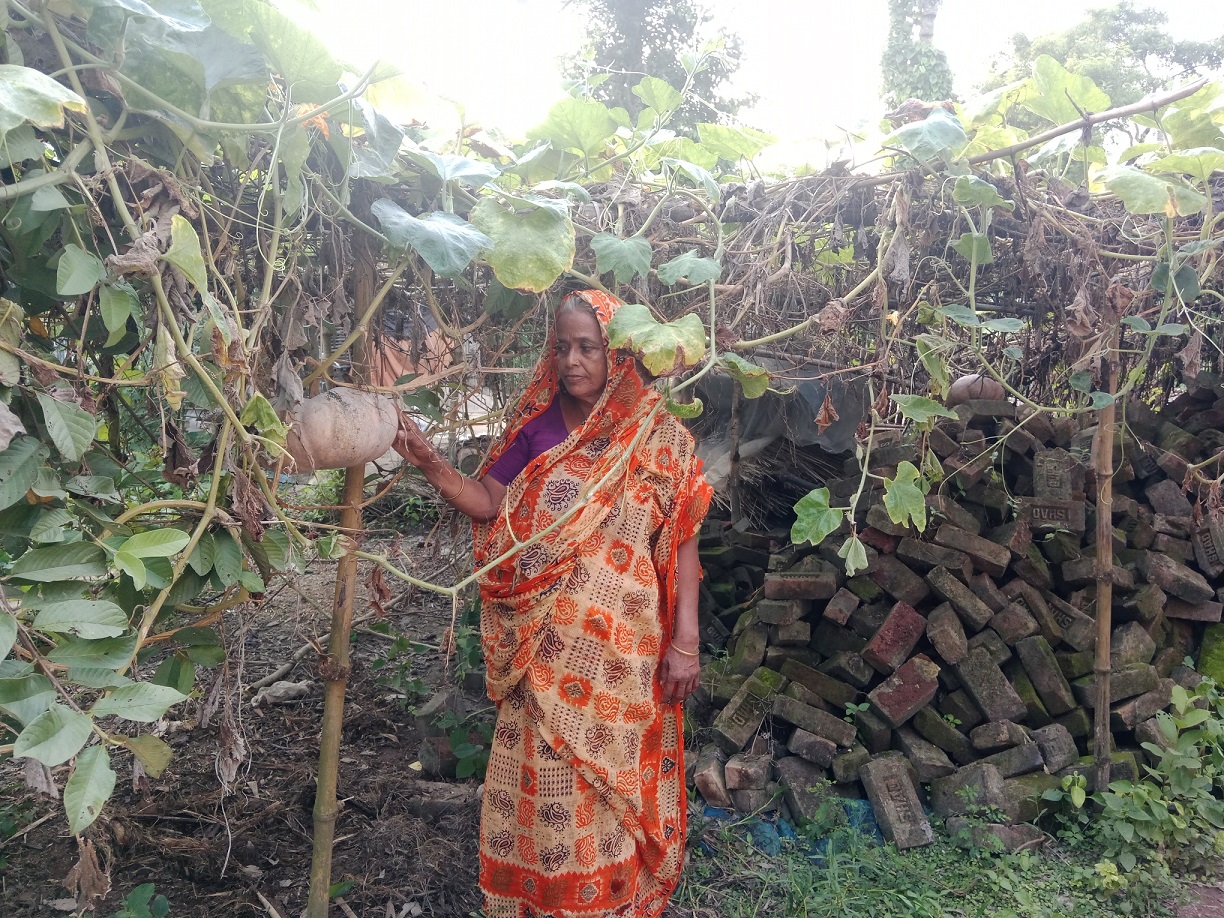
The experience also demonstrated the value of farmer-led experimentation. Rather than relying solely on externally recommended varieties, farmers were able to compare local varieties themselves and make decisions based on their own observations. Mahamuda says the experience was valuable for her and for other farmers in the community.
She said, “Growing four different varieties together was a very useful learning experience for me and for the farmers in this area. If the research is conducted again, we may be able to learn even more and achieve better results.”