
By Biswajit Mondal, from Shyamnagar, Satkhira
Sarma Rani of Mathurapur village in Shyamnagar, Satkhira, has turned limited homestead space into a productive farming system through sack-method cultivation. Despite coastal salinity, waterlogging, and limited cultivable land, she produces vegetables, spices, and other crops throughout the year on her approximately one-bigha homestead land.
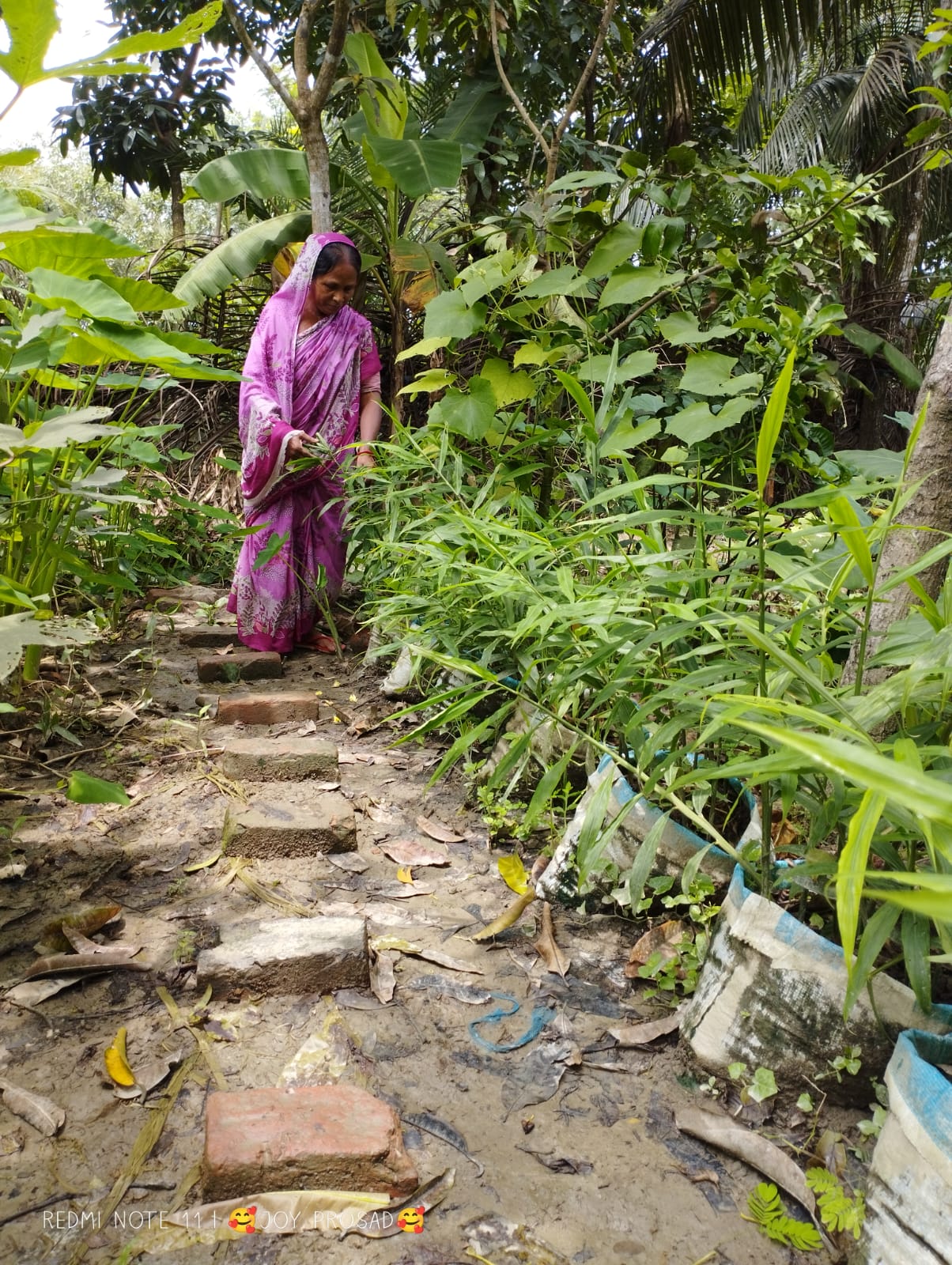
Sarma, whose husband is ill, manages much of the family’s agricultural work. She currently cultivates around 90 sacks with crops including bottle gourd, pumpkin, cucumber, eggplant, chilli, ginger, and yam. She earns approximately BDT 30,000–35,000 annually from sack cultivation while also meeting part of her family’s vegetable needs.
She said, “Our homestead space is limited, and cultivation on open land is not always possible. Sack cultivation allows me to use unused spaces around the house and produce different crops.”
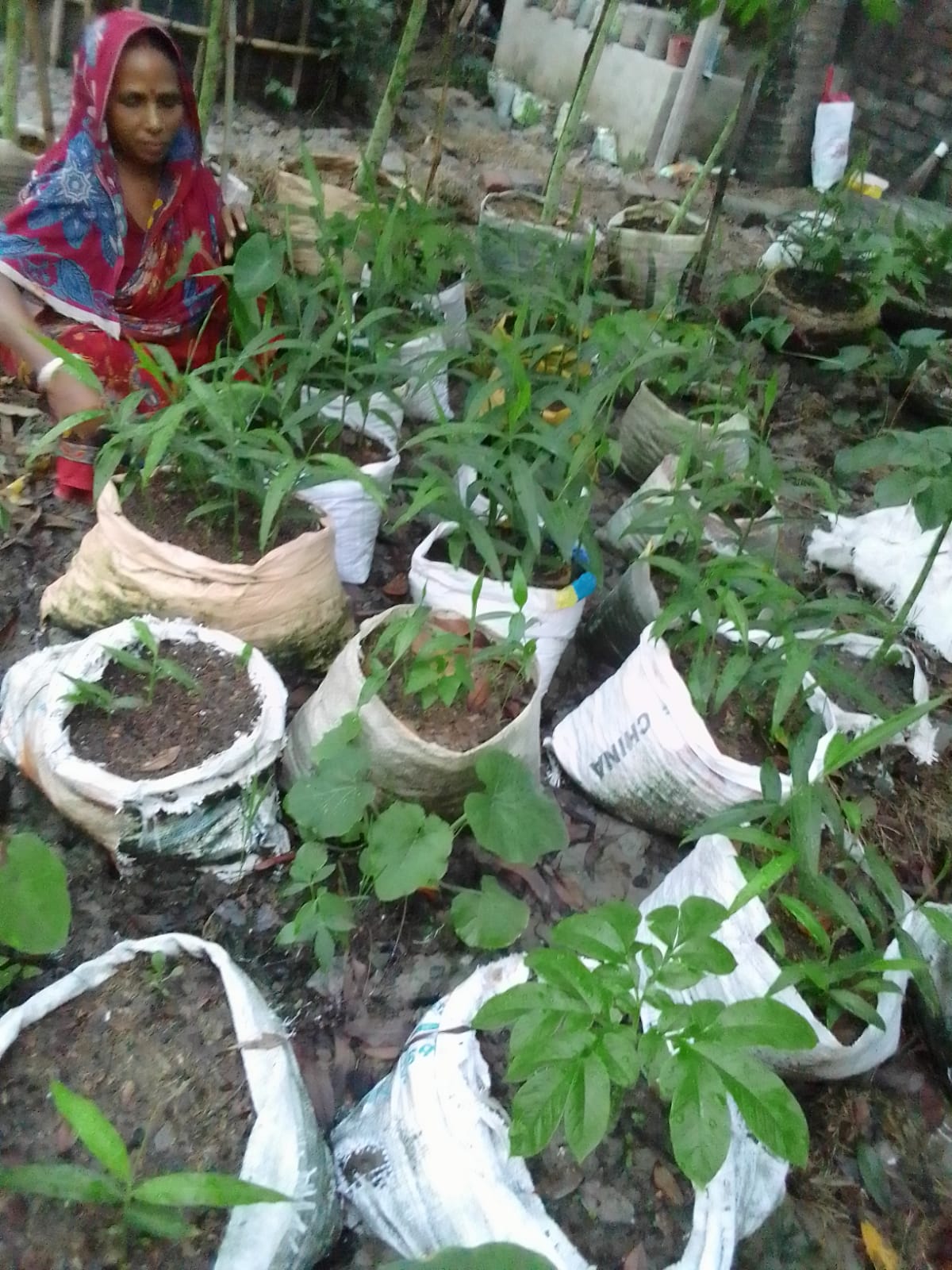
Her approach has also inspired other villagers. Around 15 families in the village have started sack-based cultivation after observing her success.
Sarma’s homestead is now serving as an Agroecological Learning Centre, where farmers can learn practical techniques for year-round production, efficient use of limited space, and adaptation to coastal conditions. Her experience demonstrates that local knowledge, innovation, and proper planning can transform even small spaces into productive and resilient farming systems.