
By Atikur Rahman Atik from Rajshahi
A human chain and signature campaign was held at Saheb Bazar Zero Point in Rajshahi recently, demanding an end to slum evictions without rehabilitation and calling for the protection of housing rights for landless and low-income urban residents.
The program was jointly organized by the Namovodra Lakeside Displaced People’s Development Organization, the Green Coalition, and the Barendra Youth Forum. It brought together slum residents, civil society representatives, human rights activists, teachers, students, laborers, and members of various social organizations.
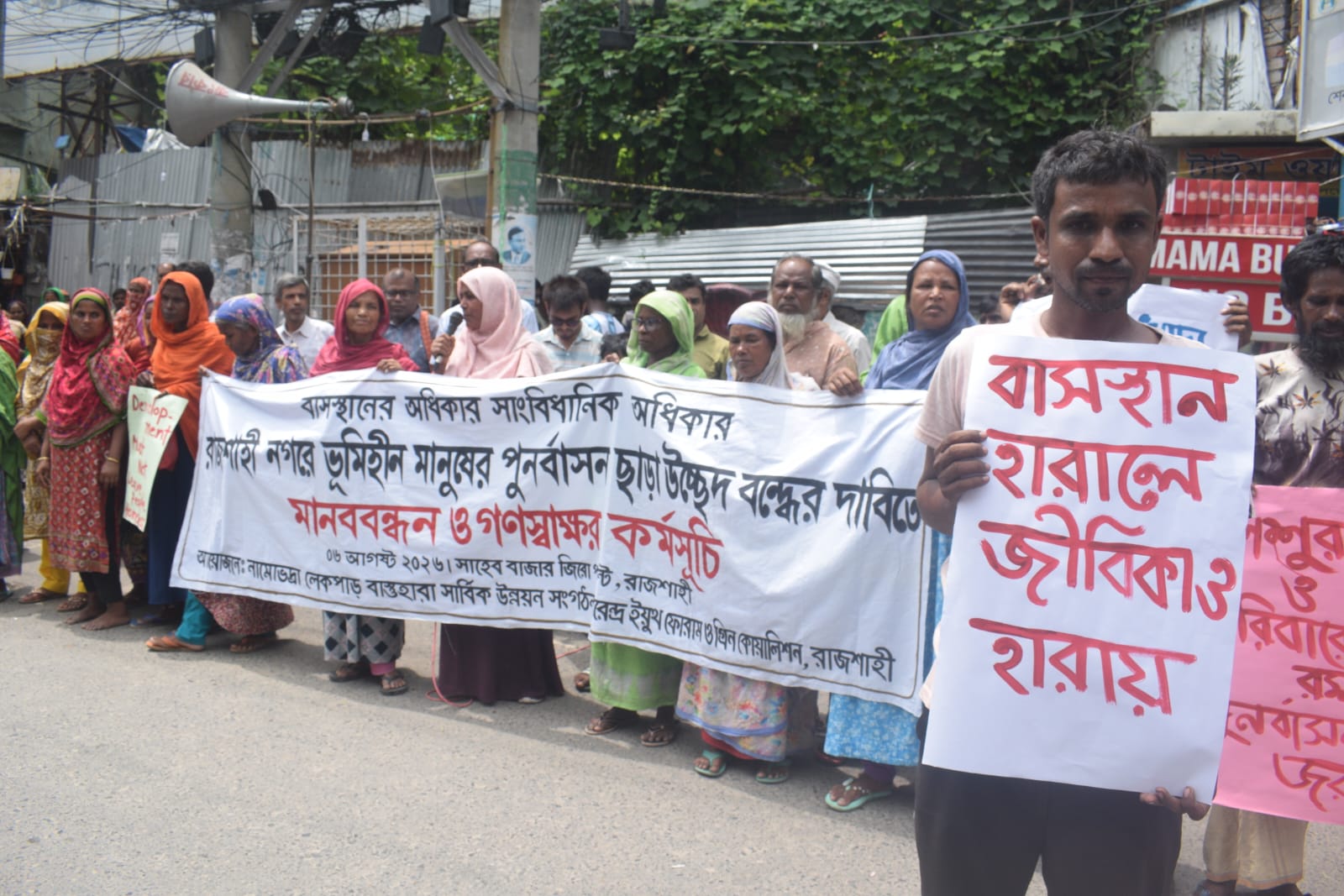
Speakers at the event highlighted that thousands of families living in 104 slums across Rajshahi, including the Namovodra Lake area, continue to face the threat of eviction. Most residents are rickshaw pullers, construction workers, domestic workers, transport workers, small traders, and daily wage earners whose labor supports the city’s economy.
Participants emphasized that housing is a fundamental human right, protected by Bangladesh’s Constitution, international human rights agreements, and the Sustainable Development Goals (SDGs). They argued that eviction without rehabilitation is neither humane nor socially just.
Slum residents shared their experiences, describing the fear of losing their homes despite their long-standing contributions to the city. Many residents, including climate migrants displaced by river erosion, stressed that they were not illegal occupants but citizens seeking the right to live with dignity.
Community leaders and researchers warned that forced evictions deepen poverty, increase social inequality, and negatively affect children’s education, health, and livelihoods. They also said that, unlike other major cities, Rajshahi has yet to introduce housing programs specifically targeting urban poor and climate-displaced populations.
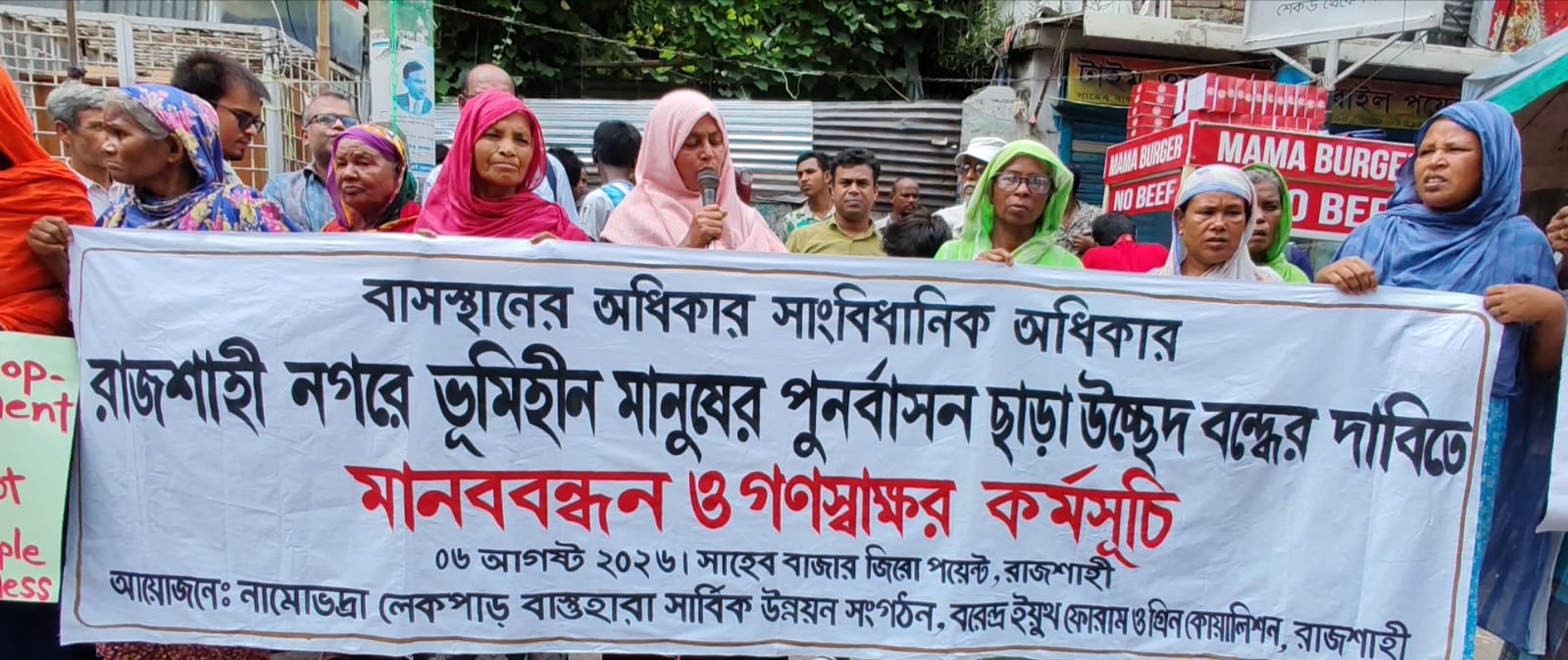
The speakers presented five key demands, including an immediate halt to evictions without rehabilitation, the development of safe and environmentally friendly housing plans, the provision of basic services, and the inclusion of slum communities in decision-making related to urban development.
The organizers announced that signatures collected during the campaign would be submitted to the relevant authorities to advocate for stronger policies protecting the housing rights of urban poor communities and ensuring rehabilitation before any eviction takes place.