
By Atikur Rahman Atik from Rajshahi
Young leaders have demanded the formulation of an agroecology-based agricultural policy to address water scarcity, land degradation, and food insecurity in the drought-prone Barind region.
The demand was raised during a participatory workshop titled “Different Realities, Shared Aspirations: Youth Voices for a Just and Sustainable Barind,” organized on World Youth Day by the Barind Youth Forum, Green Coalition, and BARCIK.
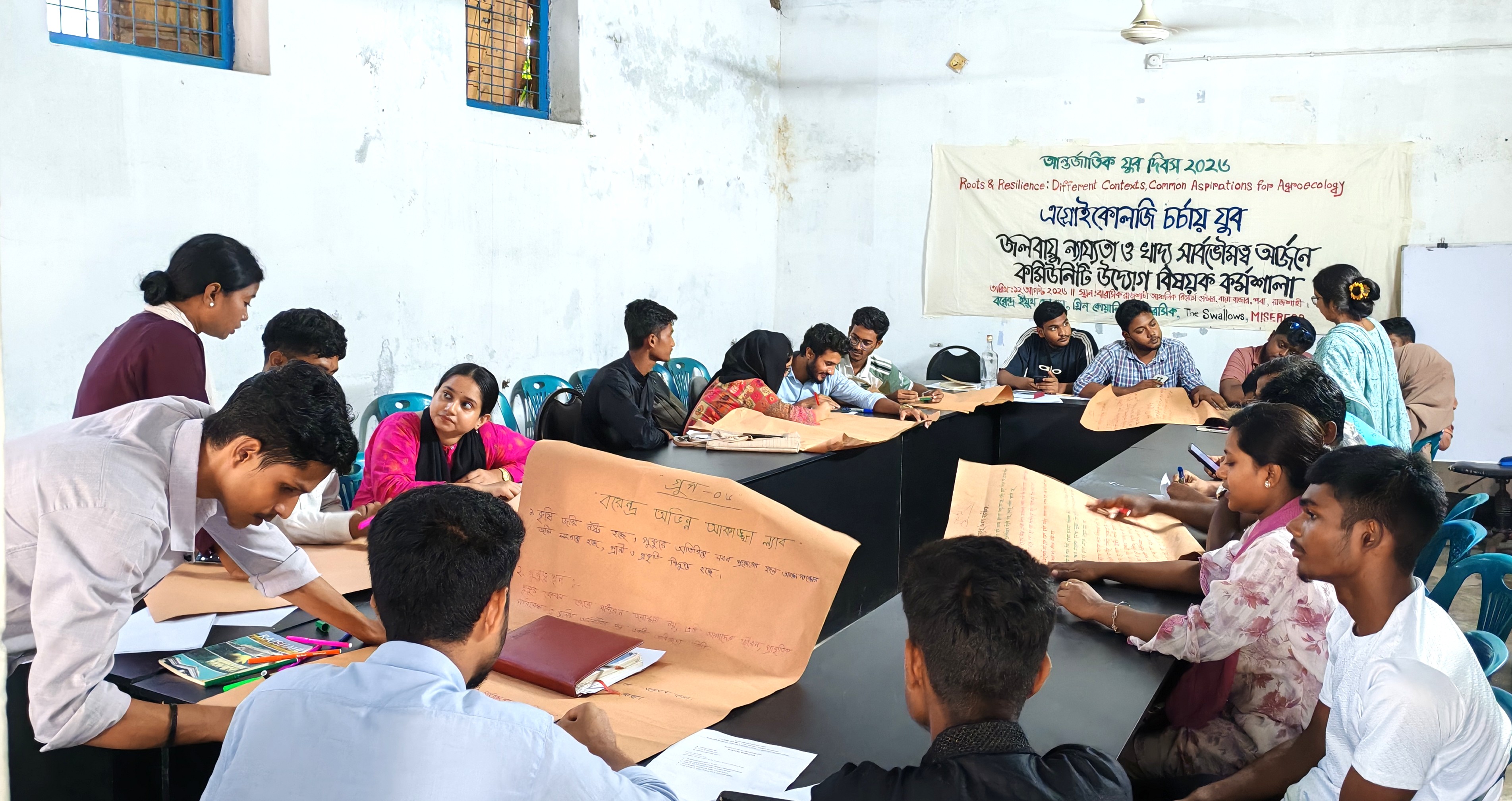
The workshop brought together young farmers, students, women, Indigenous people, fishers, and representatives of social, cultural, and environmental organizations from both rural and urban areas. Participants discussed water, agriculture, biodiversity, climate change, environmental justice, community initiatives, and youth-led innovations.
Speakers emphasized that the agricultural crisis in the Barind region extends beyond food production. Agriculture is closely connected to water, soil, biodiversity, local seeds, climate, food systems, and livelihoods. Therefore, they called for policies that increase production and protect natural resources, ensure farmers’ rights, promote safe food, and preserve the environment for future generations.
A young agroecology practitioner from Paba Upazila, Md. Ridoy, shared his experience of producing pesticide-free guavas, saying that his yields were better than those of neighboring farms that relied on chemical inputs. He urged the government to promote environment friendly farming and take action against hazardous pesticides.
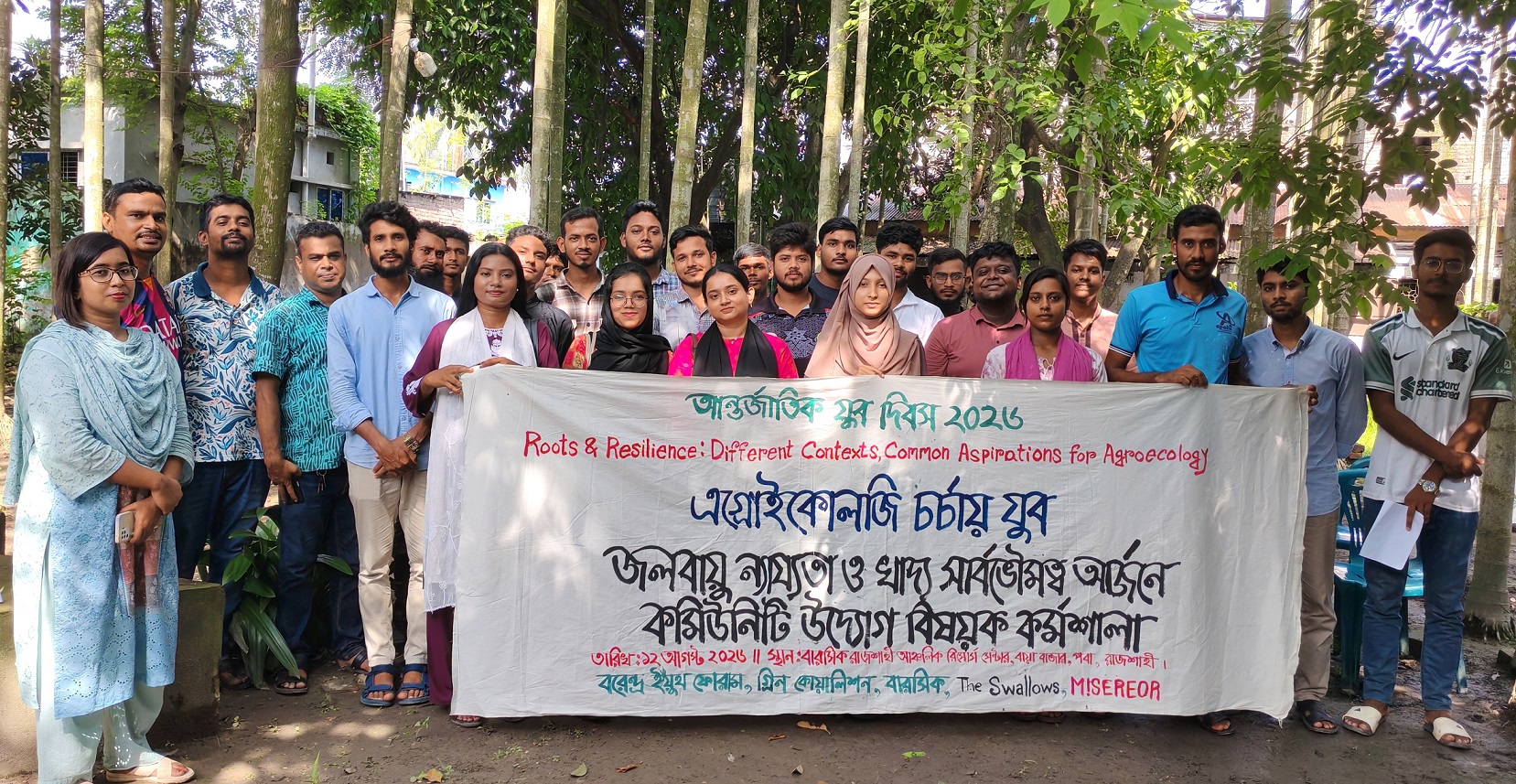
Participants also said that agricultural and development policies must ensure social and environmental justice, particularly for farmers, women, Indigenous communities, and other marginalized groups.
The workshop concluded with a strong call for an environment friendly, agroecology-based agricultural policy that combines scientific knowledge with local farming practices and community experience.
Bottom of Form