
By Atikur Rahman Atik from Rajshahi
A policy dialogue and press conference on Bangladesh’s silent pollination crisis, toxic pesticide use, and environmental degradation was held in Rajshahi recently. The event, jointly organized by BARCIK and Green Coalition-Rajshahi, brought together environmentalists, zoologists, researchers, beekeepers, and farmers to discuss the alarming decline of pollinators and its impact on food security and biodiversity.
Presenting the keynote policy paper, BARCIK researcher Md. Shahidul Islam warned that excessive pesticide-dependent agriculture is accelerating the loss of pollinators and biodiversity in the Barind region. He stressed that expanding agroecology and eco-friendly farming practices is essential to protect pollinators and ensure food sovereignty. He also called for a national pollinator protection policy.
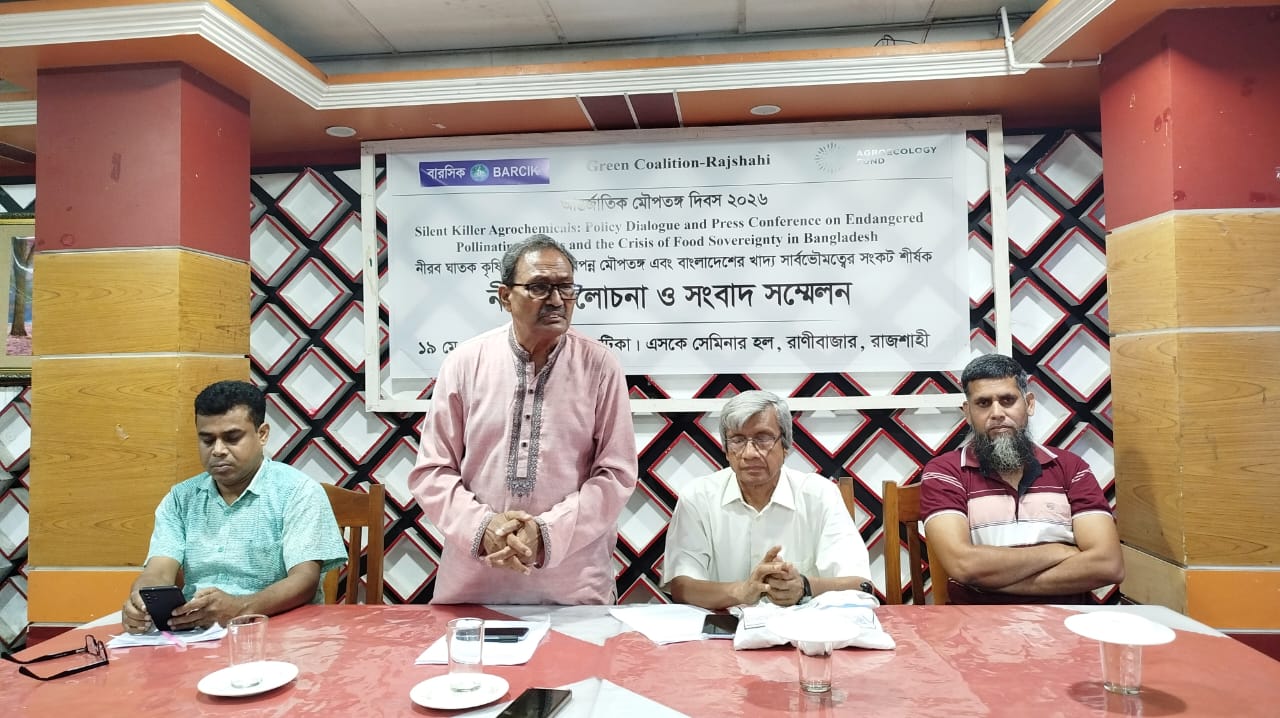
Speakers of the event said that crops such as pulses, mustard, vegetables, and most fruits heavily depend on natural pollination. However, widespread use of toxic pesticides and herbicides is destroying pollinators like bees and bumblebees, while also eliminating wildflowers and natural habitats.
Zoologist Dr. Bidhan Chandra Das said, “Although around 20,000 species of pollinators are documented worldwide, Bangladesh still lacks proper research and documentation on which species are disappearing or under threat.” He warned that the country could face a serious ecological crisis without urgent action.
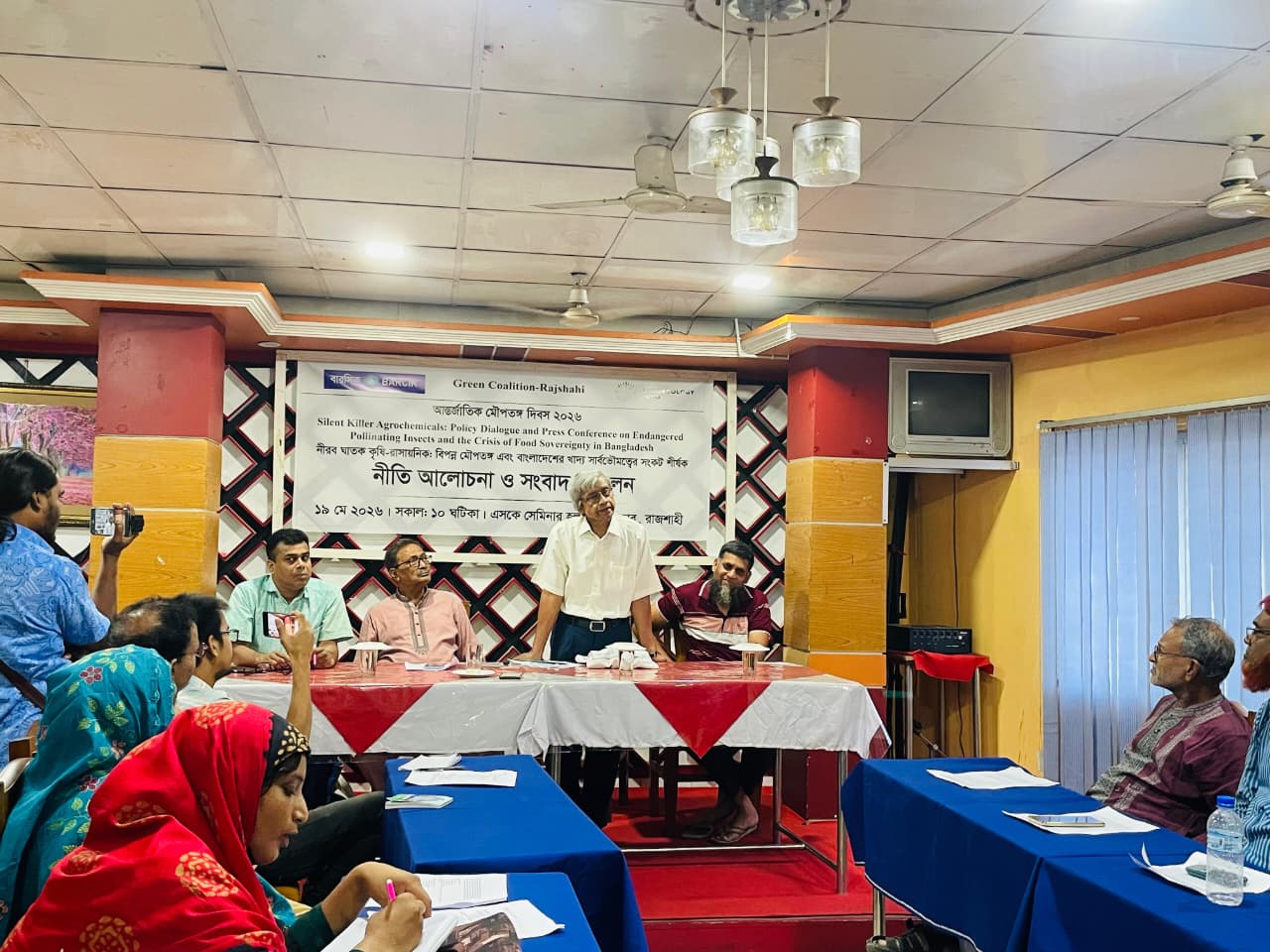
Beekeeper Shafiqul Islam Babu said rising temperatures in the Barind region are harming bee populations and reducing honey production. Another beekeeper, Shafiqul Islam Ranju, shared that nearly 120 of his bee boxes were destroyed due to pesticide spraying in vegetable fields.
Farmers also mentioned that pollinating insects once common in the fields are now rarely seen, forcing them to manually pollinate some crops. Participants at the event demanded stricter control of hazardous pesticides, nationwide promotion of agroecology, and stronger research and monitoring systems to protect pollinators and biodiversity in Bangladesh.