
By Amreto Sarker from Rajshahi
Morjina Tudu, 48, grows chilli, papaya and eggplant on a small plot beside her home in Jagdishpur village, Mundumala, Tanore Upazila, Rajshahi. Her chilli and papaya plants are bearing fruit, while the eggplants are still growing. Despite pest attacks and unpredictable weather, she continues to cultivate diverse seasonal vegetables using locally available resources and agroecological practices.
After recent rainfall, red mites attacked her chilli plants. She tried a locally used mixture of old cooking-stove ash, kerosene and detergent powder to protect the plants. She also uses other traditional practices to manage pests and maintain her vegetable garden.
Marjina lives with five family members. Her husband, Louis Mardi, has been ill for a long time and can contribute little to household work. She supports the family through agricultural wage labor, vegetable cultivation and livestock rearing while continuing to care for her elderly mother-in-law and support her children’s education. Her eldest son passed the higher secondary certificate (HSC) examination last year.
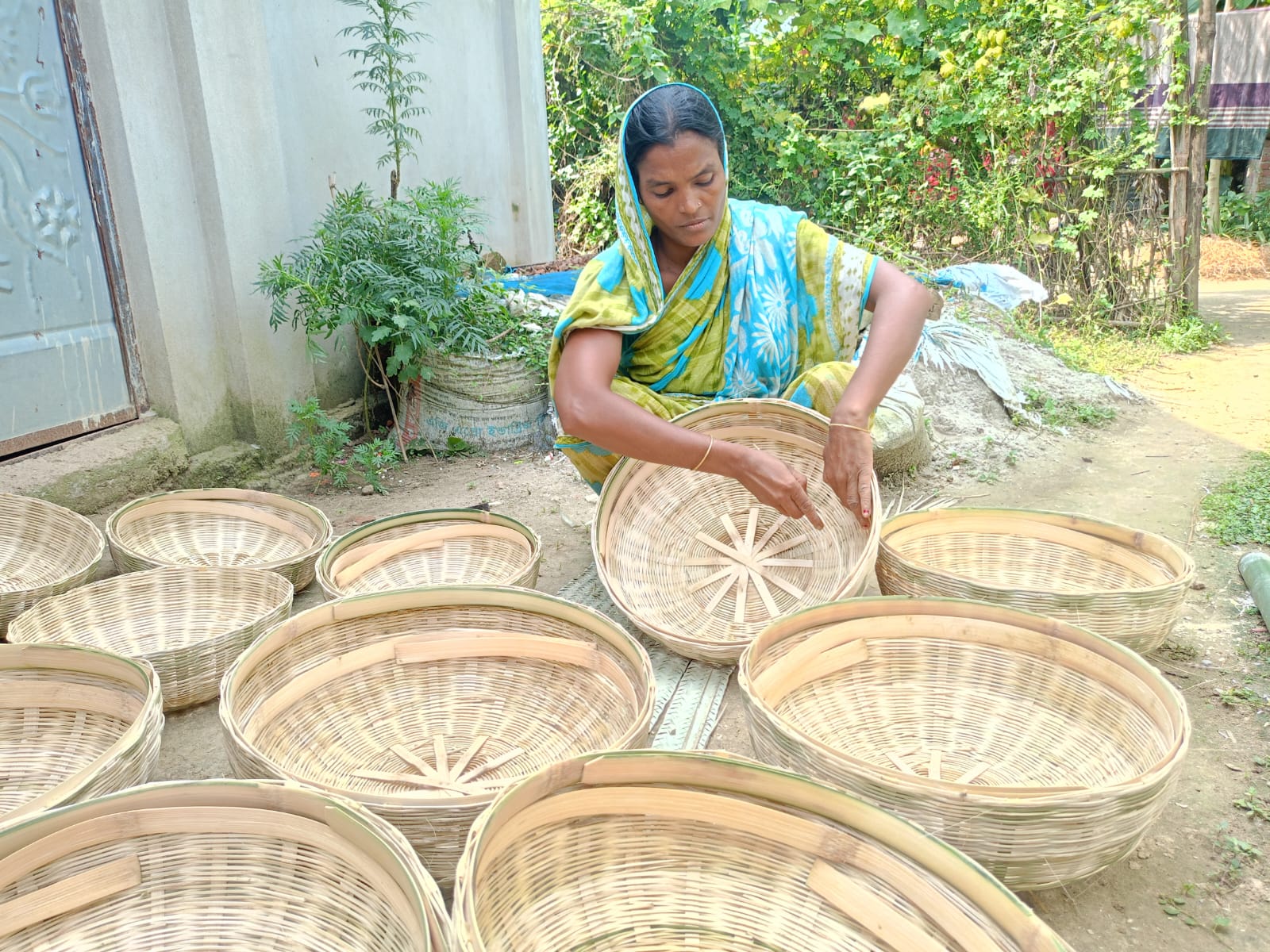
As a member of the Indigenous Mahali community, Morjina also preserves her community’s traditional bamboo and cane crafts. She makes baskets, trays and other household items to earn additional income. She also teaches Mahali to village children to help preserve the community’s language.
Promoting agroecology through women’s leadership
Morjina’s agricultural practices focus on reducing input costs and making better use of local resources. She raises three cows and collects their dung to produce decomposed manure rather than using all of it as fuel. She also maintains a vermicompost unit to produce fertilizer for rice and winter crops grown on about 10 decimals of land. She said, “Chemical fertilizers are expensive, and drought is common in our area. Using vermicompost helps reduce water requirements, and my rice cultivation costs relatively little”.
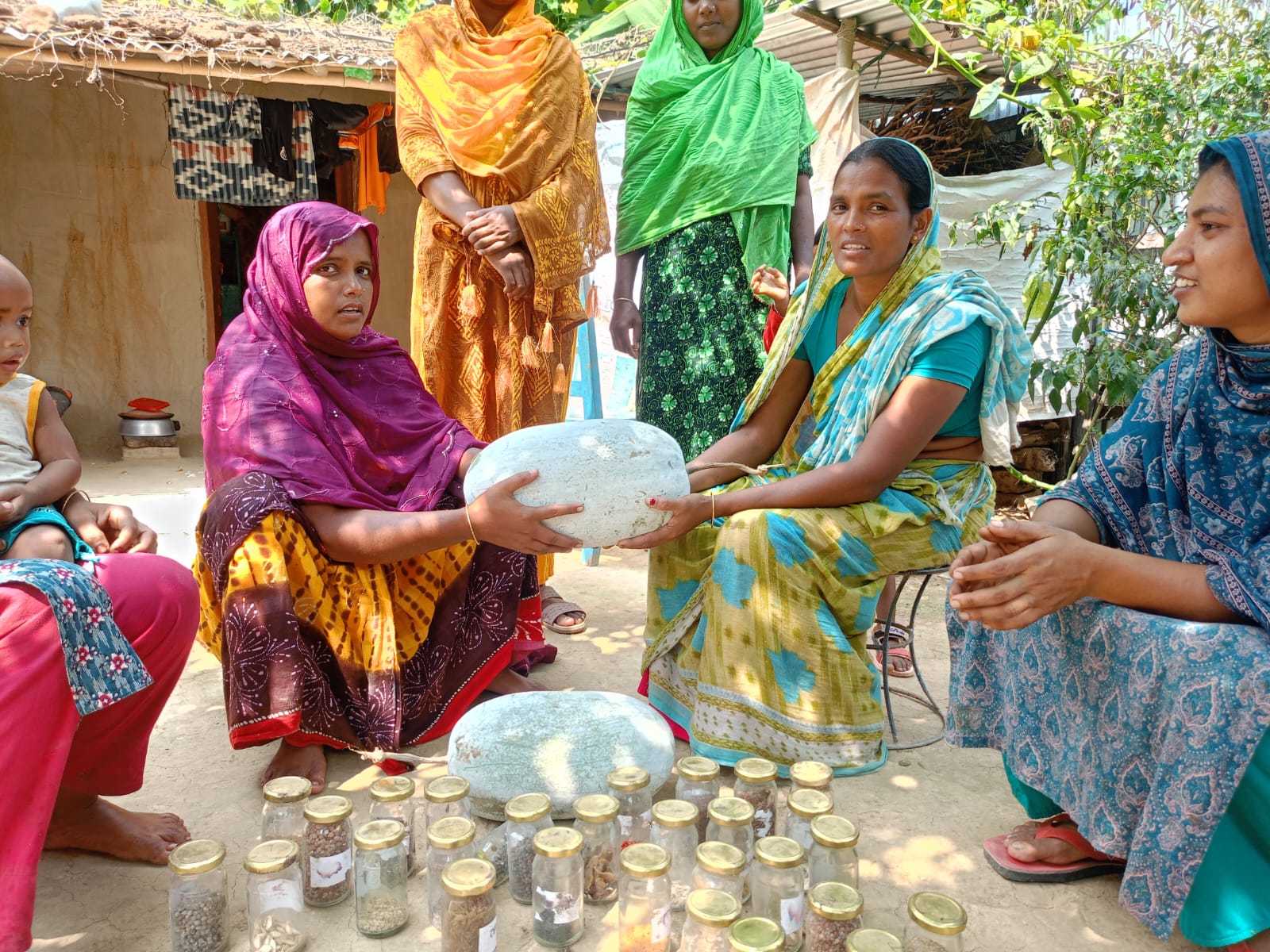
She uses neem-leaf and mahogany-fruit extracts to manage pests and diseases in her vegetable garden. She learned these practices by attending courtyard meetings organized by BARCIK. She now encourages other women to adopt the same methods, demonstrates the techniques when needed and shares her experiences with fellow farmers. To strengthen women’s collective capacity, Morjina brought together 35 village women to establish the Jagdishpur Women’s Organisation. Through the group, they have obtained a two-bigha pond on a community lease this year by communicating with the upazila authorities. They plan to use the income from fish farming to support community development.
Conserving seeds and sharing knowledge
Seed conservation is another important part of Morjina’s work. She carefully preserves mature ash gourd and other vegetable seeds for future cultivation. Her house has become a local centre for seed exchange, where women collect seeds when needed and return surplus seeds to share with others. Selina Hasda, 47, a fellow villager, said, “We collect the seeds we need from Morjina’s home and return any surplus seeds here.” Morjina has preserved viable seeds of 45 vegetable varieties. She explains that having her own seeds allows her to sow crops at the right time, even when natural disasters disrupt the growing season. It also reduces dependence on expensive market-bought seeds and the need to purchase vegetables.
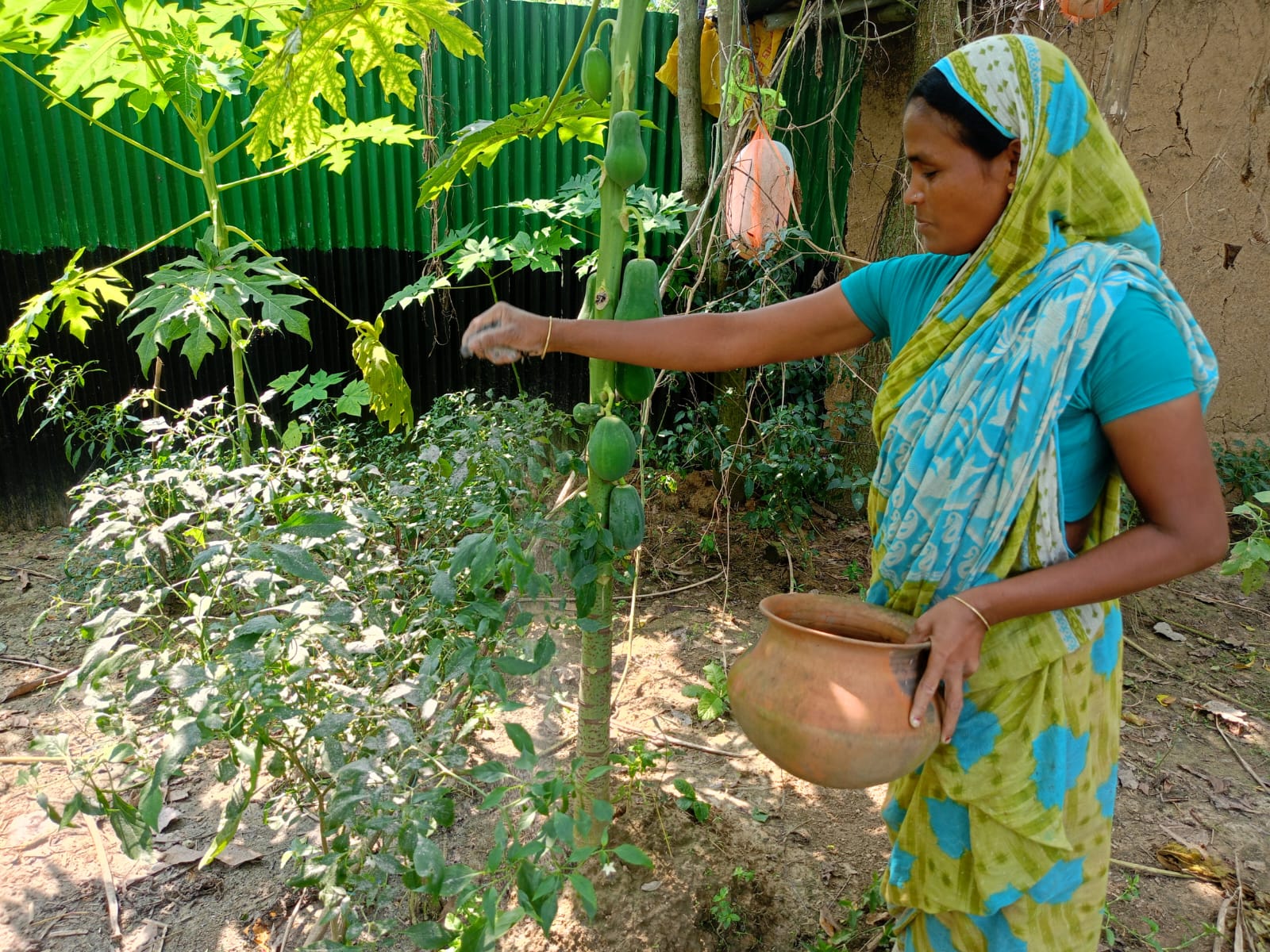
This year, she has stored 55 mature ash gourds and 19 mature sweet pumpkins, with an estimated market value of Tk 15,000. During the previous rainy season, she sold ridge gourds worth Tk 3,200. Her current garden includes beans, chillies, papaya, eggplant and sweet pumpkin, while she prepares to cultivate winter vegetables. Morjina has also shared seeds of 25 vegetable varieties with 146 women this year and taught agroecological practices to 35 women. Her work demonstrates how rural women can strengthen household food security, reduce farming costs and preserve agricultural biodiversity through seed conservation, traditional knowledge and collective action. Women like Morjina continue to sustain local seed-sharing traditions, helping protect diverse crop varieties that may prove vital in the face of climate-related disasters.