
By Ohidur Rahman from Netrakona
A civil society meeting titled “Climate Crisis and Local Adaptation Strategies in the Haor” was organized recently by BARCIK with support from Oxfam at the Netrokona Ladies Club.
Farmers, teachers, students, researchers, social wokers, writers environmentalists, journalists and other occupational groups participated. The meeting was presided over by principle of Chndranath Degree College and writer Anowar Hossein and facilitated by BARCIK’s director Pavel Partha.
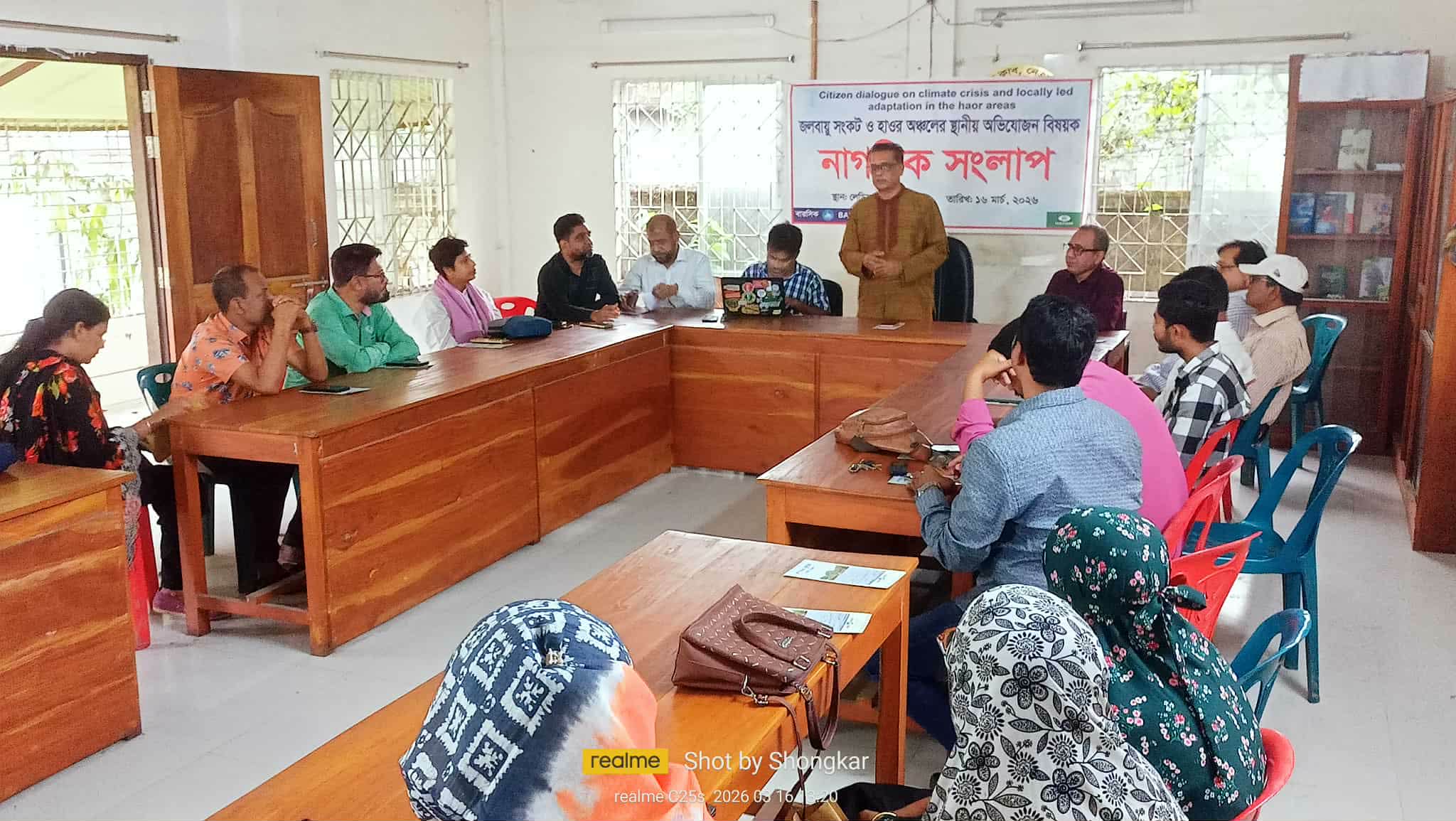
During the meeting speakers said local knowledge and traditional practices must be prioritized in all development plans for the Haor region, as local communities have survived climate challenges for centuries. They demanded no further man-made disasters be created in the name of development.
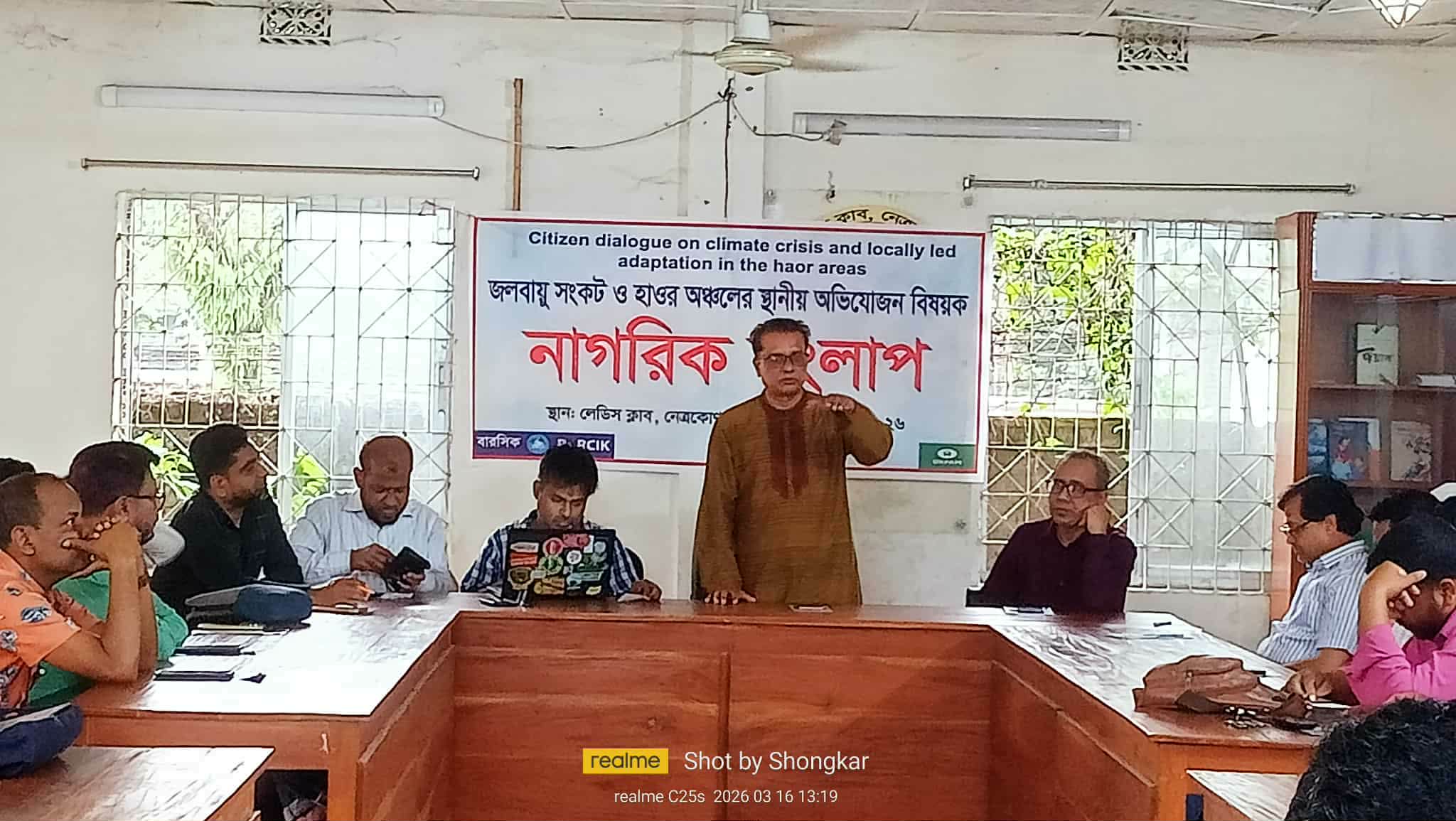
The participants of the meeting placed 19 points demand some these demands include excavating rivers and ponds, creating grazing lands, reducing pesticide use, permanently repairing embankments, banning Chinese gill nets, supporting local seed banks, stopping topsoil sales, providing weather forecasts and crop insurance, planting flood-resistant trees, establishing fish sanctuaries, regular dredging etc.