
By Atikur Rahman Atik from Rajshahi
A community policy dialogue titled “River Voices from the Riverbank: Experiences, Expectations and Actions to Protect Life, Livelihoods and the Future” was held on 27 September along the Barnoi River near Nowhata Market in Rajshahi. The event was organized jointly by the Nowhata Fishermen’s Cooperative Society, BARCIK, Green Coalition and Barendra Youth Forum under the theme “Rights to Rivers, Life and Livelihoods: A Community Commitment to a Sustainable Future.”
The dialogue focused on incorporating riverbank communities’ experiences and local knowledge into river management policies. Participants called for recognition of both river rights and the rights of river-dependent people, greater participation of women and local communities, and a shift from isolated projects towards integrated river governance.
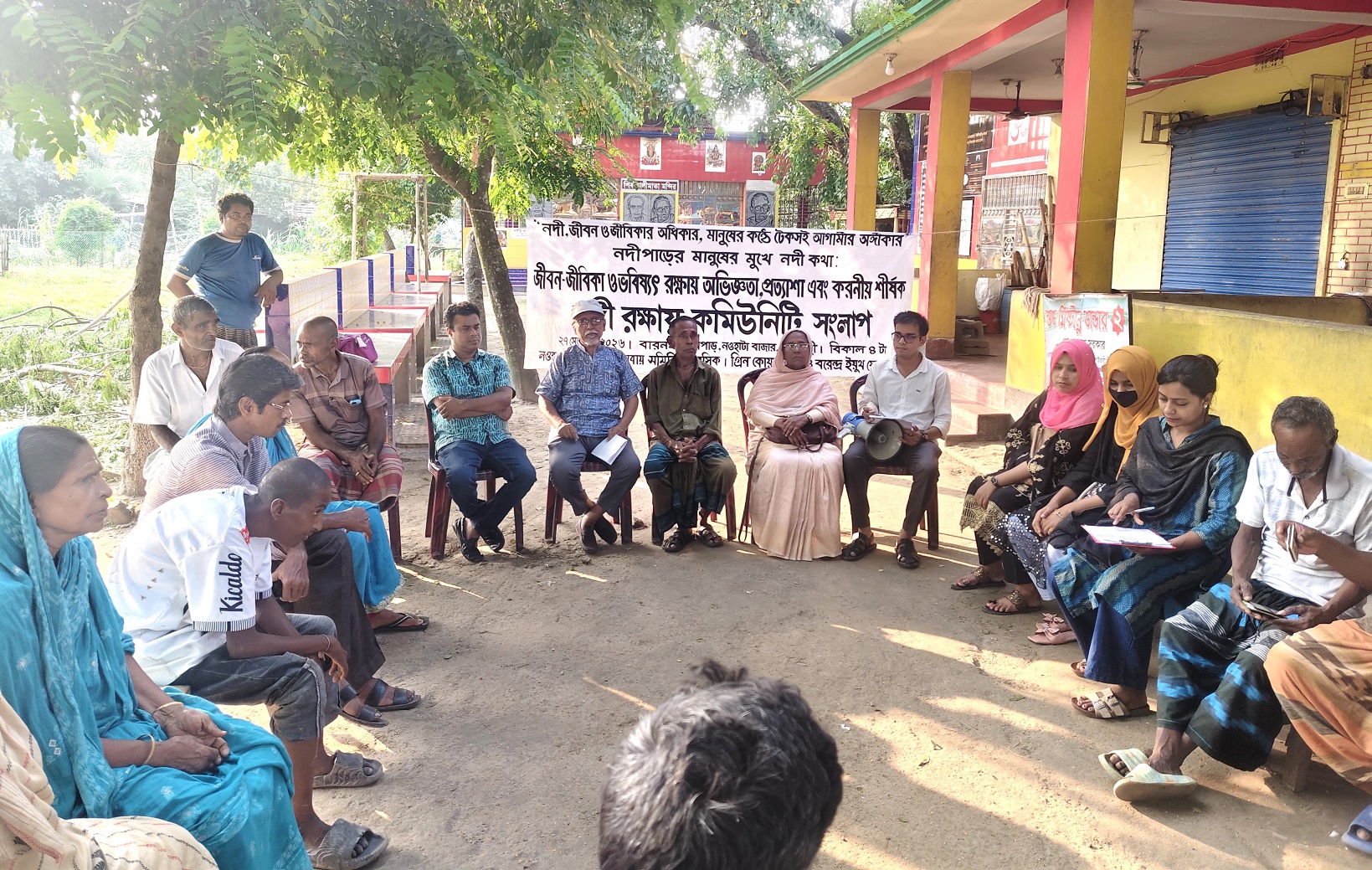
Speakers noted that rivers are fundamental to Bangladesh’s environment, agriculture, fisheries, food security and livelihoods. Changes in river flow and water quality directly affect income, food, health, culture and future security. Local communities, they said, possess long-term knowledge of changes in river flow, fisheries, navigation, wetlands and livelihoods that should complement scientific information.
Local communities also described growing water pollution. Chittaranjan Halder said that water once used for cooking now causes itching and skin sores. Nuzu Halder reported that polluted water released from the city during Ashwin-Kartik often results in fish deaths in the Barnoi River. Environmental activist and Barendra Youth Forum President Md. Atikur Rahman called for integrated river restoration and meaningful participation of riverbank communities. Researcher Md. Shahidul Islam emphasized recognition of local knowledge and customary rights, along with transparency and accountability. Social and farmers’ movement leader Mahmud Jamal Kaderi stressed long-term policies integrating river flow, wetlands, biodiversity and people’s rights. Green Coalition Paba President Rahima Khatun highlighted the need to involve women, farmers, fishers and youth in decision-making.
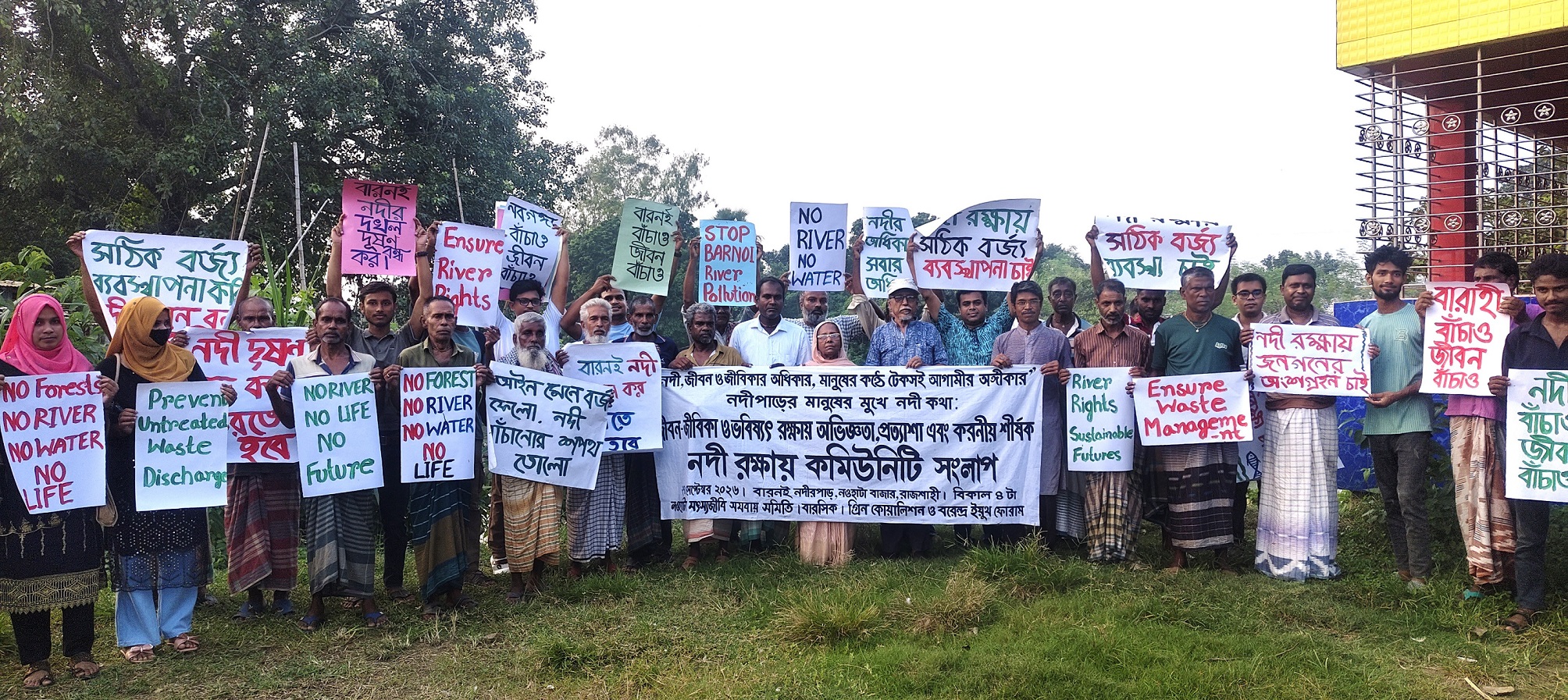
The dialogue emphasized that effective river management requires coordination among government institutions, scientific knowledge and the lived experience of river-dependent communities.