
By Amit Sarker from Rajshahi
Low-income families in Rajshahi are using small spaces around their houses, rooftops, balconies and even discarded containers to grow vegetables for household consumption. Some are also collecting edible uncultivated plants from nearby natural areas.
This was demonstrated at the Food Diversity Fair 2026, organized by BARCIK Rajshahi in Budhpara, Ward 30 of Rajshahi City, beside the railway line. Twenty-two women and men participated, displaying food produced at home or collected from nature.
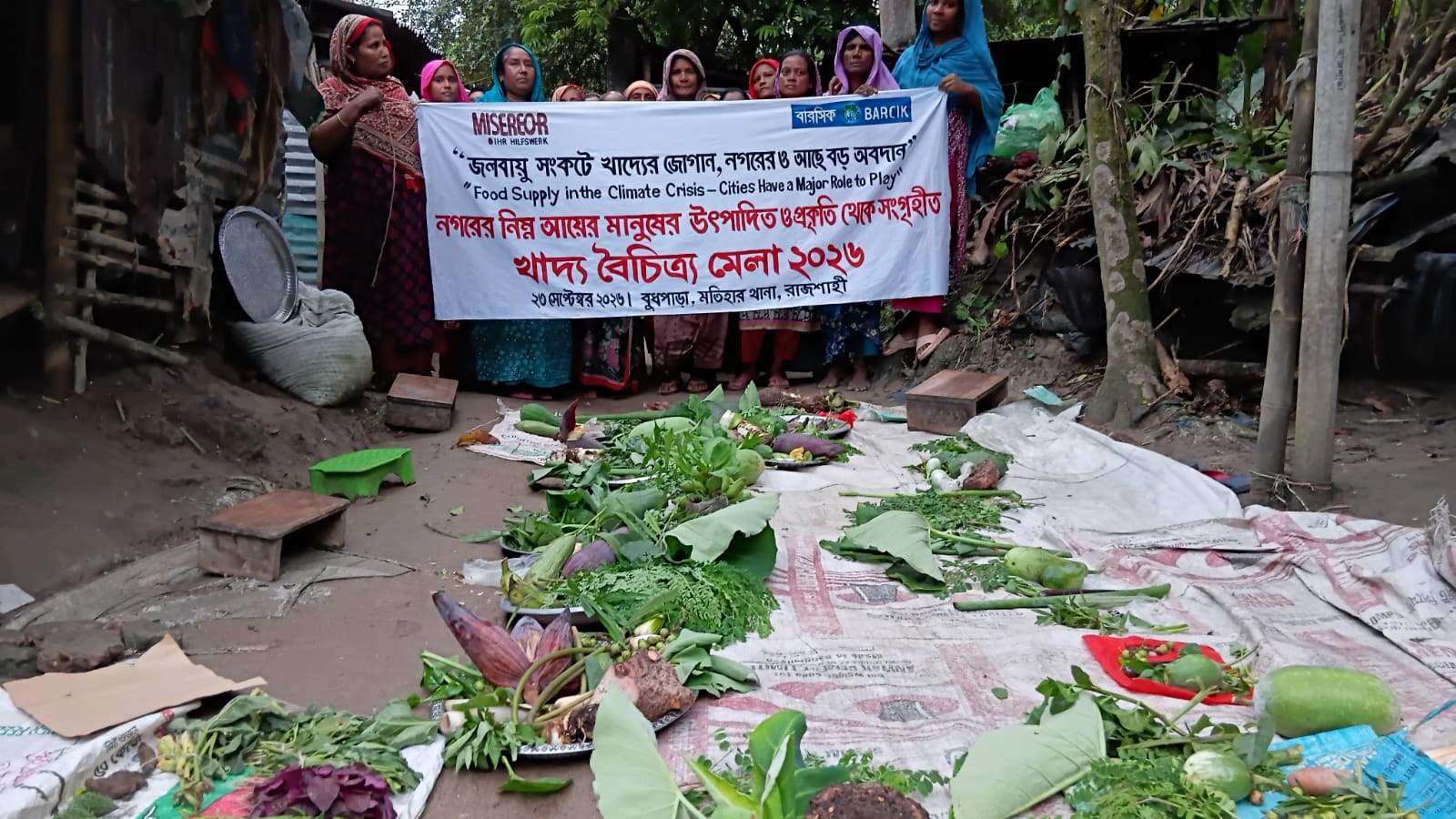
Participants of the fair exhibited 17 cultivated crops, including papaya, bottle gourd, fig, Malabar spinach, yam, bean, chilli, eggplant, tomato, cucumber, pumpkin, red amaranth, spinach, coriander and moringa leaves. They also displayed eight uncultivated leafy vegetables, including water spinach, thankuni, taro stems, motmoti, shantir shak, mankachu, shunshuni and katakhura. Fruits, medicinal and spice plants such as banana, dragon fruit, pomegranate, guava, lemon, ginger, tulsi and aloe vera were also presented. Participants exchanged locally saved seeds of bottle gourd, beans, pumpkin, leafy vegetables, yardlong beans and tomato.
Amar Ali, a participant, said he previously depended on day labor and did not know that food could be produced in very small spaces. After participating in BARCIK discussions, he began growing vegetables in sacks, cut plastic bottles and discarded buckets. He now produces chilli, eggplant, tomato, ginger, dragon fruit and tulsi, as well as papaya, Malabar spinach, bottle gourd, banana and coriander around his home. This has reduced household vegetable purchases and created a small source of additional income from surplus production.
Another participant, Latifa Begum, said that having vegetables around the house has reduced their dependence on the market. She also said that maintaining plants around her tin-roofed house helps to keep it relatively cooler during hot weather.
BARCIK representative Amit Sarkar said the fair demonstrated that urban low-income families do not necessarily need large plots to produce some of their own food. Small household spaces can be used for food production while conserving local seeds and edible plants.
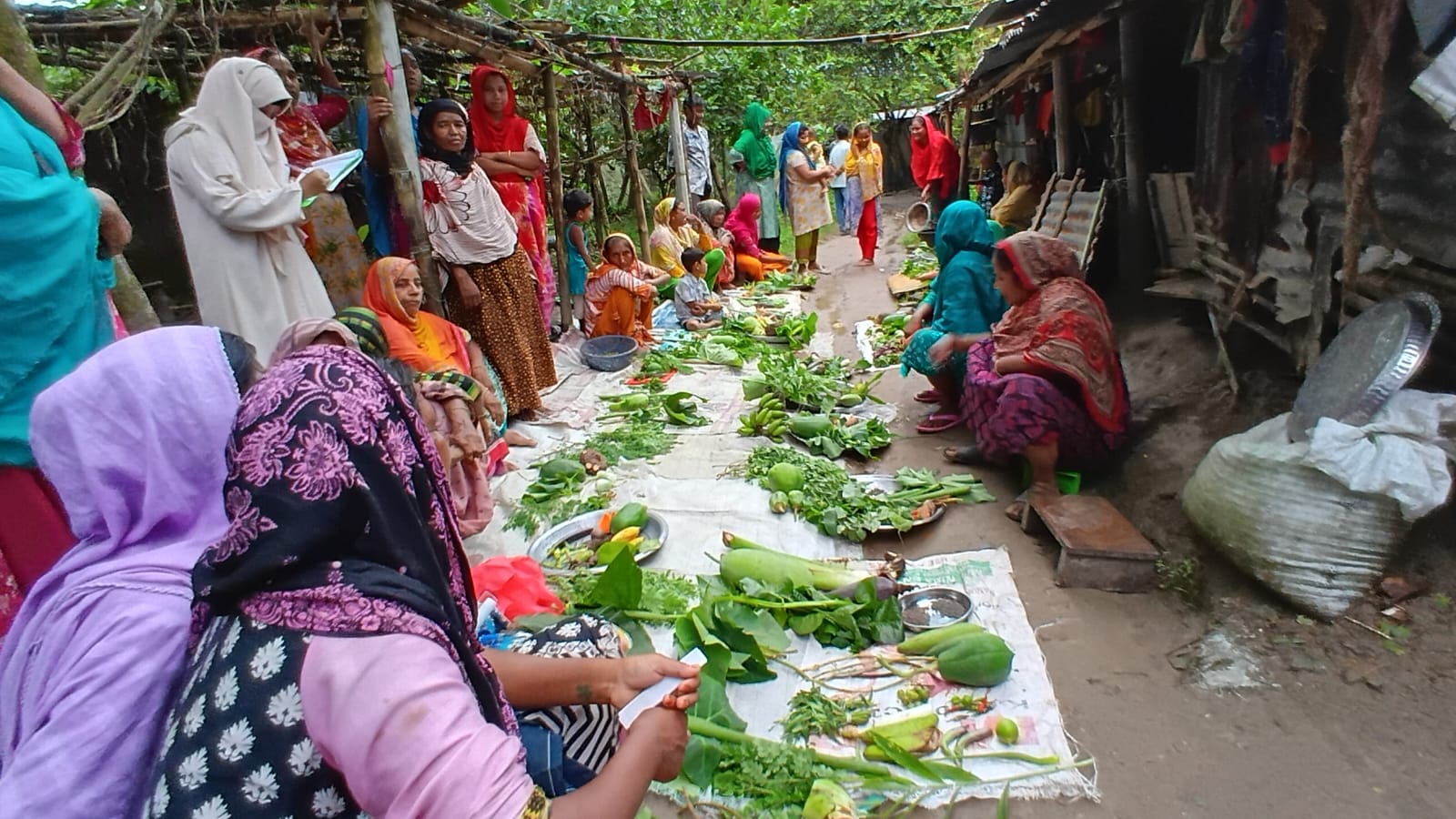
BARCIK representative Tohura Lily emphasized that unused urban spaces, rooftops and areas around homes could be used for food production and greening, requiring cooperation from government agencies, city corporations and other institutions.
The organizers mentioned that small-scale urban food production can help to reduce household food expenditure and market dependence, generate some additional income, conserve local seeds and strengthen food diversity. In the context of rising temperatures, food production uncertainty and increasing living costs associated with climate change, making better use of small urban spaces can contribute to food security and resilience among low-income people.