
By Mukunda Ghosh from Satkhira
Women have long played an important role in farming, from seed conservation and sowing to planting, cultivation and marketing. Archana Rani, 40, from Srifalkati village in Ishwaripur Union, Shyamnagar, Satkhira, is one such woman using her homestead to improve her family’s nutrition and income.
Archana lives with her husband Gobinda Mondal, 48, and their two children. Gobinda runs an Agroecology Learning Centre (ALC) while also working in agriculture and goldsmithing. Archana also helps to raise the children of her brother-in-law because they do not have parents to care for them.
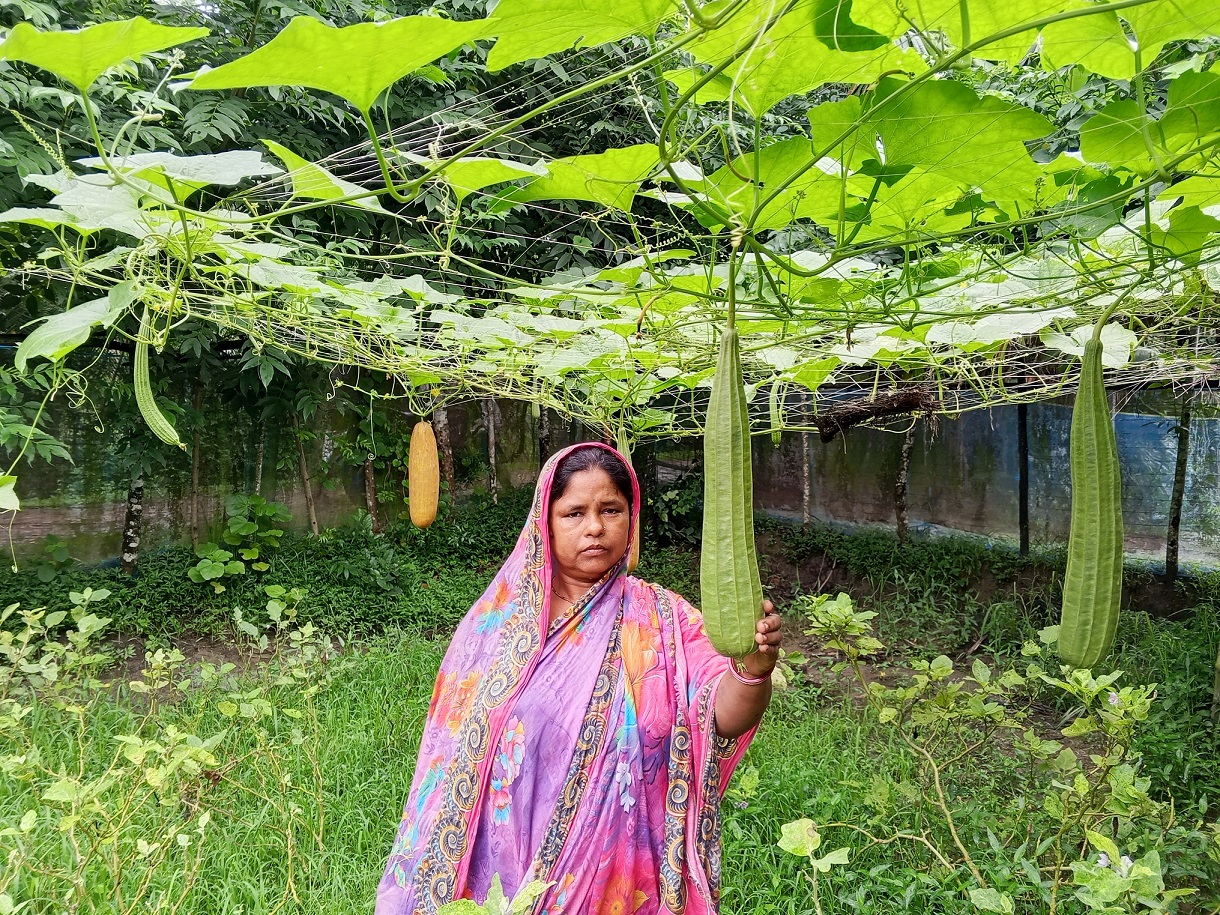
In April 2026, Archana joined the Srifalkati Women’s Agricultural Development Organization through BARCIK’s women’s empowerment project, implemented with support from Standard Chartered Bank. She received materials and technical support, including netting, bamboo fencing, trellis materials, cotton rope and equipment for producing vermicompost.
With this support, Archana developed a diversified vegetable garden on her homestead. Previously, climbing vegetables had to grow over the house roof, on the ground or on tree branches, resulting in lower yields and rotting vegetables. The trellis system has improved plant growth and increased production. She now also uses organic fertilizers and botanical pest-control methods.
Archana said, “Now we can eat safe vegetables from our own garden and sell the surplus to cover other household expenses”. She added that the support and training have increased her confidence and encouraged other women in the area to become interested in homestead gardening. She also received training on soil health, organic inputs and improved cooking stoves.
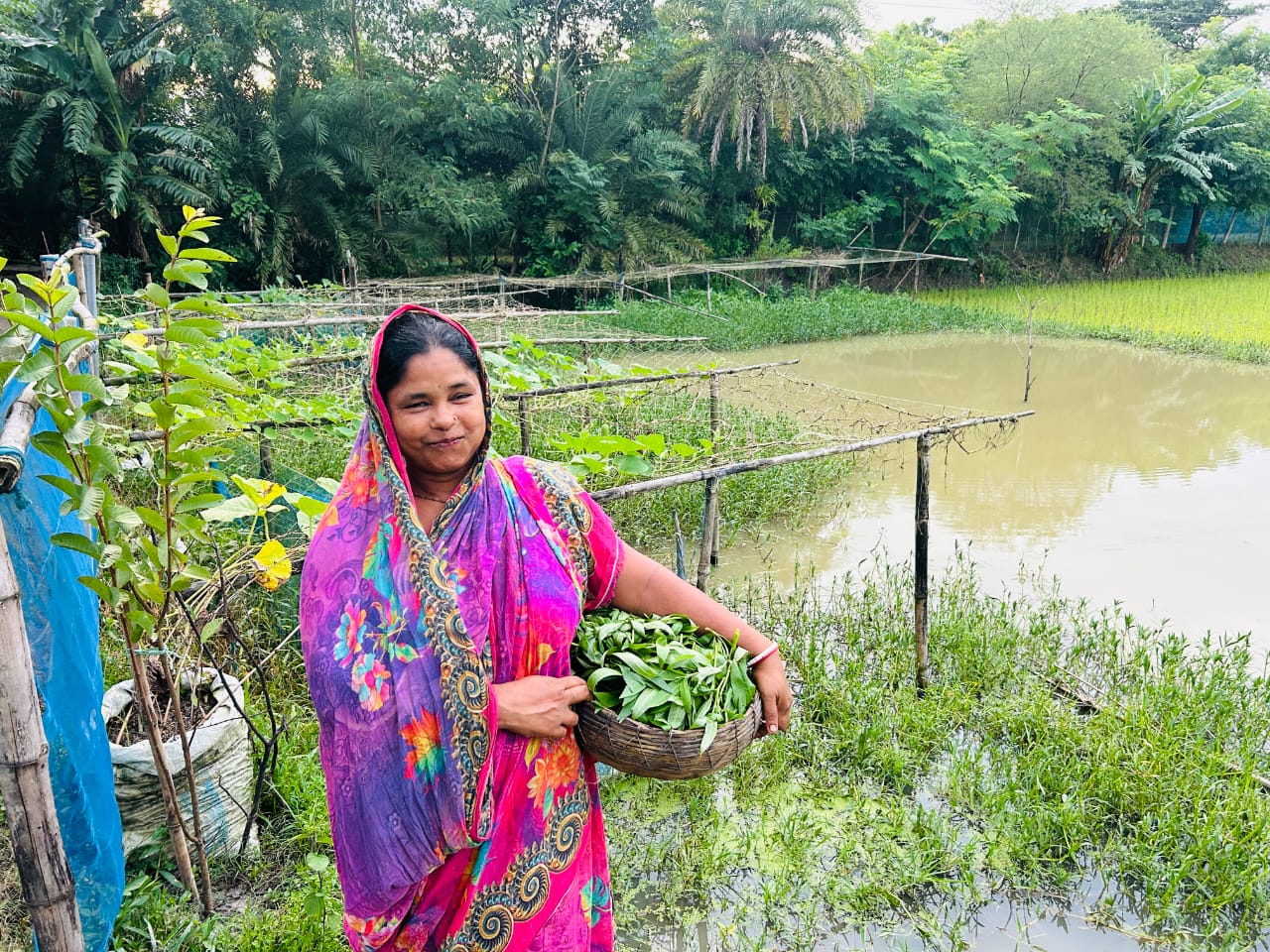
During the current monsoon season, her family consumed vegetables worth about BDT 3,000 from the garden. She expects to sell vegetables worth approximately BDT 10,000–12,000 this year. This will help to meet the family’s nutritional needs while providing additional income.
Archana’s experience demonstrates that even limited homestead space can become more productive when farmers combine their own knowledge and effort with appropriate inputs and technical support. Relatively modest assistance has expanded her vegetable production and created opportunities for year-round cultivation.