
By Biswajit Mondal, from the Coast
A group of local women took to the stage in Shyamnagar, Satkhira, to raise awareness about the harmful effects of chemical fertilizers and pesticides and encourage farmers to grow safe, chemical-free vegetables. Titled “Poisonous Vegetables,” the awareness play was performed as part of a cultural campaign to protect the environment. Its most notable feature was that all the performers were members of a local women’s organization who had never imagined themselves acting on stage.
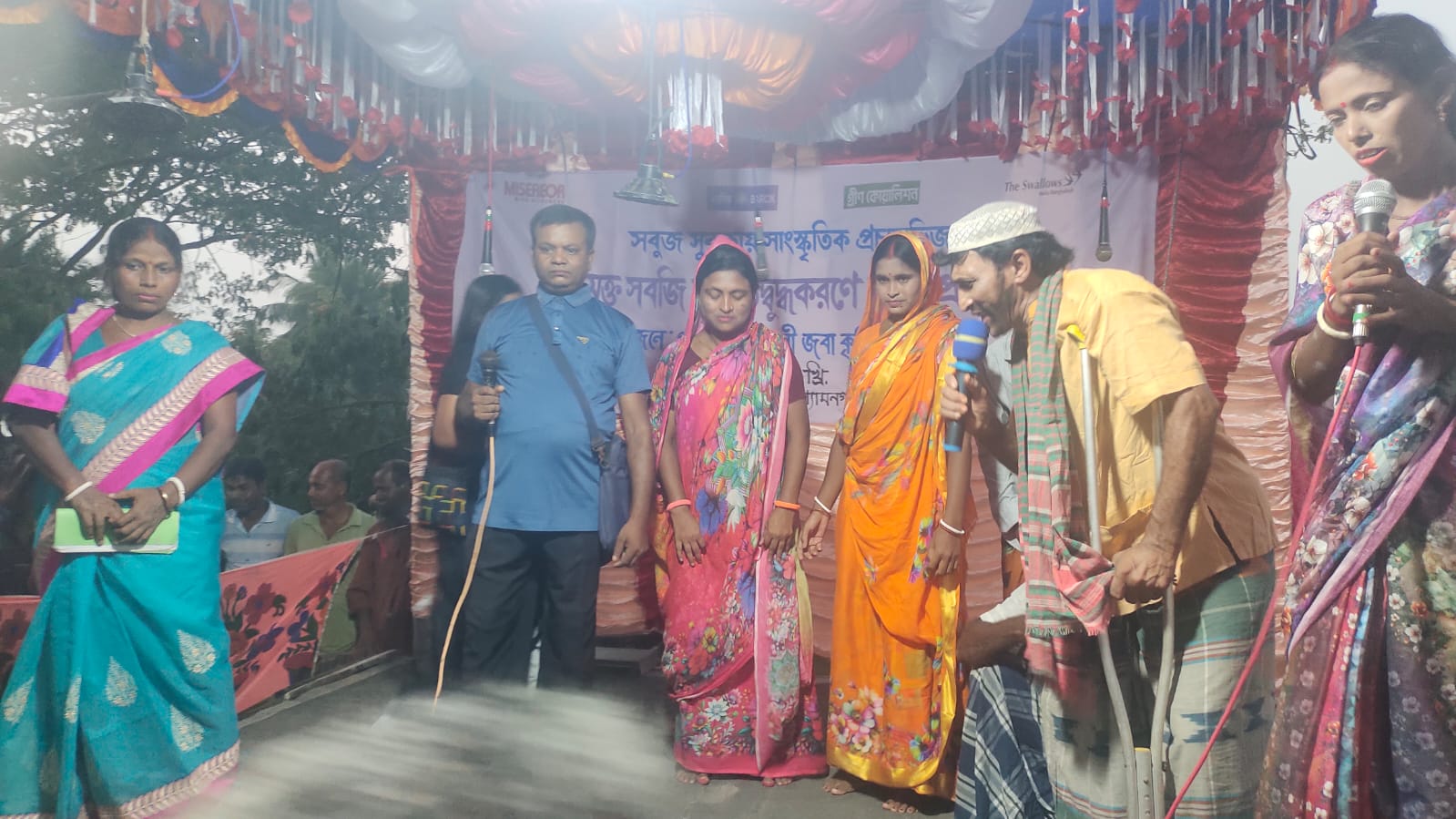
The play was staged at Rani’s Garage (Bottola) in Munshiganj Union, Shyamnagar Upazila, recently. The Jhelekhali Joba Women Farmers’ Organization organized the event with support from the Munshiganj Green Coalition and BARCIK. Around 200 people from different villages and professional backgrounds participated.
Through everyday stories and familiar situations, the performers highlighted how excessive use of chemical fertilizers and pesticides contaminates food, damages the environment and threatens human health. The play also emphasized the need to reduce dependence on chemical inputs and adopt organic and environment friendly methods of vegetable production.
The event was chaired by Shyamal Mondal, a member of Ishwaripur Union Parishad. Guests included Debashish Mondal, a member of Munshiganj Union Parishad; Dr Jogesh Mondal, president of the Munshiganj Green Coalition; Sukanta Baulia; Bhudhar Mondal; and BARCIK representative Ramkrishna Joardar.
Shyamal Mondal said excessive use of chemical fertilizers and pesticides posed serious risks to food safety, the environment and public health. He focused on the need to encourage farmers to adopt environment friendly farming practices and noted that theatre could communicate these messages effectively to the public.
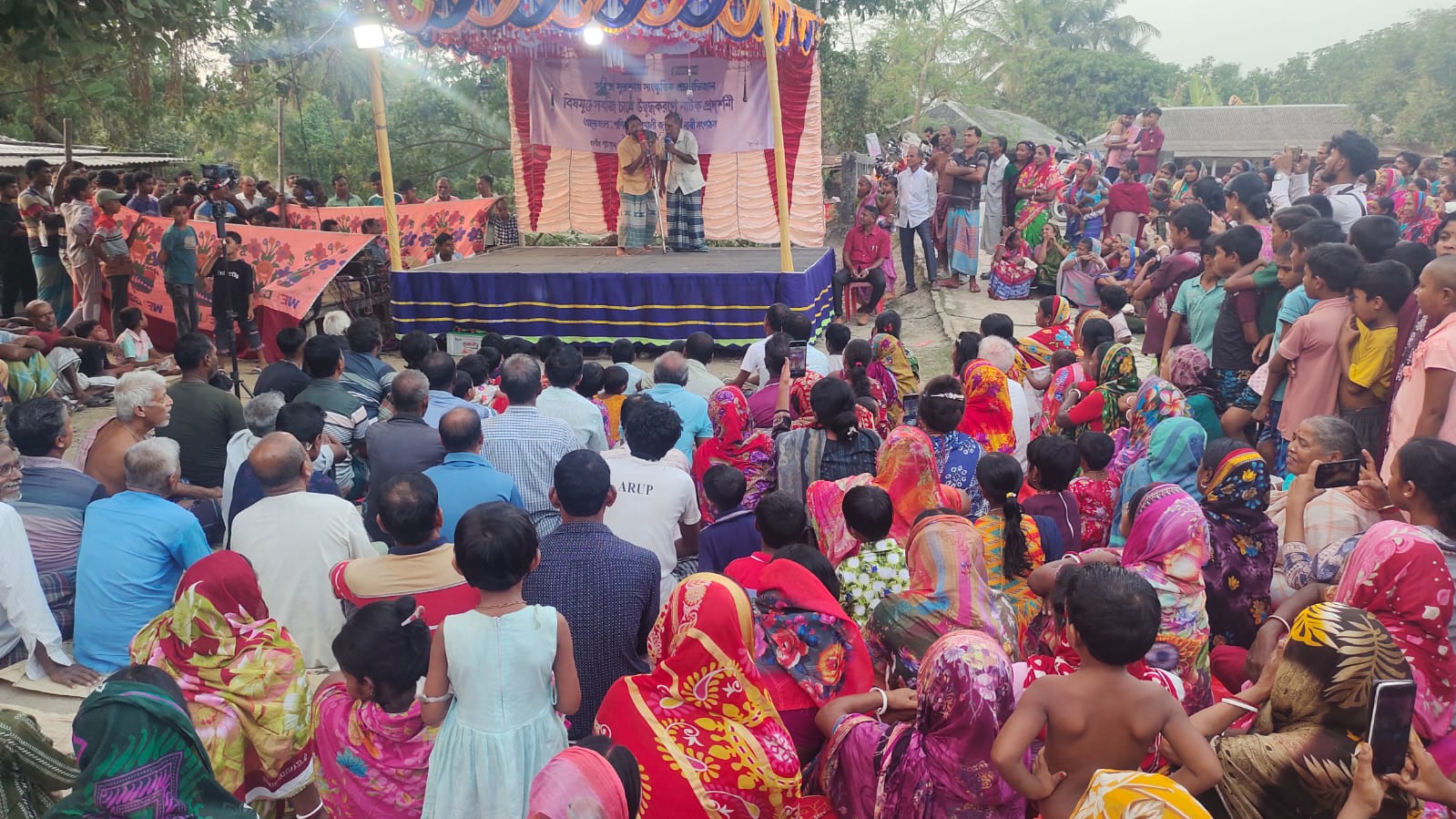
Falguny Rani, a farmer and member of the organizing women’s group, said, “There was a time when we women could hardly step outside our homes. Today, we have come together and performed on stage ourselves. Through this play, we have shared the problems in our community and possible ways to address them. We have also shown how the training provided by BARCIK is helping improve our livelihoods.”
The performance gave local women an opportunity to share their experiences and knowledge of agriculture and the environment with a wider audience. By combining local culture with women’s active participation, such initiatives can help promote safer food, public health and environmentally responsible farming at the community level.