
By Shimul Kumar Biswas
Homestead-based nutrition gardening is a practical way for rural families to ensure food security and improve their livelihoods. Bachia Begum, a woman farmer from Nayabari village in Singair Upazila of Manikganj district, has shown how even a small piece of land can provide year-round nutrition and income for a family.
On just 12 decimals of land around her house, Bachia Begum has developed a nutrition garden (known as Shotobari) along with an integrated farming system. Her family includes her husband, two sons, their wives, and two grandchildren. With the aim of ensuring year-round nutrition, reducing dependence on the market, producing safe food, and earning some extra income, she began homestead-based nutrition gardening.
Today, her homestead produces a wide variety of vegetables and fruits throughout the year. Using organic fertilizers, she grows country beans, bottle gourd, ridge gourd, coriander, chili, eggplant, ash gourd, sponge gourd, sweet pumpkin, ginger, turmeric, Malabar spinach, bananas, and many other crops. After meeting the family’s needs, she sells surplus vegetables in the market, which helps generate additional income.
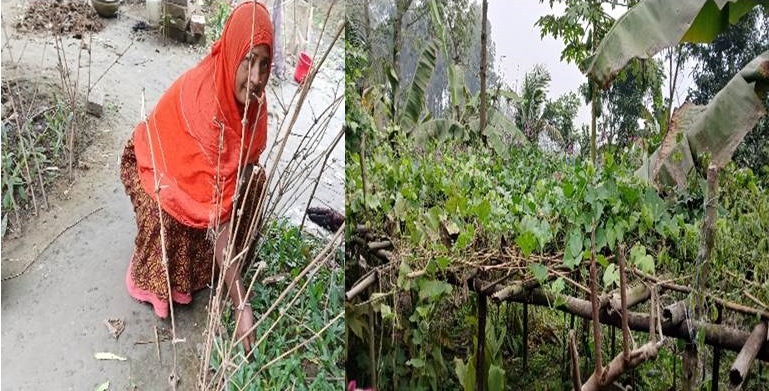
Bachia Begum has also integrated livestock and poultry into her homestead system. Poultry farming provides eggs for the family year-round, while cattle and goats supply manure for organic fertilizer and contribute to the family’s food needs. Fish from the nearby pond are also included in their regular meals. Indigenous leafy vegetables grown in unused corners of the homestead are eaten at least once a week, adding diversity to the family diet. Fruit trees such as mango, jackfruit, guava, lemon, and pomelo provide fresh seasonal fruits that add both nutrition and flavor to their meals.
Despite her success, Bachia Begum has faced several challenges. Managing crop diversity on limited land, dealing with plant diseases, coping with climate-related production risks, increased family labor, and fluctuating market prices for vegetables are some of the difficulties she encounters. Even so, she believes that with proper planning, a small homestead can meet a family’s nutritional and financial needs.
Bachia Begum says, “Training and encouragement from BARCIK have given me confidence. If we use our homestead land in a planned way, our family will never lack nutritious food. I hope more rural women will come forward and produce safe food using their own homesteads.”
Recognizing her dedication and enthusiasm, BARCIK supported Bachia Begum through its Shotobari Model Program by providing seasonal vegetable seeds, necessary agricultural inputs, and continuous encouragement, which helped her successfully establish this initiative.