
By Barsha Gain from the coast
A training and planning workshop on agroecological farm design and climate change was held at the Dhumghat Agroecology Learning Center in Ishwaripur Union of Shyamnagar Upazila, Satkhira recently. The workshop was organized by BARCIK.
16 agroecology practitioners including farmers, youths, journalists, a five-member research team from IUCAD, and BARCIK officials from Padmapukur, Burigoalini, Munshiganj, Atulia, and Ishwaripur participated in the workshop.
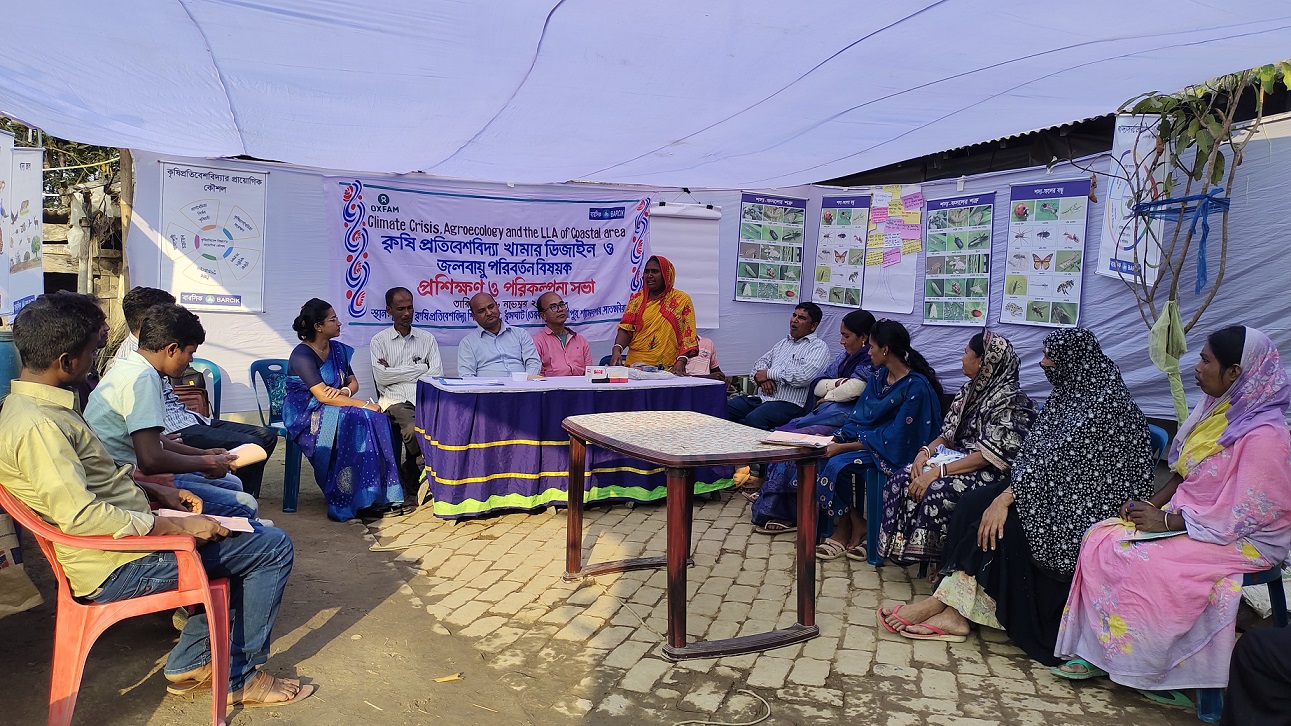
Participants discussed major climate change challenges in the coastal belt, including salinity intrusion, scarcity of safe drinking water, irregular rainfall, drought, hailstorms, waterlogging, and dense fog, all of which are severely affecting agriculture and livelihoods. The speakers said that local communities are adopting various agroecological and climate-resilient practices to protect the environment, ensure sustainable food systems, and enhance self-reliance.
The workshop was chaired by Alpona Rani Mistry, Supervisor of the Dhumghat Agroecology Learning Center. The keynote presentation on the importance and methodology of agroecological farm design was delivered by Shonkar Mrong, Associate Regional Coordinator of BARCIK’s Netrokona Resource Center.
Participants visited different initiatives of the learning center and exchanged experiences. Research Associate Samiha Saleha and Research Officer (LLA) Rawnaq Jahan Khan Ranon of ICCCAD, along with BARCIK’s Associate Regional Coordinator Ram Krishna Joardar, were also present.
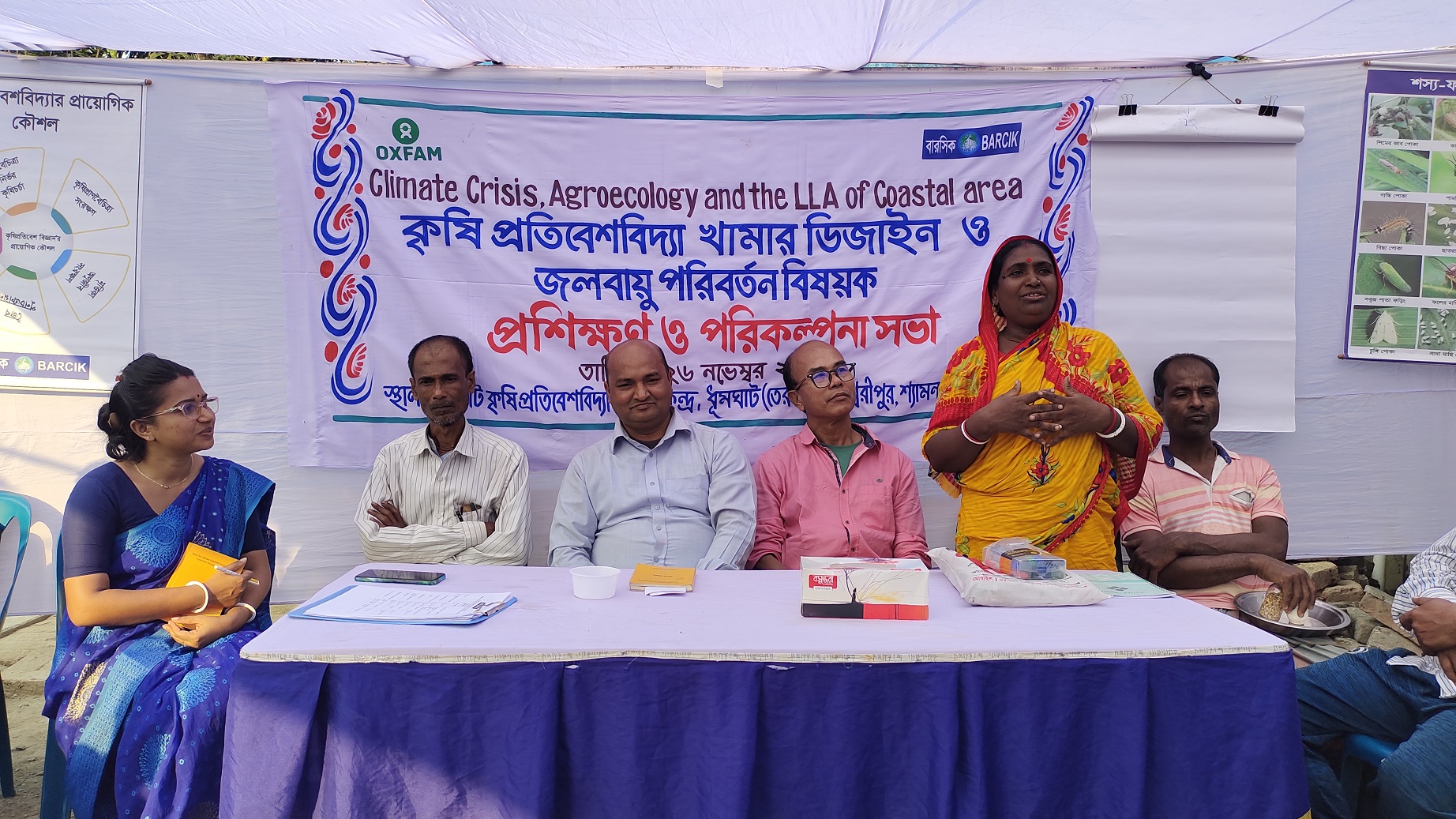
Youth entrepreneur Tapas Mondal of the Pankhali Agroecology Team said the training helped him understand how to use every corner of his homestead and natural resources for diversified crop production. However, he mentioned that high salinity in the dry season remains a major challenge. Shampati Majhi, a member of the Jelekhal Agroecology Team, said she learned for the first time about the importance of local seed conservation and vowed to preserve seasonal seeds at the family level.
Participants expressed hope that expanding such initiatives would help conserve agricultural biodiversity and strengthen food sovereignty in coastal communities.