
By Ritu Rabi Das, from Manikganj
Jaynagar Rajbanshi Para, on the bank of the Kaliganga River in Manikganj Municipality, is a modest neighborhood where I have been working since 2021. Over the years, its people have become very close to me. Yet a simple incident on 26 August 2026 touched me deeply.
After a youth workshop that afternoon, I was preparing to leave when Antara Rajbanshi handed me a carefully wrapped biscuit packet. She said, “Didi, Sadikul brought this for you. He asked me to give it to you if he could not meet you.” Sadikul had actually stayed back that day hoping to meet me.
When I opened the packet, I was astonished to find a beautifully handmade clay image of Goddess Saraswati, carefully painted by Sadikul himself. The 17-year-old had spent two days making it with patience and care. Sadikul is a Muslim boy who studied up to Grade 8 and now works as a day laborer to support his family. He is also skilled at farming around his home and in the fields.
For me, Goddess Saraswati represents knowledge, music and learning in Hindu tradition. Yet at that moment, religious identities and differences seemed to disappear. Sadikul’s gift was not about religion; it was an expression of affection, creativity and respect for someone he calls “Didi.”
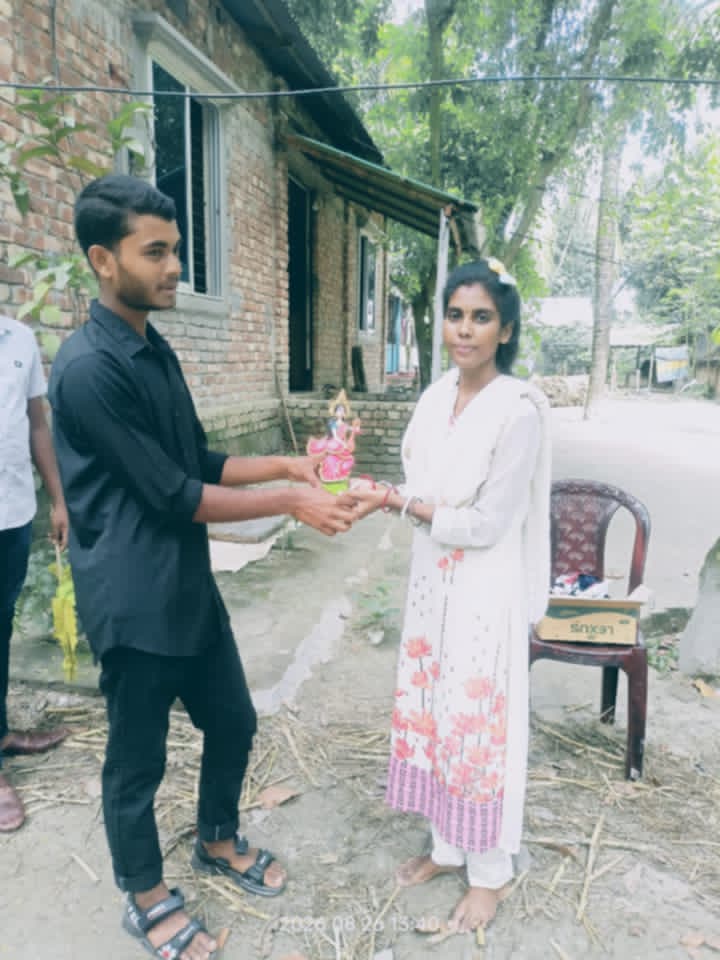
The simple biscuit wrapper was far more valuable than an expensive gift box because it carried genuine care and affection. In that ordinary moment beside a rural road, it seemed to symbolize something much greater, the beauty of communal harmony.
In a time when divisions between people are often emphasized, Sadikul’s small act offers a powerful lesson: art has no religion, and mutual respect is one of the strongest languages of love and harmony. The little Saraswati idol wrapped in a biscuit packet will remain a lasting symbol of that harmony in my heart.